US senators push back on Trump lawsuit over Arizona Dreamer tuition

Synopsis
The Trump administration has now sued 21 states over Dreamer tuition policies — and Arizona is fighting back hard. With Proposition 308 passed directly by voters, the state's legal defence hinges on a single technical argument: that its eligibility rules are based on school attendance, not residency. If courts agree, it could blunt the federal campaign across multiple states.
Key Takeaways
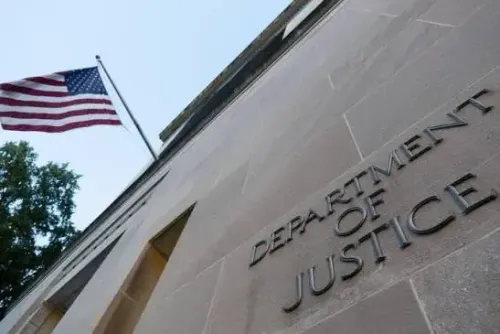
The Trump administration's Justice Department sued Arizona on 29 August over its policy granting in-state tuition to eligible Dreamers under Proposition 308 .
Parallel lawsuits were filed against New Mexico , Oregon , and Washington , bringing the total number of states sued to 21 .
Senators Ruben Gallego and Mark Kelly condemned the lawsuit, calling Dreamers 'Americans in every way.' Arizona Attorney General Kris Mayes pledged to vigorously defend Proposition 308, framing it as a states' rights issue.
Arizona's legal defence argues eligibility is based on school attendance and graduation , not state residency — a distinction that could be decisive in court.
Two Democratic senators from Arizona have sharply criticised the Trump administration's decision to sue the state over a voter-approved policy that allows eligible Dreamers and other immigrant students to access lower in-state college tuition rates. The lawsuit, filed by the Justice Department on 29 August, is part of a broader federal campaign now targeting 21 states over similar tuition and financial aid policies for undocumented immigrants.
What the Lawsuit Challenges
The Justice Department filed its complaint against Arizona alongside parallel lawsuits against New Mexico, Oregon, and Washington. Federal officials contend that these states are extending postsecondary education benefits to immigrants without legal status that are unavailable to US citizens living outside those states — a position they argue violates federal law.
Assistant Attorney General Brett A. Shumate of the Justice Department's Civil Division stated: 'This is a simple matter of federal law: colleges cannot provide benefits to illegal aliens that they do not provide to US citizens.' He added that the department 'will not tolerate American students being treated like second-class citizens in their own country.'
Associate Attorney General Stanley E. Woodward Jr. confirmed that the latest filings brought the total number of states sued by the administration over such policies to 21, and warned that the effort would continue 'until President Trump's promise is fulfilled.'
Senators Gallego and Kelly Push Back
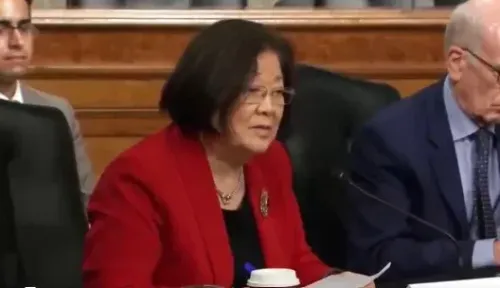
Senators Ruben Gallego and Mark Kelly of Arizona issued a joint statement on Friday defending the Dreamer students. 'Dreamers are Americans in every way. They grew up here, went to our schools, and are contributing to communities across Arizona,' the senators said.
They argued that making college more expensive for young people deeply rooted in the country does nothing to fix the immigration system or improve public safety. 'Arizona voters decided to allow these students to pursue an affordable education, and we should respect that decision,' they added, pledging to continue fighting for the policy.
Arizona's Legal Defence
Arizona Attorney General Kris Mayes said she would vigorously defend the voter-approved measure, known as Proposition 308. 'Fundamentally, this is about state's rights,' Mayes said, framing the lawsuit as federal overreach into a policy ratified directly by Arizona's electorate.
Her office disputes the federal government's characterisation of the programme. According to the attorney general's office, eligibility under Proposition 308 is not based on state residence — as federal law restricts — but rather on whether a student attended an Arizona high school or home-school equivalent for at least two years and graduated or received an equivalent credential in the state.
This distinction is central to Arizona's defence. Federal law limits certain postsecondary education benefits awarded to immigrants without legal status on the basis of state residence, unless comparable benefits are available to US citizens regardless of residence. Arizona maintains its programme uses attendance and graduation criteria, not residency, and therefore does not fall foul of the federal restriction.
Broader Context and What's Next
This comes amid an intensifying federal push to curtail benefits extended to undocumented immigrants across multiple policy areas. The administration's decision to sue 21 states simultaneously signals a coordinated legal strategy rather than isolated enforcement actions. Critics argue the lawsuits conflate residency-based benefits — which federal law does restrict — with attendance-based criteria that states like Arizona contend are legally distinct.
Courts will now be asked to determine whether the states' eligibility frameworks violate federal statute. The outcome could affect tens of thousands of Dreamer students enrolled in community colleges and universities across the targeted states. Legal proceedings are expected to unfold over the coming months, with Arizona's attorney general indicating her office is prepared to mount a full defence.
Point of View
Which would expose the federal strategy as overreach. What mainstream coverage underplays is the democratic legitimacy angle: Proposition 308 was passed by Arizona voters, not imposed by a legislature or governor, making the federal challenge an unusually direct confrontation with direct democracy. If courts side with Arizona, it could set a precedent that insulates similarly structured programmes in other states from the administration's broader campaign.
NationPress
13 Oct 2026
Frequently Asked Questions
What is the Trump administration's lawsuit against Arizona about?
The Justice Department sued Arizona on 29 August over Proposition 308, a voter-approved policy that allows eligible Dreamers and other immigrant students to pay in-state college tuition rates. Federal officials argue the policy grants education benefits to undocumented immigrants that are unavailable to US citizens living outside Arizona, in violation of federal law.
What is Proposition 308 in Arizona?
Proposition 308 is a voter-approved Arizona measure that makes certain immigrant students — including Dreamers — eligible for in-state tuition at the state's community colleges and universities. Eligibility is based on attending an Arizona high school or equivalent for at least two years and graduating or receiving an equivalent credential in the state.
How many states has the Trump administration sued over Dreamer tuition policies?
As of 29 August, the administration has sued 21 states over policies that extend in-state tuition or other education benefits to undocumented immigrants. The latest round of lawsuits targeted Arizona, New Mexico, Oregon, and Washington.
Why do Arizona officials say the lawsuit is legally flawed?
Arizona Attorney General Kris Mayes argues that Proposition 308 does not base eligibility on state residency — which federal law restricts — but instead on whether a student attended an Arizona high school for at least two years and graduated there. The state contends this attendance-based criterion does not violate the federal statute the Justice Department is invoking.
What did Senators Ruben Gallego and Mark Kelly say about the lawsuit?
Senators Gallego and Kelly issued a joint statement calling Dreamers 'Americans in every way' and arguing that making college more expensive for them does nothing to fix the immigration system or improve public safety. They pledged to keep fighting for the students and said Arizona's voter-approved policy should be respected.