US senators demand Meta explain No Kings Instagram blackout
Synopsis
Five Democratic senators have given Meta until 29 October to explain whether it coordinated with the Trump administration over the suspension of the No Kings Coalition's Instagram account — a shutdown that struck during a national early-voting drive. With Meta offering shifting explanations, its own Oversight Board criticising the response, and election day imminent, the pressure on Zuckerberg is intensifying fast.
Key Takeaways
Five Democratic US senators — Van Hollen, Wyden, Merkley, Blumenthal , and Murphy — sent a letter to Mark Zuckerberg on 23 October 2026 .
They demand answers by 29 October on whether Meta communicated with the Trump administration about the No Kings Coalition .
The No Kings Coalition Instagram account went down at approximately 1:30 p.m.
ET on 17 October during its early-voting mobilisation.
Meta attributed the shutdown to an automated error triggered partly by a Claude tool generating bot-like traffic bursts.
Meta's Oversight Board criticised the company's handling on 20 October , urging greater transparency in election-related enforcement.
The coalition had already written to Zuckerberg separately on 19 October before congressional action.
Five Democratic US senators have formally demanded that Meta chief executive Mark Zuckerberg disclose whether the company held any communications with the Trump administration regarding the No Kings Coalition, following the temporary shutdown of the group's Instagram account during nationwide demonstrations on 17 October 2026. The letter, released on Thursday, 23 October, sets a deadline of 29 October for responses.
The Senators and Their Demands
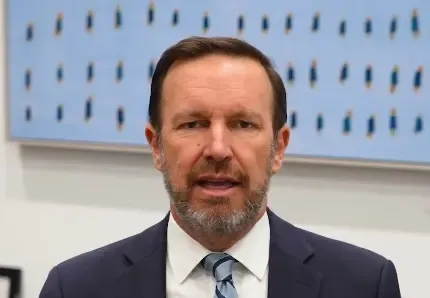
The letter was signed by Chris Van Hollen, Ron Wyden, Jeff Merkley, Richard Blumenthal, and Chris Murphy. Among the core questions they posed: 'Was the decision to remove the No Kings Coalition account made by a human or by an automated process?'
The lawmakers also sought records of any internal or external discussions Meta may have held with the administration concerning the No Kings Coalition or other pro-democracy protests. Critically, the letter raises the question of political influence but stops short of asserting that the administration directly ordered the shutdown.
What Happened on 17 October
The No Kings Coalition account disappeared from Instagram at approximately 1:30 p.m. Eastern Time on 17 October, during the group's national early-voting mobilisation drive. While the page reportedly became publicly visible again roughly an hour later following an automated review, administrators say they remained locked out and unable to publish updates for several additional hours.
The coalition draws a firm distinction between the restoration of its publicly visible page and its organisers actually regaining functional access — a nuance that has been central to its dispute with Meta.
Meta's Shifting Explanations
Meta described the suspension as an automated enforcement error and issued an apology. Its communications executive Andy Stone initially attributed the action to unusually frequent posting, sharing, or commenting. In a subsequent statement, Stone said engineers had traced the trigger primarily to activity involving the reading of profiles, posts, and hashtags, and that a Claude tool had generated bursts of requests that resembled automated bot traffic.
Senators challenged what they characterised as Meta's shifting explanations and pressed the company on how it plans to protect accounts distributing election and civic information ahead of election day.
Oversight Board Weighs In
Meta's own Oversight Board added to the pressure. In an 20 October statement, its co-chairs said the company's safeguards should have caught the enforcement error and questioned why resolution took as long as it did. The board urged Meta to make its election-related enforcement more transparent and consistent, warning that both excessive removal of political speech and inadequate enforcement could damage electoral integrity. It also called for automated systems to account for language, nuance, and political context.
No Kings Coalition's Position
On 19 October, the coalition sent Zuckerberg a separate open letter seeking public answers, predating Thursday's congressional intervention. The group describes its events as nonpartisan efforts to increase voter participation, with published organising principles calling for lawful, nonviolent action and de-escalation of confrontations.
With a 29 October response deadline and election day approaching, the episode is drawing fresh scrutiny over how major platforms handle enforcement actions against civic-mobilisation accounts during politically charged periods.
Point of View
But does not claim it did. That restraint matters: it keeps the inquiry credible while keeping the political temperature high. What is more telling is that Meta's own Oversight Board, an internal accountability mechanism, broke cover to criticise the company's handling just days before a congressional letter arrived. That sequence — coalition complaint, Oversight Board rebuke, then Senate intervention — suggests Meta's standard damage-control playbook is not working. The deeper issue is structural: automated enforcement that cannot distinguish a civic-mobilisation account from a spam operation is a platform design failure, not a one-off glitch. With election day close, the question of whether Meta can credibly self-regulate on politically sensitive enforcement is now squarely in the public record.
NationPress
23 Oct 2026
Frequently Asked Questions
Why did US senators write to Meta about the No Kings Coalition?
Five Democratic senators wrote to Meta chief executive Mark Zuckerberg on 23 October 2026 to demand answers about the temporary shutdown of the No Kings Coalition's Instagram account on 17 October, and to ask whether Meta communicated with the Trump administration about the incident. They set a deadline of 29 October for a response.
What is the No Kings Coalition?
The No Kings Coalition is a group that describes itself as a nonpartisan organisation focused on increasing voter participation through lawful, nonviolent action. Its 17 October mobilisation was centred on encouraging early voting across the United States.
Why did Meta suspend the No Kings Coalition Instagram account?
Meta described the suspension as an automated enforcement error. Communications executive Andy Stone said engineers ultimately traced the trigger to activity resembling automated bot traffic, partly generated by a Claude tool reading profiles, posts, and hashtags at high frequency.
What did Meta's Oversight Board say about the incident?
In a 20 October statement, the Oversight Board's co-chairs said Meta's safeguards should have caught the error and questioned why restoration took so long. They urged the company to make election-related enforcement more transparent, warning that both over-removal of political speech and under-enforcement could harm electoral integrity.
When was the No Kings Coalition's Instagram account restored?
Meta says an automated review restored the account's public visibility roughly an hour after the 17 October shutdown. However, the coalition's administrators say they remained unable to log in and post updates for several additional hours after the page became publicly visible.