South Korea rejects US House report on Coupang discrimination claims
Synopsis
South Korea's presidential office and National Assembly have publicly rejected a US House Judiciary Committee report accusing Seoul of 'discriminatory attacks' on Coupang — a rare diplomatic spat between close allies, triggered by a data breach affecting over 33 million accounts and entangled with questions of trade, sovereignty, and legislative oversight.
Key Takeaways
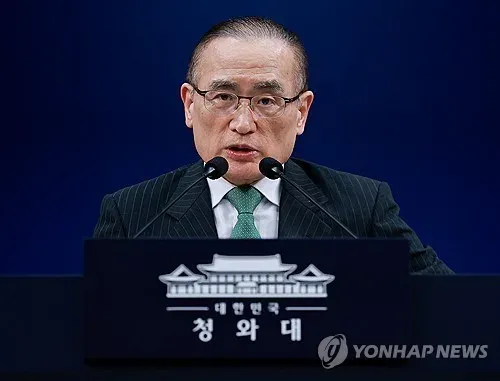
South Korea's National Security Advisor Wi Sung-lac on 4 July rejected a US House Judiciary Committee report alleging discriminatory targeting of Coupang Inc.
The US report accused Seoul of 'economic discrimination against foreign companies' in connection with a probe into a data breach affecting more than 33 million Coupang user accounts .
Wi denied allegations that the National Intelligence Service or a senior presidential official was involved in retrieving an IT device from China linked to the breach suspect.
South Korea's National Assembly also pushed back, calling the US assessment based on 'a limited set of facts' and defending its parliamentary hearings as standard legislative practice.
The foreign ministry said it would continue consultations with Washington to prevent the dispute from affecting the broader Korea-US alliance .
South Korea's presidential office on Friday, 4 July flatly rejected a US House Judiciary Committee report alleging that Seoul had engaged in 'discriminatory attacks' against e-commerce giant Coupang Inc., insisting that the government neither targets companies based on nationality nor conducts selective investigations. The pushback marks a rare public diplomatic rebuke between two close allies over a corporate data-breach probe.
What the US Report Alleged
The House Judiciary Committee report, released earlier this week, accused South Korea of carrying out 'discriminatory attacks' on Coupang — a US-listed company with a South Korean affiliate — in connection with a large-scale customer data leak. The report characterised Seoul's actions as 'economic discrimination against foreign companies' and described Coupang as a 'consistent target' of the South Korean government.
Seoul's Formal Rebuttal
National Security Advisor Wi Sung-lac addressed the report directly during a press briefing, calling its central claims factually inaccurate. 'The report's claims that the investigation is discriminatory, that it is targeted and that unfair regulations continue are far from the facts,' Wi said. He added that South Korea 'neither discriminates against companies, (their business) activities based on their nationality nor conducts investigations targeting anybody,' stressing that the Coupang probe is proceeding 'without discrimination' in line with domestic legal due process.
Wi also noted that Coupang itself had acknowledged the data breach involved more than 33 million user accounts, and that the leak may have affected US citizens residing in South Korea. Drawing a pointed comparison, he said: 'Had a similar data breach occurred in the US, involving personal information affecting two-thirds of the US population leaked to China, with its whereabouts remaining unknown, it would undoubtedly have been considered a serious issue.'
Intelligence Service Allegations Denied
The US report had further alleged that the National Intelligence Service or a high-ranking presidential official was involved in retrieving an IT device from China linked to a suspect in the data breach. Wi denied this claim outright, saying the report appeared to reflect only Coupang's unilateral version of events. He said Seoul would work to ensure its position is properly communicated to Washington through ongoing bilateral channels, and would also seek to keep the Coupang dispute separate from broader bilateral matters.
National Assembly Weighs In
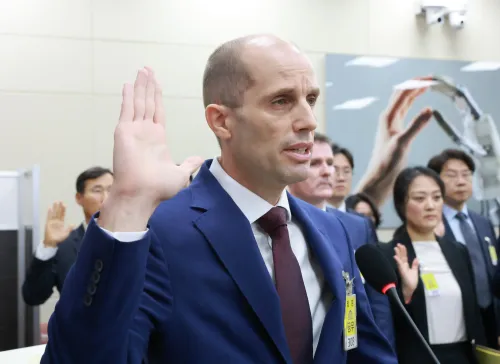
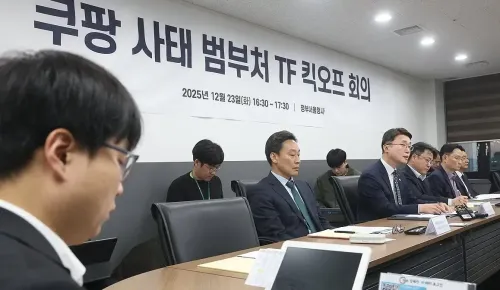
South Korea's National Assembly issued a separate statement expressing regret over the report, saying the US assessment was based on 'only a limited set of facts.' Lawmakers had questioned Coupang officials — including interim CEO Harold Rogers — during parliamentary hearings in December over the data leak and related issues. The Assembly defended the proceedings as 'lawfully convened in accordance with the National Assembly Act' and described them as 'ordinary practice for reviewing complex issues,' not exceptional targeting of any single company.
The hearings had previously drawn controversy after some lawmakers raised concerns about alleged mistranslations during Rogers' testimony. At a subsequent session, the Assembly arranged simultaneous interpretation, but Rogers reportedly insisted on using his own interpreter, creating friction between the two sides. The Assembly clarified that interpretation support was provided 'to ensure accurate communication and facilitate the smooth conduct of the session.'
Foreign Ministry Flags Alliance Concerns
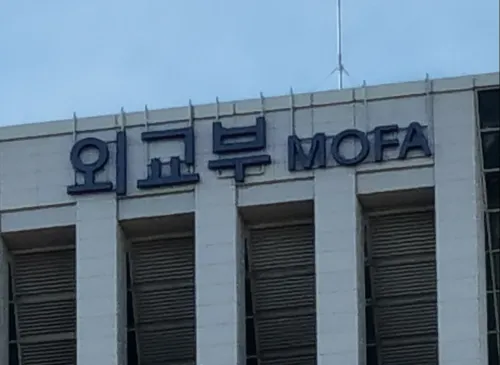
South Korea's foreign ministry had separately expressed regret over the report on Thursday, while signalling its intent to continue consultations with Washington to prevent the issue from affecting the broader Korea-US alliance. The episode underscores the delicate intersection of trade, data sovereignty, and diplomatic relations as Seoul navigates scrutiny from both its own legislature and a key strategic partner.
Point of View
The National Assembly, and the foreign ministry — signals that South Korea views this not merely as a corporate dispute but as a challenge to its regulatory sovereignty. The data-breach at the centre of this row involved over 33 million accounts, a scale that would trigger serious regulatory action in virtually any jurisdiction; the fact that a US congressional report frames that response as 'discrimination' raises questions about whose interests the report serves. The episode also exposes a structural tension in the Korea-US relationship: as US-listed companies expand in allied markets, the line between trade advocacy and legislative overreach will only grow harder to define.
NationPress
3 Oct 2026
Frequently Asked Questions
What did the US House Judiciary Committee report say about South Korea and Coupang?
The report accused South Korea of carrying out 'discriminatory attacks' on e-commerce company Coupang Inc., characterising Seoul's investigation into a massive data breach as 'economic discrimination against foreign companies.' It described Coupang as a 'consistent target' of the South Korean government.
How did South Korea respond to the US House committee report?
National Security Advisor Wi Sung-lac rejected the report's claims as 'far from the facts,' stating that South Korea does not discriminate against companies based on nationality and that the Coupang investigation follows due process under domestic law. The National Assembly and foreign ministry also issued separate rebuttals.
What was the Coupang data breach about?
Coupang itself acknowledged a data leak involving more than 33 million user accounts at its South Korean affiliate. The breach prompted parliamentary hearings in December, during which Coupang officials including interim CEO Harold Rogers were questioned by South Korean lawmakers.
Was the National Intelligence Service involved in the Coupang probe?
The US report alleged that South Korea's National Intelligence Service or a senior presidential official was involved in retrieving an IT device from China linked to a suspect in the data breach. National Security Advisor Wi Sung-lac denied this allegation outright.
Could the Coupang dispute affect the broader Korea-US relationship?
South Korea's foreign ministry said it would continue consultations with Washington specifically to prevent the Coupang issue from affecting the wider Korea-US alliance. Seoul has also stated its intention to keep the corporate dispute separate from other bilateral matters.