Sita Air plane loses rear tyre on landing at Nepal's Juphal Airport, all 16 safe
Synopsis
A Sita Air plane lost its rear tyre mid-landing at Nepal's remote Juphal Airport on Thursday, with a video of the tyre rolling down a slope going viral. All 16 on board survived — but the incident is the latest in a string of aviation safety scares in a country still banned from EU airspace since 2013.
Key Takeaways
A Sita Air aircraft lost its right rear tyre while landing at Juphal Airport , Dolpa , Nepal, on Thursday, 24 September 2026 at approximately 8:25 am .
All 16 people on board — 13 passengers and 3 crew members — are safe.
Passengers included 7 foreign nationals from France , Germany , and Belgium , and 6 Nepali nationals .
The aircraft remains on the runway; a technical team has been dispatched to assess its condition.
Nepal has been on the EU aviation safety blacklist since 2013 , restricting Nepali carriers from EU airspace.
The Saurya Airlines crash in Kathmandu on 24 July 2024 killed 18 of 19 people on board, highlighting persistent safety gaps.
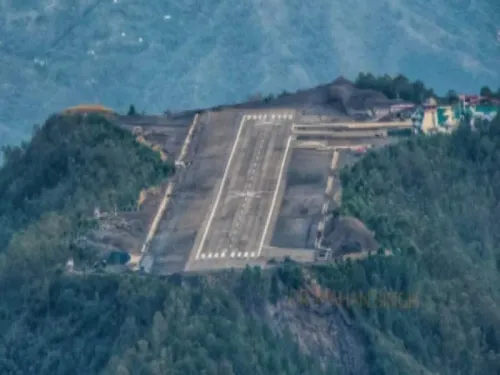
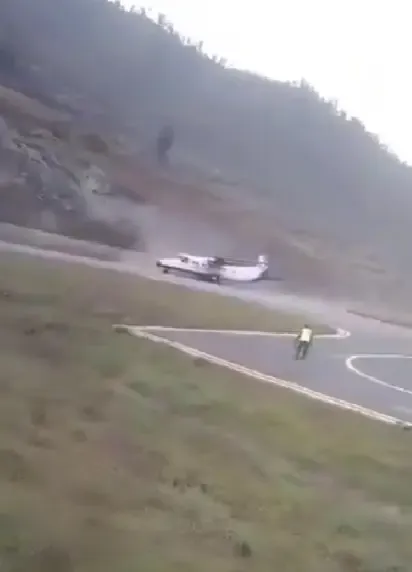
A Sita Air aircraft carrying 16 people narrowly escaped a serious accident at Juphal Airport in Dolpa district, western Nepal, on Thursday after its right rear tyre detached during landing at approximately 8:25 am. All passengers and crew were confirmed safe, according to a senior district police official.
What Happened at Juphal Airport
Deputy Superintendent of Police Anil Raj Giri, chief of the District Police Office in Dolpa, confirmed the incident in a statement. 'The plane, carrying 16 people, including 13 passengers and three crew members, lost its right rear tyre while landing at around 8:25 am,' Giri said. 'All crew members and passengers are safe.'
The aircraft had taken off from Nepalgunj Airport in southwestern Nepal and was bound for Juphal. Following the tyre detachment, a video reportedly showing the tyre rolling down a slope circulated widely on social media, drawing public attention to the close call.
Who Was on Board
Among the 13 passengers aboard were seven foreign nationals from countries including France, Germany, and Belgium, along with six Nepali nationals. The three crew members were also unharmed. The aircraft remains on the runway at Juphal Airport pending a technical inspection.
'Necessary decisions will be taken regarding the aircraft once a technical team arrives to investigate its condition,' Giri said.
Dolpa's Dependence on Air Connectivity
Dolpa is among Nepal's most remote districts, where air services are not a convenience but a lifeline. Road connectivity to much of the region is limited or non-existent, making the reliability and safety of small aircraft operations critical for residents and visitors alike. The incident has renewed concerns about the airworthiness of aircraft operating on Nepal's remote mountain routes.
Nepal's Aviation Safety Record Under Scrutiny
This incident comes against a backdrop of repeated aviation safety concerns in Nepal. The country's challenging mountainous terrain has been a persistent factor in air accidents, but regulatory gaps have also drawn sustained criticism. The Saurya Airlines crash at Kathmandu on 24 July 2024 — which killed 18 of the 19 people on board — exposed significant weaknesses in aircraft operations, flight preparation, cargo handling, and regulatory oversight.
Notably, the European Union has maintained Nepal on its aviation safety blacklist since 2013, barring Nepali airlines from operating in EU airspace. Critics argue that successive governments have failed to implement systemic reforms to lift the ban or meaningfully reduce accident risk. An investigation into Thursday's tyre incident is underway, with further details expected once the technical team completes its assessment.
Point of View
And the EU ban — entering its thirteenth year — signals that the international community has seen little structural improvement. The core problem is not terrain alone; it is a regulatory ecosystem that has repeatedly failed to enforce airworthiness standards on the remote-sector fleets that carry the most vulnerable passengers. Until Nepal produces a credible, independently verified safety audit and acts on it, these incidents will keep arriving — and the next one may not end with everyone walking away.
NationPress
24 Sept 2026
Frequently Asked Questions
What happened to the Sita Air plane at Juphal Airport in Nepal?
A Sita Air aircraft lost its right rear tyre while landing at Juphal Airport in Dolpa district, western Nepal, on Thursday morning at around 8:25 am. All 16 people on board — 13 passengers and 3 crew members — were unharmed.
Who was on board the Sita Air flight?
The flight carried 16 people: 13 passengers and 3 crew members. The passengers included 7 foreign nationals from France, Germany, and Belgium, and 6 Nepali nationals.
What is Nepal's aviation safety record?
Nepal has a history of aviation accidents linked to its mountainous terrain and regulatory gaps. The European Union has kept Nepal on its aviation safety blacklist since 2013, barring Nepali airlines from EU airspace. The Saurya Airlines crash in Kathmandu on 24 July 2024 killed 18 of 19 people on board, drawing renewed scrutiny of oversight standards.
What happens next after the Juphal Airport tyre incident?
The aircraft remains on Juphal Airport's runway pending an inspection by a technical team. Authorities say decisions on the aircraft will be made after the team assesses its condition. An investigation into the incident is already underway.
Why is air travel so important in Dolpa, Nepal?
Dolpa is one of Nepal's most remote districts, with limited road connectivity to many parts of the region. Air services are the primary means of transport for residents and are also used by trekkers and foreign tourists visiting the area.