Smithsonian chief Lonnie Bunch: Understanding history is America's greatest strength
Synopsis
As America turned 250, Smithsonian Secretary Lonnie Bunch — the institution's first Black leader — delivered a pointed message: the country's strength lies not in sanitising its past but in confronting it. Drawing on his grandfather's journey from sharecropping to Howard University, Bunch made the case that ambiguity, not certainty, is what a healthy democracy requires.
Key Takeaways
Smithsonian Secretary Lonnie Bunch spoke on 6 July during NBC's special broadcast marking America's 250th independence anniversary .
Bunch argued that confronting — not erasing — difficult history is 'America's greatest strength.' He is the first Black Secretary of the Smithsonian Institution, founded in 1846 .
The National Museum of African American History and Culture collected around 40,000 objects , roughly 70% from private homes.
Bunch described the Smithsonian as 'the glue that helps hold a nation together' amid deep political divisions.
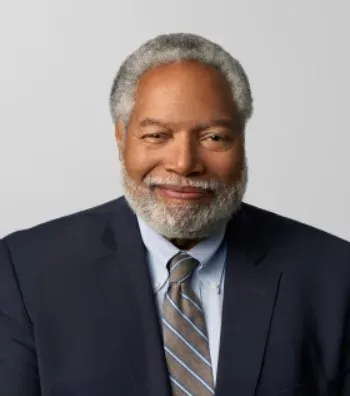
Smithsonian Institution Secretary Lonnie Bunch said on 6 July that the United States must confront — not erase — its difficult past if it hopes to fulfil the promise of its democracy, as America marked the 250th anniversary of its independence. Speaking on NBC's special Meet the Press broadcast, Bunch argued that grappling honestly with history is among the country's most enduring strengths.
A Nation Always in Pursuit
Bunch framed America's founding ideals not as achievements but as an ongoing obligation. 'To me it means that we are always in pursuit. We are in pursuit of the promise of America,' he said. 'That in essence, we'll almost never get there, and that's okay. That the notion of being a more perfect union, not the perfect union, is really what motivates me.'
He argued that the country's full history — including its most painful chapters — must be embraced rather than avoided. 'America's greatest strength, it's not running away from its history, but it's understanding how that history shaped us and continues to shape us,' Bunch said.
From Sharecropper's Grandson to Smithsonian Secretary
Bunch, the first Black Secretary of the Smithsonian Institution, drew on his own family's arc to illustrate the distance America has travelled. He described his grandfather as a sharecropper from North Carolina who spent ten years earning a college degree before attending dental school at Howard University and practising dentistry for five decades.
Asked what his grandfather would make of his achievements, Bunch said: 'I think he would be astonished. He'd be proud of America. Proud of a nation that can come out of slavery, and Jim Crow and Civil Rights, to basically say, 'It's possible for someone like me to be part of this amazing group called the Smithsonian.''
Building the African American History Museum
Bunch also reflected on the creation of the National Museum of African American History and Culture, saying the project reshaped his understanding of what such an institution could accomplish. 'I realised that this was an opportunity not to build an African American museum like I would've done it 40 years ago, but to basically say, 'This is a story of a community, but it's also the story of a nation,'' he said.
A nationwide effort to collect family heirlooms and artefacts proved unexpectedly powerful. The project gathered around 40,000 objects, with roughly 70 per cent sourced from 'basements, trunks and attics of people's homes.' Bunch described the responsibility that came with that trust: 'You're not building a museum. You're holding people's culture, people's hands, people's hopes in your hands.'
The Smithsonian as Democratic Glue
Addressing America's deepening political divisions, Bunch said museums have a distinct civic role in cultivating tolerance for complexity. 'I think the Smithsonian, in some ways, is the glue that helps hold a nation together,' he said. 'The Smithsonian gives you ambiguity. It helps you understand complexity, nuance, subtlety, debate.'
He added that fostering comfort with differing historical interpretations could itself reinforce democracy: 'If you could help people feel comfortable with ambiguity, then you could help a nation move forward.'
Founded in 1846, the Smithsonian Institution is the world's largest museum, education, and research complex, comprising 21 museums, the National Zoo, and numerous research centres, preserving millions of artefacts documenting American history, science, culture, and innovation. As the nation's semiquincentennial celebrations continue, Bunch's remarks signal an ongoing national reckoning with what American identity truly means.
Point of View
Not liabilities, is a quiet but direct counter to that trend. The 40,000-object collection story is the most underreported detail here: it shows that historical memory lives outside official archives, and that its preservation depends on public trust in institutions — trust that is itself now contested. The 250th anniversary framing gives Bunch's words ceremonial cover, but the substance is unmistakably urgent.
NationPress
5 Oct 2026
Frequently Asked Questions
Who is Lonnie Bunch and why is his statement significant?
Lonnie Bunch is the Secretary of the Smithsonian Institution and its first Black leader. His remarks on America's 250th independence anniversary carry particular weight because he leads the world's largest museum and research complex, and his own family history — from sharecropping to heading a national institution — embodies the arc he described.
What did Lonnie Bunch say about American history at the 250th anniversary?
Bunch said that America's greatest strength is not running away from its history but understanding how that history shaped the country. Speaking on NBC's Meet the Press special, he argued the nation must embrace its full past — including its most painful chapters — to fulfil the promise of democracy.
What is the National Museum of African American History and Culture?
It is a Smithsonian museum that Bunch helped create, designed to tell both the story of African Americans and the broader story of the United States. A nationwide collection drive gathered around 40,000 objects, with approximately 70 per cent sourced from private homes rather than existing public collections.
What role does Bunch say the Smithsonian plays in American democracy?
Bunch described the Smithsonian as 'the glue that helps hold a nation together,' arguing it fosters tolerance for complexity, nuance, and debate. He said helping citizens become comfortable with ambiguity — rather than seeking simple answers — could strengthen democracy itself.
When did the Smithsonian Institution get founded and how large is it?
The Smithsonian Institution was founded in 1846 and is today the world's largest museum, education, and research complex. It comprises 21 museums, the National Zoo, and numerous research centres, preserving millions of artefacts related to American history, science, culture, and innovation.