Vance rejects zero-sum America view in July 4 USS Kearsarge speech
Synopsis
On America's 250th birthday, Vice President JD Vance chose a warship in New York Harbour to deliver a pointed rebuttal of what he called zero-sum thinking about US history — framing the country's greatness as a product of cooperation, not conflict. The speech is as much a cultural intervention as a celebration.
Key Takeaways
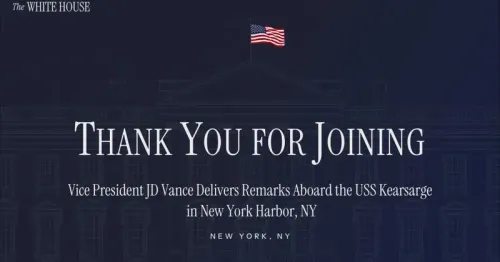
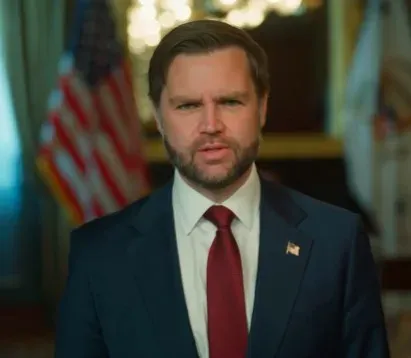
JD Vance addressed the nation aboard the USS Kearsarge in New York Harbour on 4 July 2025 , America's 250th Independence Day .
He urged Americans to reject 'two-dimensional' and 'zero-sum' portrayals of US history.
Vance cited George Washington , James Buchanan Eads , and Henry Kaiser as examples of cross-generational American cooperation.
He acknowledged critics who focus on national imperfections, calling their framing 'wrong.' The speech coincided with the US Navy's 250th anniversary celebrations held across the country.
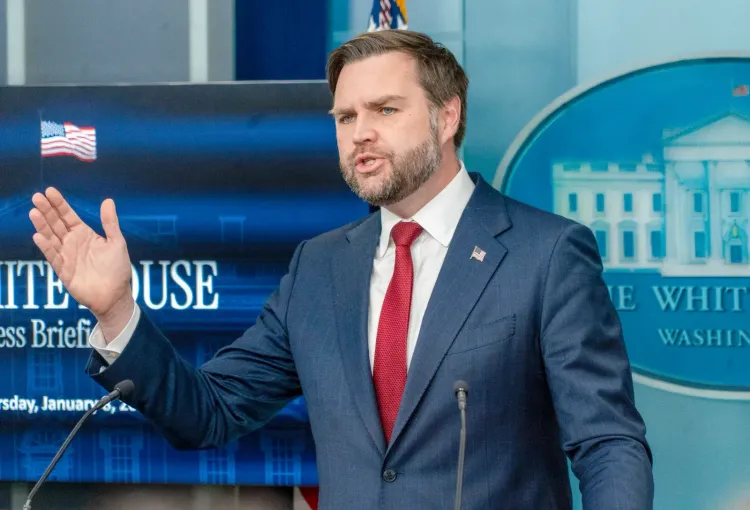
US Vice President JD Vance used America's 250th Independence Day on 4 July 2025 to challenge what he called a 'two-dimensional' portrayal of the United States, urging citizens to reject narratives that focus solely on the nation's failures and instead recognise a shared legacy of cooperation and achievement.
Setting and Context
Vance delivered the address aboard the USS Kearsarge in New York Harbour, during celebrations marking the US Navy's 250th anniversary. The setting — a warship docked in one of America's most iconic waterways — underscored the speech's emphasis on collective national effort and military heritage. The address came as ceremonies were held across the country to mark the 250th anniversary of the Declaration of Independence.
What Vance Said
Vance argued that America's story is defined by cooperation across generations and professions, not by conflict between competing groups. 'America's greatness is built by cooperation between all of our citizens from every single walk of American life,' he said, invoking historical figures including George Washington, engineer James Buchanan Eads, and industrialist Henry Kaiser as examples of cross-generational contribution.
He directly addressed critics who, in his characterisation, frame American history as a zero-sum struggle between the powerful and the powerless. 'You will hear a couple small but loud voices today speak obsessively not of our national greatness but of our national imperfections,' he said. Dismissing that framing, he added: 'They're wrong.'
Vance called on Americans to 'reject the two-dimensional view of your fellow citizens and reject the two-dimensional view of your country' and to 'reject the view of your nation that sees only its sins but not its grace and its greatness.'
The Broader Appeal
The Vice President framed American accomplishment as inherently collective. 'Everything that we have done as a country, we have done together. Not as citizens divided against each other, but as a common people working towards a common future,' he said. He concluded with a forward charge: 'All of us will need to do our part to create the next 250 years of American greatness. Today, my friends, we celebrate, and tomorrow we get back to work.'
Political Significance
The speech arrives at a moment of pronounced ideological polarisation in the United States, with debates over how American history should be taught and commemorated intensifying in recent years. Vance's remarks — delivered on the most symbolically charged date in the American calendar — represent a deliberate effort by the current administration to stake out a unifying, achievement-centred national narrative. Notably, he framed the appeal as bipartisan, saying 'whether we're Democrat or Republican, whatever our political persuasion, all of us are celebrating.'
Whether the message lands as genuinely inclusive or as a coded dismissal of civil-rights and social-justice perspectives will likely depend on the listener — a tension the speech itself seemed to anticipate.
Point of View
But its target is as revealing as its message. By characterising critics of American history as 'small but loud voices' obsessed with imperfection, he frames a complex historiographical debate as fringe noise — a rhetorical move that sidesteps rather than engages the substance. The bipartisan framing ('whether Democrat or Republican') is notable for a Vice President whose political brand has been sharply partisan; it reads more as a rhetorical device than a genuine olive branch. The deeper question the speech leaves unanswered: can a national unity narrative that explicitly dismisses dissenting historical interpretations actually produce the unity it calls for?
NationPress
3 Oct 2026
Frequently Asked Questions
What did JD Vance say in his July 4 speech?
Vance urged Americans to reject what he called a 'two-dimensional' and 'zero-sum' view of US history, arguing that America's greatness was built through cooperation across generations rather than conflict between groups. He delivered the address aboard the USS Kearsarge in New York Harbour during the country's 250th Independence Day celebrations.
Where did JD Vance give his Independence Day speech?
Vance spoke aboard the USS Kearsarge in New York Harbour on 4 July 2025, as part of events marking both the 250th anniversary of US independence and the US Navy's 250th anniversary.
Who did Vance reference in his speech?
Vance invoked historical figures including George Washington, engineer James Buchanan Eads, and industrialist Henry Kaiser to illustrate his argument that American achievement has always been a product of collective effort across professions and generations.
What is the significance of Vance's 'zero-sum' remark?
Vance used the phrase to push back against interpretations of American history that frame it as a struggle between the powerful and the powerless. He argued this framing is reductive and inaccurate, stating plainly: 'They're wrong.' The remarks reflect a broader administration effort to shape how national identity and history are publicly discussed.
Was Vance's speech bipartisan in tone?
Vance explicitly framed the celebration as bipartisan, saying 'whether we're Democrat or Republican, whatever our political persuasion, all of us are celebrating.' However, his criticism of voices focused on 'national imperfections' was seen by observers as a pointed reference to progressive historical narratives.