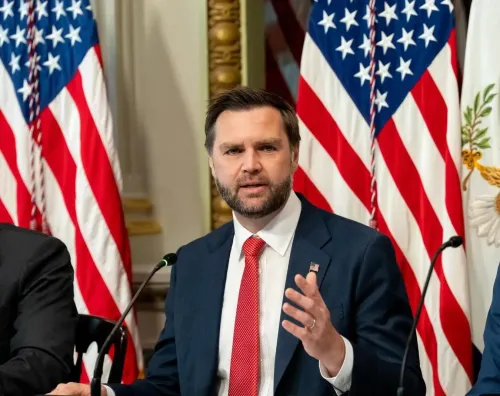
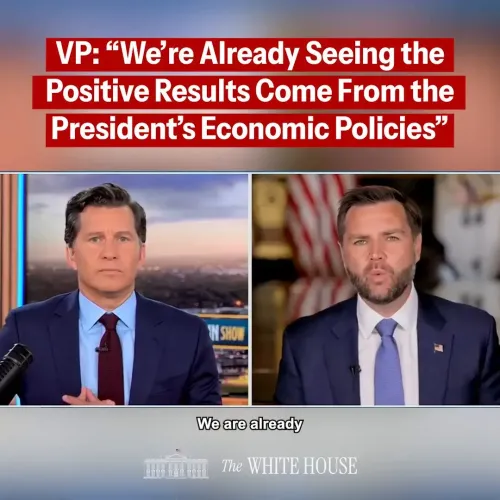
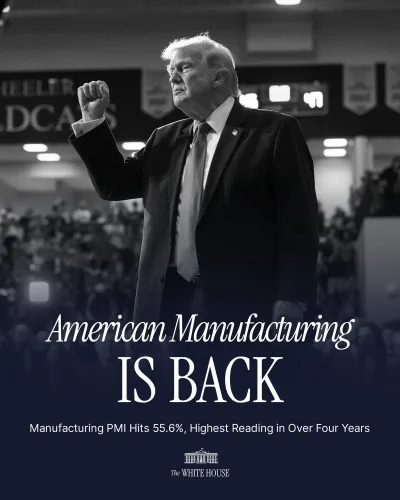
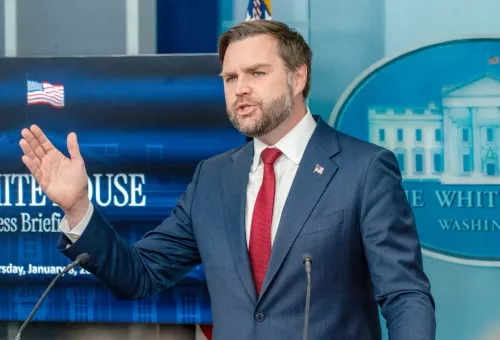
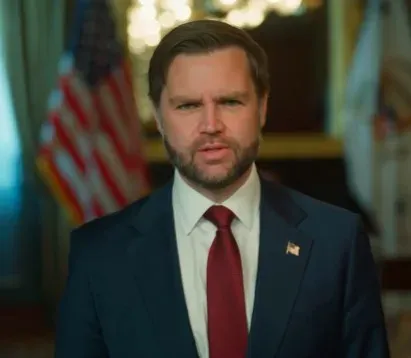
Vance ties US manufacturing revival to China challenge in Kansas City speech
Synopsis
JD Vance's Kansas City address was less a policy rollout and more a declaration of industrial war — against China, against decades of offshoring, and against the political consensus that enabled both. With tariffs already in place and reshoring incentives expanding, the Trump administration is betting that manufacturing can be the centrepiece of its economic legacy. For India, the stakes are direct: the same China+1 logic that is drawing investment to Indian factories is now being contested by a resurgent American industrial pitch.
Key Takeaways
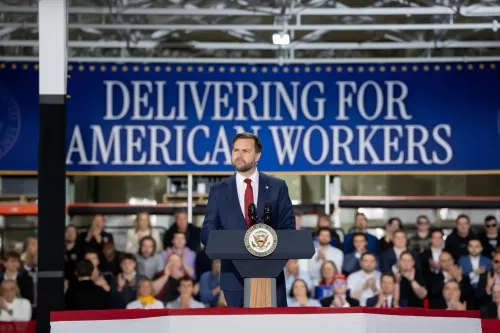
US Vice President JD Vance delivered a major manufacturing policy speech in Kansas City, Missouri on 19 May .
Vance claimed the Trump administration had achieved the 'biggest growth in manufacturing employment' since President Trump's first term.
The speech repeatedly targeted China and Mexico as destinations to which American jobs were 'shipped' by earlier political leadership.
The America First economic agenda includes expanded tariffs, domestic manufacturing incentives, and supply-chain restructuring away from Chinese dependency.
The US reshoring drive has direct implications for India , which is competing for the same global manufacturing investment flows under China+1 strategies.
US Vice President JD Vance on 19 May delivered a major policy address in Kansas City, Missouri, declaring that the Trump administration had reversed decades of American industrial decline by prioritising domestic workers and cutting dependence on overseas production hubs, particularly China. The speech framed the administration's economic agenda as a direct corrective to factory closures and job losses that hollowed out working-class communities across the United States.
Key Claims from the Kansas City Address
Vance drew on personal experience to underscore the stakes, describing his hometown's industrial erosion as emblematic of a broader national failure. 'For my entire life, the story of my hometown, the story of great manufacturers like this one, is that they were shedding jobs instead of creating jobs,' he said. 'What Donald Trump has done in just 18 months… is that we have made it great to build in the United States of America once again.'
He claimed the administration had overseen the 'biggest growth in manufacturing employment' since President Donald Trump's first term, though independent verification of that specific claim was not immediately available. Vance also praised factory workers who continued operations through the Covid-19 pandemic. 'You guys came to work, and we're proud of you for it and we're grateful,' he said.
China and Mexico in the Crosshairs
Throughout the address, Vance repeatedly linked economic decline in industrial towns to political decisions that allowed production to migrate overseas. 'Why is it that we have leaders who allow our jobs to get shipped to Mexico and China?' he said. 'You had people in Washington who weren't fighting for you.'
He argued that the shift was fundamentally a matter of political will. 'The reason why China and Mexico were building while the United States was shrinking — it was a simple, simple question of political leadership,' Vance said. The administration has backed that rhetoric with expanded tariffs and domestic manufacturing incentives aimed at encouraging companies to reshore production.
The 'America First' Economic Framework
The Kansas City speech situated the manufacturing push within a broader America First economic strategy that also encompasses tax cuts, anti-fraud measures, and supply-chain restructuring. Vance framed it as a departure from decades of policy consensus that, in his telling, prioritised global integration over domestic industry. 'We decided to put American businesses and most importantly, American workers first for a change,' he said.
This comes amid a sustained White House effort to reshore manufacturing, reduce reliance on Chinese supply chains, and expand domestic industrial capacity — a drive that has accelerated since the administration's second term began.
What This Means for India
The US push carries significant implications for India, which has been positioning itself as a leading alternative manufacturing destination under the so-called China+1 supply-chain strategy. As global companies diversify production away from China, India has actively courted investment in electronics, semiconductors, defence production, and pharmaceuticals. A sustained American reshoring drive could intensify competition for those same investment flows, even as it opens parallel opportunities for Indian suppliers integrated into US-bound value chains.
How the administration's tariff and incentive architecture ultimately shapes global supply chains will be closely watched in New Delhi in the months ahead.
Point of View
The administration's tariff-and-incentive approach risks raising input costs for US manufacturers even as it discourages offshoring, a tension the Kansas City address did not address. For India, the picture is genuinely double-edged: American reshoring competes with the China+1 investment India is courting, but US tariffs on Chinese goods also accelerate the diversification that benefits Indian exporters. The speech signals that this tension will only sharpen through 2025 and into the next electoral cycle.
NationPress
19 Sept 2026
Frequently Asked Questions
What did JD Vance say in his Kansas City manufacturing speech?
Vance declared that the Trump administration had reversed decades of American industrial decline, citing what he called the biggest growth in manufacturing employment since Trump's first term. He argued that earlier political leadership had allowed jobs to move to China and Mexico, and framed the administration's tariffs and incentives as a corrective.
How does the US manufacturing push affect India?
India has been positioning itself as a major alternative manufacturing hub under China+1 supply-chain strategies, attracting investment in electronics, semiconductors, defence, and pharmaceuticals. A successful US reshoring drive could compete for some of the same global investment flows, though US tariffs on Chinese goods simultaneously accelerate the diversification that benefits Indian manufacturers.
What is the 'China+1' strategy and why does it matter?
China+1 is a supply-chain diversification approach where global companies maintain some Chinese production but add a second manufacturing base — often in India, Vietnam, or Mexico — to reduce concentration risk. It has been a key driver of foreign investment into India's manufacturing sector in recent years.
What specific policies back Vance's manufacturing claims?
The Trump administration has expanded tariffs on imports, introduced domestic manufacturing incentives, and pushed supply-chain restructuring away from Chinese dependency. Vance also referenced tax cuts and anti-fraud efforts as part of the broader America First economic framework, though granular policy details were not outlined in the Kansas City address.
Did Vance provide data to support his manufacturing employment claim?
Vance claimed the US had seen its biggest growth in manufacturing employment since Trump's first term, but the speech did not cite specific figures or an official source. Independent verification against labour department data was not immediately available at the time of reporting.