South Korea's President Lee Commemorates Fallen Soldiers and Promises Peace Through Strong Defense
Synopsis
On March 27, South Korean President Lee Jae Myung honored 55 troops who sacrificed their lives during clashes with North Korea at the West Sea Defence Day ceremony. He emphasized the importance of a strong national defense to secure peace on the Korean Peninsula.
Key Takeaways
President Lee Jae Myung commemorated 55 fallen South Korean troops.
He emphasized the need for a strong national defense for peace.
West Sea Defence Day was established to honor military sacrifices.
The Navy conducted significant drills to enhance readiness.
The Northern Limit Line is a critical maritime boundary in Korean relations.
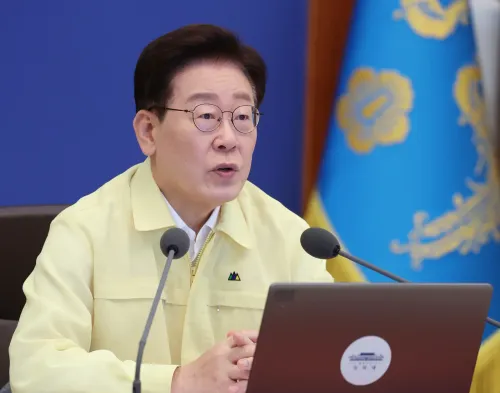
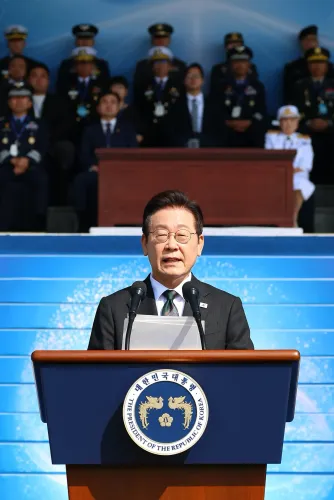
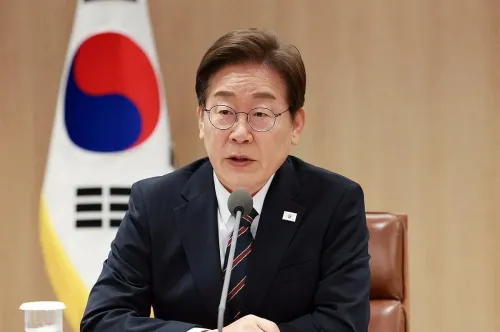
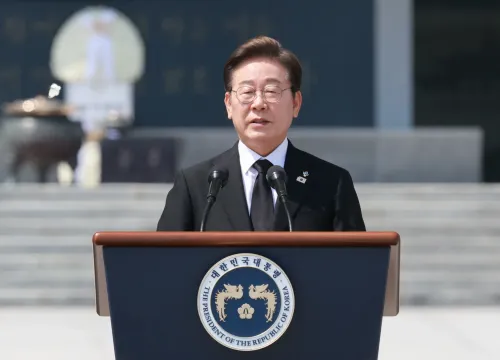
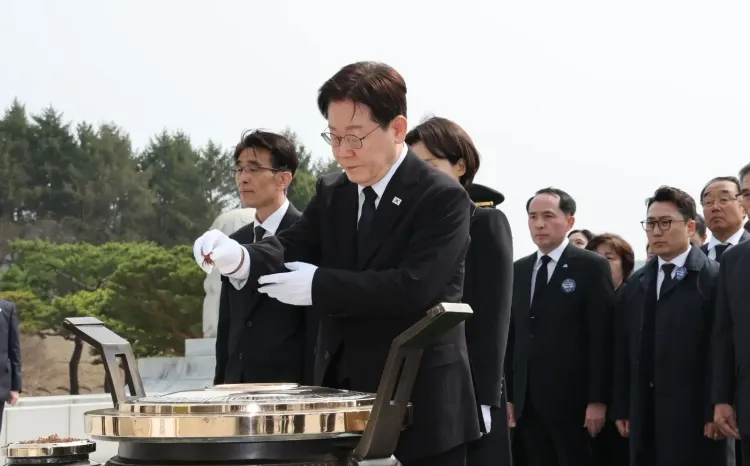
Seoul, March 27 (NationPress) President Lee Jae Myung of South Korea commemorated the sacrifice of 55 military personnel who lost their lives during confrontations with North Korea while safeguarding the Yellow Sea maritime boundary. He reaffirmed his commitment to foster peace on the Korean Peninsula through robust defense capabilities.
During a speech at the national cemetery in Daejeon, approximately 140 kilometers south of Seoul, Lee honored the sailors and Marines who died in conflicts near the Northern Limit Line (NLL), which serves as the unofficial maritime boundary between the two Koreas.
"It is our historical duty to ensure the safety of our citizens and the territory of the Republic of Korea through strong national defense, and to strive for a peaceful Korean Peninsula that is free from the fear of warfare," Lee stated.
He also emphasized that achieving peace—a state devoid of conflict—is the most reliable form of security, although it is a challenging goal.
Additionally, Lee promised to provide "special compensation" to veterans for their significant sacrifices while defending South Korea from North Korean threats in the western seas.
This event marked Lee's inaugural attendance at the ceremony as the president, having previously participated as a presidential candidate last year.
Since 2016, the fourth Friday of March has been designated as West Sea Defence Day to commemorate this occasion, as reported by Yonhap.
On March 26, the South Korean Navy commenced maneuvering drills to honor those who died in naval confrontations with North Korea in the Yellow Sea and to enhance its combat readiness.
The four-day exercise, which is set to conclude on Friday, involves naval forces conducting intensive training to improve anti-submarine warfare, tactical maneuvers, and firing capabilities. Approximately 20 surface vessels, including the 8,200-ton Jeongjo the Great destroyer, submarines, and maritime surveillance aircraft such as the P-3 and P-8, as well as the AW-159 naval helicopter, were mobilized for operations along both the eastern and western coasts.
Point of View
President Lee Jae Myung's tribute to the 55 fallen soldiers underscores the ongoing tensions on the Korean Peninsula. His commitment to a strong national defense highlights the delicate balance between peace and security in this historically volatile region.
NationPress
25 Sept 2026
Frequently Asked Questions
What is West Sea Defence Day?
West Sea Defence Day is commemorated on the fourth Friday of March to honor South Korean service members who lost their lives during military confrontations with North Korea near the Yellow Sea.
Who attended the West Sea Defence Day ceremony?
South Korean President Lee Jae Myung attended the ceremony, marking his first attendance as president.
What were the recent military exercises conducted by the Navy?
The Navy conducted maneuvering drills to honor fallen service members and to enhance combat readiness, focusing on anti-submarine warfare and tactical maneuvers.
What is the significance of the Northern Limit Line (NLL)?
The NLL is the de facto maritime border between North and South Korea, where several military clashes have occurred.
What compensation did President Lee promise to veterans?
President Lee promised 'special compensation' for veterans who made significant sacrifices defending South Korea against North Korean provocations.