South Korea to invest $200 billion in US energy projects, Trump announces
Synopsis
President Trump announced that South Korea will invest up to $200 billion in US energy infrastructure — eight nuclear plants, a Texas power facility, and the long-stalled Alaska LNG pipeline — under a broader $350 billion bilateral deal. The commitment sets a ceiling, not a done deal, but it is one of the largest allied investment pledges in US energy history and a strategic pivot point for both countries.
Key Takeaways
South Korea has committed up to $200 billion in US energy projects, announced by President Trump at the White House on 1 October 2026 .
Projects include eight large-scale nuclear power plants , a six-gigawatt power facility in Texas , and the Alaska LNG pipeline . $54 billion is specifically earmarked for the Alaska LNG project, which received federal authorisation in May 2020 .
The Alaska pipeline would run 807 miles from the North Slope to an export terminal capable of producing 20 million metric tonnes of LNG annually.
The investment is part of a broader $350 billion US-South Korea trade and strategic investment deal signed in November 2025 ; South Korea is capped at $20 billion in outflows per calendar year.
Glenfarne owns 75% of the Alaska LNG project; the state of Alaska holds the remaining 25% .
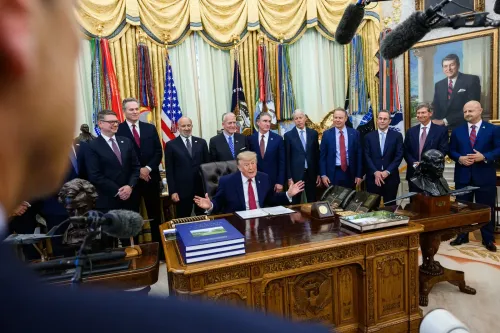
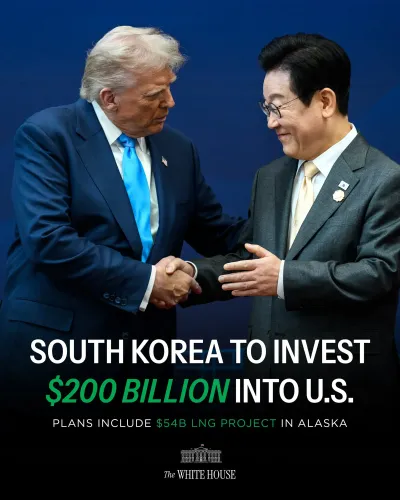
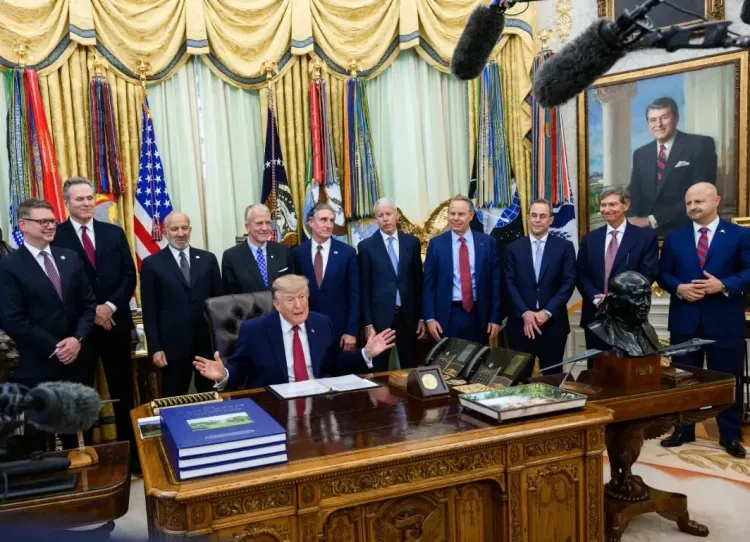
President Donald Trump on Wednesday announced that the South Korean government will invest up to $200 billion in US energy infrastructure, covering eight large-scale nuclear power plants, a six-gigawatt power generation facility in Texas, and the long-discussed Alaska liquefied natural gas (LNG) pipeline. The announcement, made at a White House event, marks what Trump described as 'one of the largest energy infrastructure investments in American history.'
What the Investment Covers
The commitment includes $54 billion earmarked specifically for the Alaska LNG project, alongside the Texas power facility and eight new nuclear plants. Trump quoted himself directly at the event: 'Thanks to the agreements my administration has secured with the Republic of Korea, they will invest up to $200 billion; that's the Korean government, $200 billion to build a six-gigawatt power generation facility in Texas.'
The Alaska pipeline would span 807 miles (roughly 1,300 kilometres), running from the state's North Slope to an export terminal in southern Alaska. The terminal is designed to produce up to 20 million metric tonnes of LNG annually, according to the White House. LNG is natural gas cooled into liquid form for transport by ship.
Context: Broader US-South Korea Deal
The investment commitments fall under a larger $350 billion trade deal and strategic investment memorandum signed between the two countries in November 2025. That framework included $150 billion in shipbuilding investment and $200 billion in additional strategic investment. A joint White House fact sheet noted that South Korea would not be required to provide more than $20 billion in US dollars in any single calendar year, effectively spreading the commitment over multiple years. A White House official, speaking on background, said the investments would 'advance US energy projects and strengthen trade, investment and energy security between the two countries.'
Notably, Wednesday's announcement concerns investment commitments, not transfers. Trump's use of 'up to $200 billion' sets a ceiling; it does not confirm the full amount has been disbursed or spent.
Alaska LNG: A Long-Deferred Project
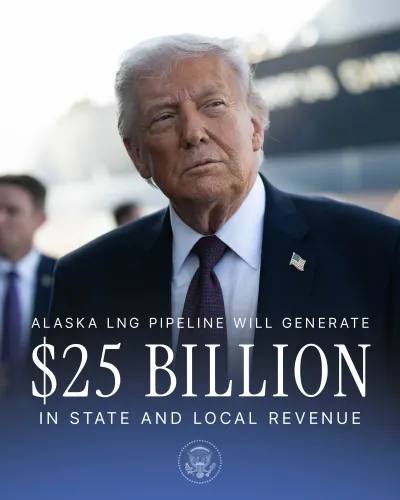
The Alaska LNG project received US federal regulatory authorisation in May 2020, but has remained in development limbo since. Its developer describes two financially independent phases: a pipeline supplying Alaska's domestic market, followed by a liquefaction facility and related export infrastructure at Nikiski. Glenfarne holds a 75% stake in the project, with the remaining 25% owned by the state of Alaska through the Alaska Gasline Development Corporation. The White House also said the pipeline would provide a reliable, year-round gas supply for Alaska residents and lower their energy costs — though those benefits depend on the project actually being developed.
Trump credited Republican Senator Dan Sullivan of Alaska with long championing the pipeline and thanked him for his involvement. Commerce Secretary Howard Lutnick, Interior Secretary Doug Burgum, Energy Secretary Chris Wright, and Alaska Representative Nick Begich were also present at the event.
Geopolitical and Energy Security Implications
The deal signals a deepening of US-South Korea strategic and economic ties at a time when Washington is actively courting allied investment in domestic infrastructure. For South Korea, the commitment locks in energy supply chains and deepens bilateral trade links, potentially shielding Seoul from tariff pressure. This comes amid broader US efforts to attract foreign capital into its energy transition and nuclear build-out, with South Korea joining a growing list of allied governments making large-scale US investment pledges. Whether the commitments translate into shovel-ready projects will depend on project financing, regulatory timelines, and the pace of disbursement.
Point of View
Not a cheque — the $20 billion annual cap means the full outlay could take a decade to materialise, and the Alaska LNG pipeline has been 'long-planned' since at least 2020 without breaking ground. What is genuinely significant is the geopolitical signal: the US is now packaging infrastructure finance with trade policy, effectively asking allies to buy into American energy buildout as the price of market access. For South Korea, this is strategic insurance. For the US, it is a template — expect similar allied investment asks to follow.
NationPress
1 Oct 2026
Frequently Asked Questions
What is South Korea's $200 billion US energy investment?
It is a commitment by the South Korean government to invest up to $200 billion in US energy infrastructure, including eight nuclear power plants, a six-gigawatt power generation facility in Texas, and the Alaska LNG pipeline. The announcement was made by President Trump at a White House event on 1 October 2026 and falls under a broader $350 billion bilateral trade and strategic investment deal.
What is the Alaska LNG pipeline project?
The Alaska LNG pipeline is an 807-mile (roughly 1,300-kilometre) project running from Alaska's North Slope to an export terminal at Nikiski in southern Alaska, capable of producing up to 20 million metric tonnes of LNG annually. It received US federal regulatory authorisation in May 2020 and is 75% owned by Glenfarne, with the state of Alaska holding the remaining 25%.
Has South Korea actually transferred $200 billion to the US?
No. Wednesday's announcement concerns investment commitments, not completed transfers. Trump's 'up to $200 billion' figure sets a ceiling, and a White House fact sheet noted South Korea is not required to provide more than $20 billion in US dollars in any single calendar year.
How does this fit into the broader US-South Korea deal?
The energy investment is part of a $350 billion trade deal and strategic investment memorandum signed between the US and South Korea in November 2025, which also included $150 billion in shipbuilding investment. The energy commitments announced Wednesday represent the $200 billion strategic investment tranche of that framework.
Who attended the White House announcement?
Commerce Secretary Howard Lutnick, Interior Secretary Doug Burgum, and Energy Secretary Chris Wright joined President Trump at the event. Alaska Representative Nick Begich and Republican Senator Dan Sullivan — whom Trump credited with long pursuing the Alaska pipeline — were also present.