Will South Korea Focus on Confirming the Status of Separated Families in North Korea?
Click to start listening
Synopsis
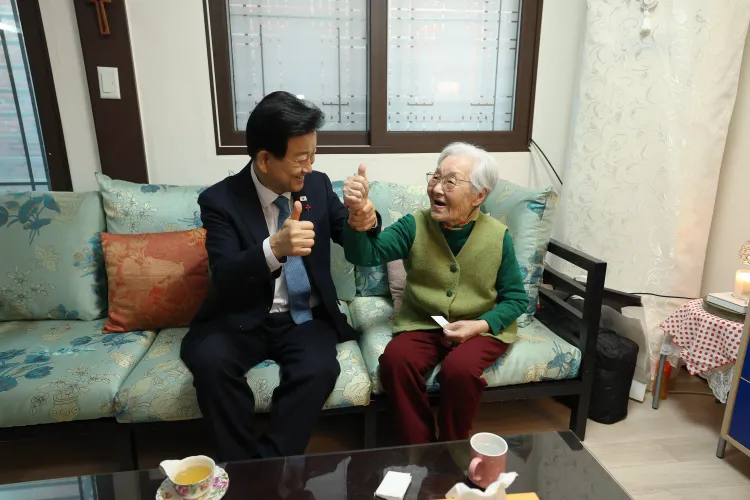
As South Korea's Ministry of Unification prioritizes the fate of families separated by the Korean War, will inter-Korean relations improve enough to facilitate family reunions? With over 34,000 surviving members eagerly awaiting news, the urgency is undeniable. Discover the latest developments in this poignant humanitarian effort.
Key Takeaways
- The South Korean government prioritizes the fate of separated families in North Korea.
- Efforts to resume family reunions are contingent upon improved inter-Korean relations.
- 34,658 surviving separated family members are registered, with many elderly individuals.
- North Korea dismantled a reunion facility in 2019, complicating future reunions.
- Humanitarian efforts remain urgent as time is running out for many elderly individuals.
Seoul, Dec 31 (NationPress) The Ministry of Unification announced on Wednesday that it will focus on determining the status of relatives of separated families residing in North Korea, contingent upon any thaw in the strained inter-Korean relations.
As part of the 2026-2028 initiative aimed at assisting families torn apart by the 1950-53 Korean War, the ministry plans to promote government-level exchanges between these divided families and encourage civilian interactions, as reported by Yonhap news agency.
“Should there be advancements in inter-Korean relations, our government will prioritize ascertaining the fate of these families’ relatives in North Korea,” stated the ministry.
Since the inaugural inter-Korean summit in 2000, there have been 21 rounds of reunions for separated families. However, following the last reunion in August 2018, such state-sponsored events have been on hold due to deteriorating relations.
In a significant move, North Korea dismantled a reunion facility for separated families located within the Mount Kumgang tourist region after leader Kim Jong-un instructed officials in 2019 to demolish all “unsightly” facilities erected by South Korea at the resort.
The ministry is exploring options for a new location for these family reunions and is seeking reciprocal visits between separated families in Seoul and Pyongyang.
The urgency surrounding the issue of separated families has intensified as an increasing number of elderly individuals are passing away without the opportunity to reunite with their relatives in the North, largely due to Pyongyang's hesitance in organizing family reunion events.
As of the end of November, the number of surviving separated family members registered with the government stands at 34,658, with 32 percent of them aged 90 and above.
Point of View
Especially as the number of elderly individuals continues to decline. The government's commitment to prioritizing the fate of these families is commendable, but actual progress hinges on the improvement of inter-Korean relations. As always, our focus should remain on fostering dialogue and understanding to alleviate the suffering experienced by these families.
NationPress
09/01/2026
Frequently Asked Questions
What is the current status of separated families in North Korea?
The South Korean government is making efforts to confirm the status of separated families in North Korea, particularly as inter-Korean relations potentially improve.
How many separated family members are still alive?
As of the end of November, there are 34,658 surviving separated family members registered with the government.
When was the last family reunion held?
The last state-organized family reunion took place in August 2018, and such events have been suspended since then.