How Can Schools Be Returned to Society for Significant Educational Reform?
Synopsis
Union Education Minister Dharmendra Pradhan calls for a return to community-driven schools to initiate vital educational reform. With the NEP 2020's five-year review, India eyes a transformative shift in the Samagra Shiksha framework by 2026-27, stressing the need for collective responsibility in enhancing education quality and accessibility.
Key Takeaways
Schools should return to community ownership .
Transformative reforms are necessary for educational success.
Collaboration is key in enhancing education quality.
100% enrollment up to Class XII is a crucial goal.
Utilizing technology will aid in educational advancements.
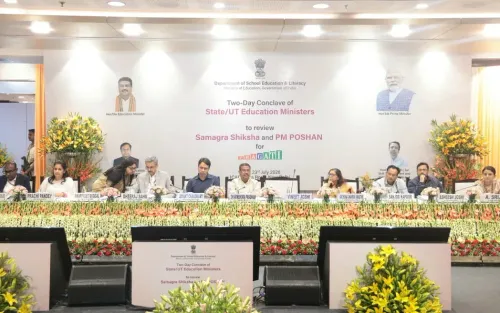
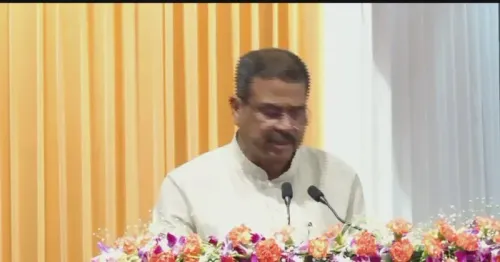
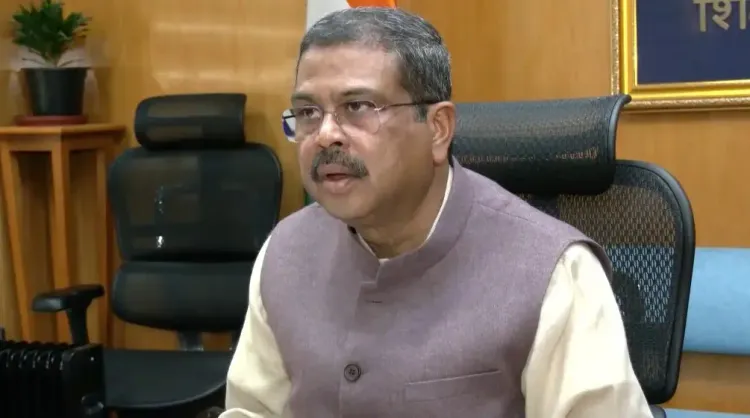
New Delhi, Jan 9 (NationPress) Union Education Minister Dharmendra Pradhan emphasized the importance of transforming schools into dynamic, community-centric institutions to facilitate significant change in the education landscape. Speaking at a stakeholder consultation meeting under the Samagra Shiksha scheme in New Delhi, Pradhan highlighted that after five years of the National Education Policy (NEP) 2020, India is gearing up to shift towards a new Samagra Shiksha framework in 2026-27, in line with the vision of Viksit Bharat.
“Our primary challenge today is to create an education system and workforce that meets the aspirations of a developed India,” the Minister articulated.
Pradhan pointed out the significant expectations surrounding Samagra Shiksha, noting that states nationwide have garnered valuable insights and developed best practices in utilizing education as a means to forge a more equitable society.
“Every state possesses unique experiences and best practices that should be integrated to further enhance Samagra Shiksha and address the needs of our populace,” he stated.
The Minister underscored the necessity for transformative reforms across various facets of school education, such as enhancing learning outcomes, bolstering nutrition standards, alleviating examination pressures, streamlining learning processes, achieving 100% enrollment up to Class XII, fostering holistic school development, and effectively utilizing technology and digital tools.
“To genuinely translate these elements into tangible outcomes, we must reintegrate schools with society,” Pradhan insisted.
Expanding on the community's role, he indicated that while the government should maintain accountability for systems and salaries, the management and daily operations of schools should involve the broader society.
“The government must oversee systems and salaries, but societal ownership should govern school operations. As we transition toward a new Samagra Shiksha framework, we need to collaboratively explore how to achieve this,” he urged.
Referring to Prime Minister Narendra Modi’s vision for Viksit Bharat by 2047, Pradhan asserted that this ambition can only be fulfilled when every child in India has access to quality education, achieving complete enrollment up to Class XII.
Bridging learning gaps and drop-out rates, enhancing learning and nutrition outcomes, developing teacher capacity, promoting design thinking and critical skills among students, moving beyond the “Macaulay mindset,” and building strong human capital for a developed India are collective duties, he added.
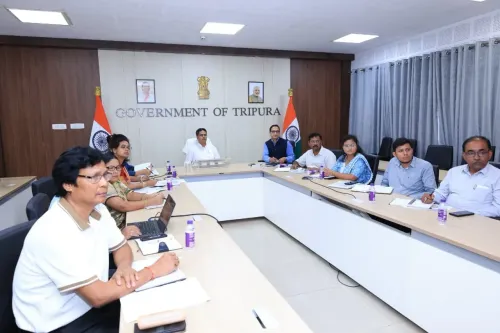
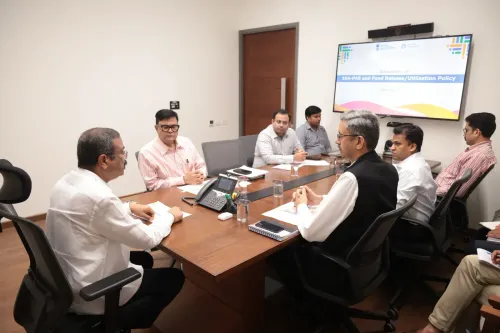
The Minister also called upon academic experts, senior officials from various ministries, and representatives from participating states and union territories to collaborate on a comprehensive annual plan for the academic year 2026-27.
“This initiative should evolve into a national movement,” Pradhan emphasized.
The consultation meeting gathered key stakeholders to discuss the future trajectory of Samagra Shiksha and to ensure the emerging framework effectively supports India’s educational and developmental objectives.
Point of View
It is crucial to recognize the significance of Dharmendra Pradhan's vision for education reform. The emphasis on community involvement in school management is a step towards creating a more inclusive and effective education system. It reflects a growing recognition that education is not solely the responsibility of the government but a societal endeavor that demands collaboration and shared ownership.
NationPress
28 Sept 2026
Frequently Asked Questions
What is the main focus of Dharmendra Pradhan's recent speech?
The main focus is on restoring schools as community-centered institutions to drive significant educational reform.
What is the Samagra Shiksha initiative?
Samagra Shiksha is a comprehensive framework aimed at improving the quality of education in India while addressing various challenges in the education sector.
When is the new Samagra Shiksha framework expected to be implemented?
The new framework is set to be introduced in the academic year 2026-27.
How does Pradhan suggest improving the education system?
He emphasizes the need for transformative reforms in learning outcomes, nutrition, and overall school development, alongside community involvement.
What role does the community play in education according to Pradhan?
The community should be actively involved in the management and operation of schools, while the government remains responsible for systems and salaries.