US Court strikes down Trump's 10% tariff under 1974 trade law
Synopsis
For the second time in 2025, a US court has blocked President Trump's tariff agenda — this time ruling that the White House misread a 1974 trade law to justify a 10% global import surcharge. With the Federal Circuit and potentially the Supreme Court still ahead, America's trade policy hangs in legal limbo.
Key Takeaways
The US Court of International Trade struck down President Trump's 10% import surcharge in a 2-1 ruling on 8 May 2025 .
The court found the administration misapplied Section 122 of the Trade Act of 1974 , which was designed for specific balance-of-payments crises, not broad trade deficits.
Barnett and Claire R.
Kelly warned that accepting the administration's reading would give presidents unlimited tariff authority .
The ruling sided with importers Burlap and Barrel and Basic Fun , along with the State of Washington .
The decision is expected to be appealed to the US Court of Appeals for the Federal Circuit and could reach the Supreme Court .
Senate Republican leader Mitch McConnell had previously called using emergency powers to bypass Congress on tariffs illegal .
A US federal trade court on 8 May struck down President Donald Trump's latest global tariff move, ruling in a 2-1 decision that the administration exceeded its authority under a 1974 trade law by attempting to impose a 10% import surcharge on goods entering the United States. The ruling marks the second major judicial blow to Trump's tariff agenda in 2025.
What the Court Ruled
The US Court of International Trade held that the Trump administration could not rely on broad trade and current account deficits to justify the tariffs under Section 122 of the Trade Act of 1974. The court found that the law was specifically designed to address "balance-of-payments" crises tied to the international monetary system of the 1970s — not modern trade deficits of the kind the administration cited.
Judges Mark A. Barnett and Claire R. Kelly wrote that Trump's proclamation "fails to assert that those required conditions have been satisfied." The majority further warned that accepting such a broad interpretation would effectively hand presidents unlimited tariff authority, noting: "Such an expansive reading of the statute would raise a non-delegation issue, which in turn would prompt a constitutional question."
Background: A Second Tariff Defeat
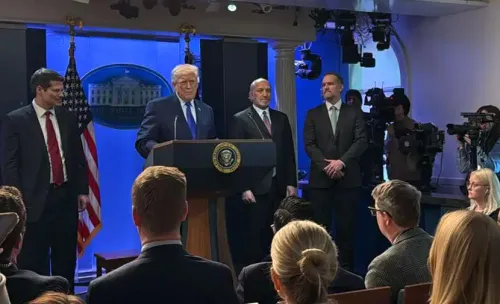
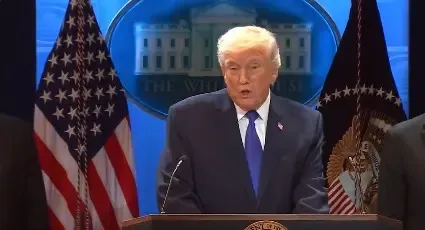
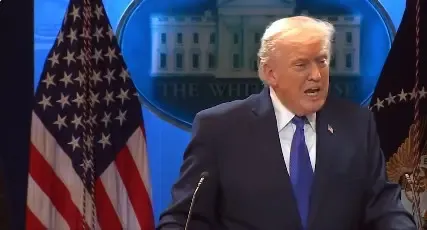
Trump imposed the new tariffs in February 2025 after the Supreme Court earlier struck down his previous tariff regime, which had been issued under the International Emergency Economic Powers Act (IEEPA). Following that ruling, Trump publicly lashed out at the justices from the White House briefing room, declaring: "We're going forward. We will be able to take in more money." He had described Section 122 — which permits temporary import surcharges of up to 15% for 150 days — as one of several "very powerful alternatives" at his disposal.
The latest ruling, however, found that his proclamation relied on current account deficits and a "large and serious trade deficit" rather than the narrower balance-of-payments standard Congress intended in 1974.
Who Brought the Case
The decision sided with two importers — spice company Burlap and Barrel and toy firm Basic Fun — as well as the State of Washington. Claims from several other Democratic-led states were dismissed for lack of legal standing. Judge Timothy Stanceu dissented, arguing the court should not second-guess the President's economic judgment or narrowly define how balance-of-payments deficits are measured.
Political and Legal Fallout
The ruling intensifies growing legal and political scrutiny of Trump's use of executive authority on trade. Critics — including some within the Republican Party — have long argued that Congress, not the White House, holds constitutional authority over tariffs. Senate Republican leader Mitch McConnell had previously stated that using emergency authorities "to circumvent Congress in the imposition of tariffs" was illegal.
What Happens Next
The ruling is widely expected to be appealed to the US Court of Appeals for the Federal Circuit and could ultimately return to the Supreme Court. With two consecutive tariff regimes now blocked by the judiciary, the administration faces mounting pressure to either seek congressional authorisation or devise a legally defensible trade framework.
Point of View
Not an anomaly. Trump's tariff agenda has been judicially rejected twice in rapid succession — first under IEEPA emergency powers, now under a 1974 balance-of-payments provision. Each defeat reveals the same structural problem: the administration is stretching statutory language written for narrow, specific crises to justify sweeping, open-ended economic policy. The courts are not blocking tariffs on principle; they are blocking the legal fiction that existing statutes authorise what Congress never actually granted. The real question is whether the White House will seek a congressional mandate — which would require genuine political negotiation — or continue searching for executive workarounds that courts keep closing off.
NationPress
9 May 2026
Frequently Asked Questions
Why did the US court strike down Trump's tariffs?
The US Court of International Trade ruled in a 2-1 decision that the Trump administration exceeded its authority under Section 122 of the Trade Act of 1974. The court found that the law was designed to address specific balance-of-payments crises linked to the 1970s monetary system, not the broad trade and current account deficits the administration cited to justify a 10% import surcharge.
What is Section 122 of the Trade Act of 1974?
Section 122 is a provision that allows the US President to impose temporary import surcharges of up to 15% for a period of 150 days to address balance-of-payments deficits. The court held that the Trump administration misapplied this provision by relying on modern trade deficits rather than the narrower balance-of-payments standard Congress intended in 1974.
Is this the first time Trump's tariffs have been blocked by a court?
No. This is the second major judicial defeat for Trump's tariff agenda in 2025. Earlier this year, the Supreme Court struck down his tariff regime issued under the International Emergency Economic Powers Act (IEEPA), after which Trump turned to Section 122 as an alternative legal basis.
Who challenged the tariffs in court?
The case was brought by importers Burlap and Barrel and toy company Basic Fun, along with the State of Washington. Claims from several other Democratic-led states were dismissed for lack of legal standing.
What happens next after this ruling?
The ruling is expected to be appealed to the US Court of Appeals for the Federal Circuit and could ultimately reach the Supreme Court. The administration faces mounting pressure to either seek formal congressional authorisation for its trade measures or find a new legal framework that withstands judicial scrutiny.