What is the significance of the 10% US tariffs under Section 122?
Synopsis
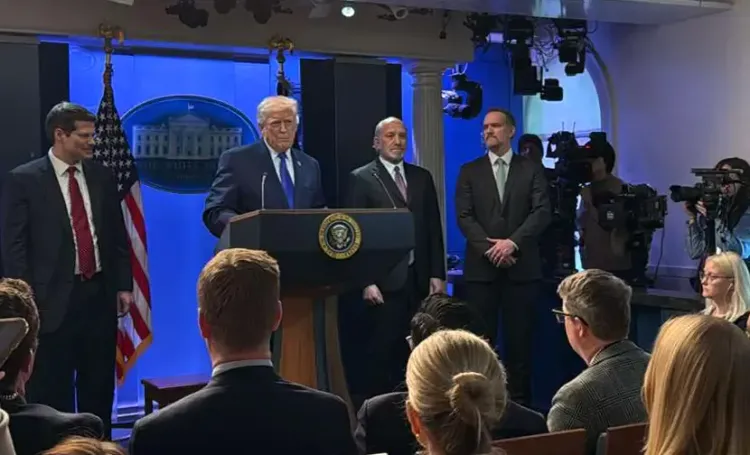
The recent activation of Section 122 by President Trump introduces a 10% tariff on imports, effective for 150 days, to address critical payment issues. This move follows a Supreme Court ruling and aims to stabilize the US economy amid significant challenges.
Key Takeaways
Temporary 10% tariff imposed for 150 days.
Exemptions for critical goods to support the US economy.
Section 122 allows rapid tariff imposition without investigations.
Potential for renewal if balance-of-payments issues persist.
Focus on addressing significant international payment challenges.
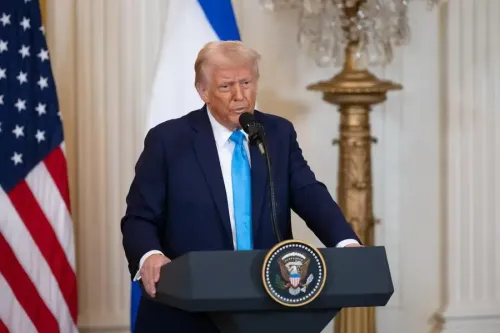
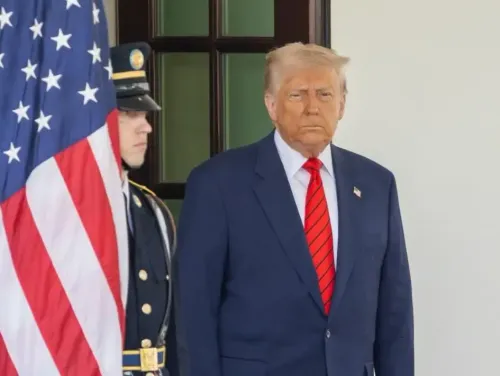
New Delhi, Feb 21 (NationPress) Following the recent decision by the US Supreme Court to overturn reciprocal tariffs from the Donald Trump era, the White House has issued a Fact Sheet detailing Trump's decision to activate his powers under “Section 122 of the Trade Act of 1974”. This section grants the President the ability to tackle specific “fundamental international payment problems” via surcharges and other unique import restrictions.
The Proclamation introduces a temporary 10 percent “ad valorem import duty on goods entering the United States, effective February 24 at 12:01 a.m. Eastern Standard Time, and lasting for 150 days.
It’s important to note that certain items will be exempt from this temporary import duty in consideration of the US economy's needs, as well as to ensure that the duty effectively addresses the significant international payments issues currently faced by the nation.
Exempted categories include critical minerals, currency-related metals, energy resources and products, natural resources and fertilizers, specific agricultural items, pharmaceuticals and their components, certain electronics, and passenger vehicles, among others.
Additionally, the President has instructed the Office of the United States Trade Representative to leverage its section 301 authority to probe into unreasonable and discriminatory practices that could hinder American commerce.
The White House stated, “The United States is encountering serious international payment challenges, particularly a significant balance-of-payments deficit. Due to the decline in domestic production, the country relies heavily on imports for consumption, resulting in substantial outflows of US dollars from our economy.”
Tariffs enacted under Section 122 will automatically expire after 150 days unless Congress votes for an extension. Although there’s a clear timeline, experts suggest that the President could allow these tariffs to expire and potentially reintroduce them by declaring a new balance-of-payments emergency.
Unlike many other trade laws, Section 122 does not necessitate a formal investigation prior to the imposition of tariffs, enabling swift action, as reported.
President Trump has also indicated that other trade regulations are still under consideration, emphasizing that the Supreme Court’s ruling targeted a specific legal method rather than the tariffs themselves.
Point of View
The recent activation of Section 122 by President Trump represents a critical response to ongoing economic challenges. While the temporary tariffs may provide immediate relief, their long-term implications on international trade and domestic production merit careful scrutiny. The balance between protectionism and global engagement remains a significant concern for the nation.
NationPress
13 Oct 2026
Frequently Asked Questions
What does Section 122 of the Trade Act of 1974 entail?
Section 122 empowers the President to impose surcharges and special restrictions to address fundamental international payment problems.
How long will the 10% tariff be in effect?
The 10% tariff on imports will be effective for 150 days unless Congress votes to extend it.
Which goods are exempt from the new tariffs?
Exempt goods include critical minerals, energy products, pharmaceuticals, and certain electronics, among others.
Can tariffs under Section 122 be renewed?
Yes, they can be renewed if the President declares a new balance-of-payments emergency.
What are the potential impacts of these tariffs?
The tariffs aim to address international payment deficits but may also affect domestic prices and international relations.