Did Trump Really Impose a 25% Tariff on Certain Semiconductor Imports?
Synopsis
In a bold move, President Trump signed two significant trade actions targeting critical minerals and semiconductors. This decision, aimed at securing US supply chains, introduces a hefty 25% tariff on specific semiconductor imports, promising to bolster national revenue and security. What does this mean for the economy and international trade?
Key Takeaways
Trump's new tariffs on semiconductors are set at 25%.
The actions are aimed at securing critical minerals and semiconductors.
Tariffs are intended to generate revenue for the US.
Legal challenges to tariff authority are pending in the Supreme Court.
The move is part of Trump's strategy to bolster national security.
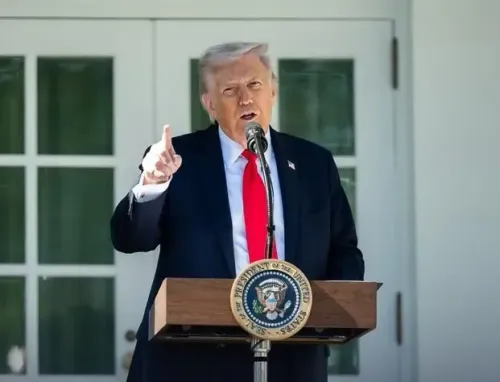
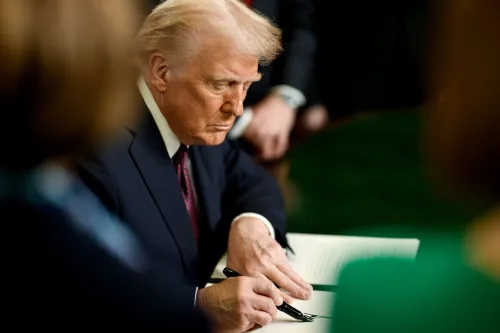
Washington, Jan 15 (NationPress) US President Donald Trump has announced that he has enacted two new trade measures under Section 232. These actions are aimed at critical minerals and the importation of semiconductors.
According to White House Staff Secretary Will Scharf, the first measure is a response to a trade investigation concerning critical minerals. This initiative is intended to establish a process for safeguarding US supply chains related to critical minerals and associated products.
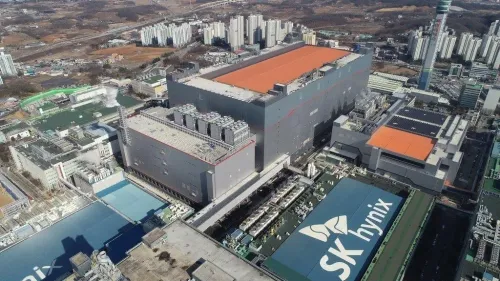
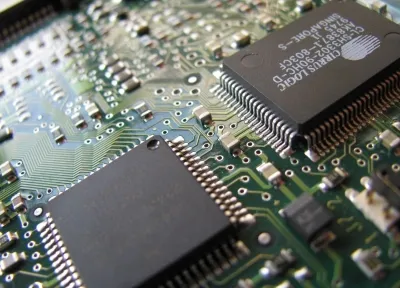
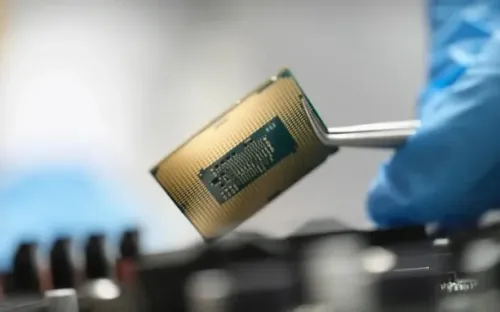
The second measure zeroes in on semiconductors. Scharf explained that this sets forth a two-stage process, with the initial phase imposing a 25% tariff on specific imported semiconductors.
This tariff will be applied to chips brought into the United States that are not utilized domestically for the development of artificial intelligence or computing systems.
Moreover, semiconductors that are transported through the US to other nations will also incur this tariff.
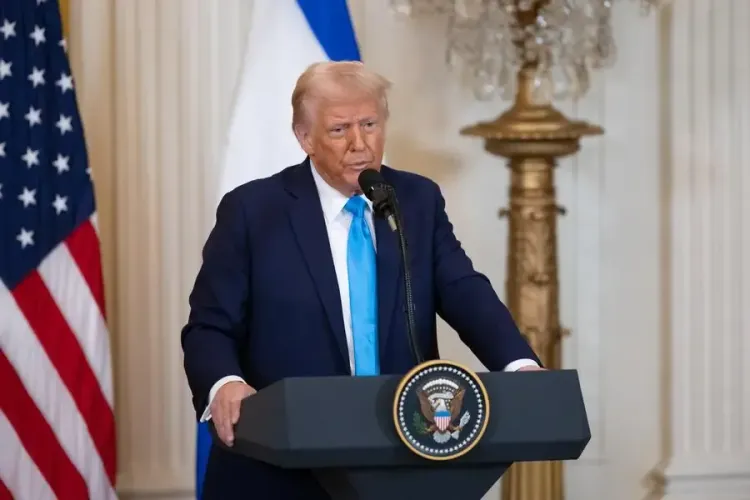
Trump stated that this initiative will generate revenue for the United States, indicating that foreign buyers are eager for these chips and that the US would retain 25% of their value. He characterized these chips as “very good,” albeit not the most cutting-edge.
The president remarked that tariffs have successfully brought in hundreds of billions of dollars to the country and bolstered national security.
When questioned about a legal challenge to his tariff authority currently pending before the Supreme Court, Trump expressed disbelief that such a case exists. He labeled it an attempt by “very China-centric individuals” who do not wish for the United States to thrive.
Trump asserted that tariffs have contributed to diminishing trade imbalances and attracting investment. He mentioned that the US has witnessed $18 trillion in investment commitments since his return to office.
Furthermore, he claimed that tariffs have played a role in reducing inflation and enhancing productivity. He noted that they have been leveraged in foreign policy and trade discussions.
Pointing to recent manufacturing developments, he cited the expansion of auto plants and new investments from major car manufacturers as proof of these measures' efficacy.
Trump emphasized that tariffs have also positioned the US favorably against China, stating, “We’re performing excellently against China.”
He expressed that a ruling against his tariff authority would be “very disappointing” and did not specify how the administration would respond if the court restricts his powers.
In closing, the president referred to the United States as “the hottest country anywhere in the world,” contrasting it with what he described as economic frailty prior to his return to office.
Point of View
While the imposition of tariffs can stimulate domestic production and secure supply chains, it may also escalate tensions with trading partners and impact prices for consumers. The balance between protecting national interests and fostering international trade remains critical as these measures unfold.
NationPress
23 Sept 2026
Frequently Asked Questions
What is the purpose of the new tariff on semiconductors?
The tariff aims to secure US supply chains and generate revenue by imposing a 25% levy on specific imported semiconductors not used for domestic AI or computing systems.
How will this tariff affect the semiconductor market?
The tariff may increase costs for semiconductor imports, potentially leading to higher prices for consumers and affecting the broader tech industry.
What has Trump said about the impact of tariffs on the US economy?
Trump claims that tariffs have brought in hundreds of billions of dollars, reduced trade imbalances, and attracted significant investment to the US.
Is there a legal challenge to Trump's tariff authority?
Yes, there is an ongoing legal challenge in the Supreme Court regarding Trump's authority to impose these tariffs.
What are the potential long-term effects of these tariffs?
Long-term effects may include shifts in manufacturing locations, changes in supply chain strategies, and possible retaliation from trading partners.