Will the US Pursue 'Separate' Tariff Agreements for Semiconductors?
Synopsis
In a bold move, the U.S. plans to establish separate semiconductor tariff agreements with various countries, following a recent deal with Taiwan. This could reshape the dynamics of international semiconductor trade. What implications will this have for global chip manufacturers? Dive into the details of this developing story.
Key Takeaways
U.S. seeks individual semiconductor tariff agreements Deal with Taiwan may influence future negotiations Impact on South Korean chip manufacturers is seen as limited Tariffs aimed at protecting national security Potential shifts in global semiconductor supply chains
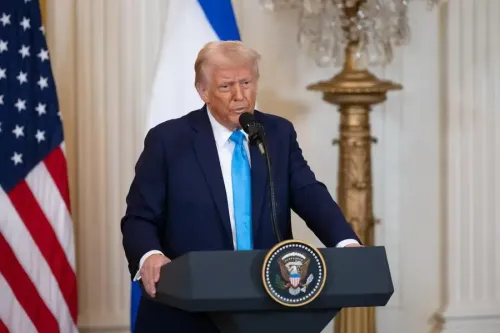
Washington, Jan 17 (NationPress) The administration of U.S. President Donald Trump plans to negotiate distinct semiconductor tariff agreements for individual nations, as stated by a U.S. official, following a recent accord on chip levies between the United States and Taiwan this week.
"Distinct agreements for individual nations," the U.S. official remarked in response to a query from Yonhap News Agency about whether the Taiwan deal would establish a benchmark for chip tariffs or whether the U.S. would engage in separate discussions with other countries regarding sectoral tariffs.
This statement came the day after the U.S. Commerce Department published a fact sheet detailing a trade and investment arrangement between the United States and Taiwan, which highlighted a bilateral agreement concerning semiconductor tariffs.
Per the fact sheet, Taiwanese firms that construct new semiconductor facilities in the U.S. can import up to 2.5 times the anticipated capacity without incurring sectoral duties during the sanctioned construction phase.
Moreover, Taiwanese businesses that have finalized new chip production initiatives in the U.S. will still be permitted to import 1.5 times their new U.S. output capacity without having to pay sectoral duties.
The agreement regarding chip tariffs has sparked inquiries on whether it will create a standard for chipmakers from other nations, including South Korea.
On Wednesday, Trump enacted a proclamation imposing a 25 percent tariff on certain semiconductors used for artificial intelligence (AI), which are imported into the U.S. and subsequently re-exported to other nations.
The White House has also indicated that Trump may introduce more extensive tariffs on semiconductor imports and their derivative products.
The president has implemented various industry-wide tariffs, utilizing Section 232 of the Trade Expansion Act of 1962, a statute that grants the president authority to modify imports into the U.S. when he deems them a threat to national security.
The top trade envoy from South Korea evaluated the Trump administration's proclamation on semiconductor tariffs as having a limited impact on local chip manufacturers.
Trade Minister Yeo Han-koo made this assessment upon returning home from a six-day visit to the U.S., amidst Washington's concerns regarding a recent amendment to a South Korean law aimed at combating false and fabricated online information.
"The initial measure announced is focused on advanced chips from NVIDIA and AMD, and excludes memory chips, which are vital export products of local companies," Yeo informed reporters at Incheon International Airport.
Point of View
It's essential to observe how the U.S. administration's approach to semiconductor tariffs could impact both domestic manufacturers and international trade relations. The pursuit of separate agreements may provide leverage but could also lead to complexities in trade negotiations. Our focus remains on how these developments align with national interests and stability in the tech sector.
NationPress
19 Sept 2026
Frequently Asked Questions
What is the significance of the U.S. seeking separate semiconductor tariff agreements?
The U.S. aiming for separate semiconductor tariff agreements indicates a tailored approach to trade, potentially allowing for more favorable terms with individual countries. This strategy could influence global semiconductor supply chains and pricing.
How does the agreement with Taiwan impact other countries?
The agreement with Taiwan may set a precedent for future negotiations with other nations but is not a definitive standard. Each country will likely have unique terms based on their trade relationships with the U.S.
What are the potential consequences for South Korean chip manufacturers?
South Korean chip manufacturers may face a 'limited' impact from the new tariffs, as noted by Trade Minister Yeo Han-koo, particularly since the focus is on advanced chips and excludes memory chips, which are critical to their exports.
What prompted the U.S. to impose tariffs on semiconductors?
The U.S. imposed tariffs on semiconductors to protect national security interests, invoking Section 232 of the Trade Expansion Act, which allows for adjustments in imports deemed threatening to national security.
What does the future hold for global semiconductor trade?
The future of global semiconductor trade may be characterized by more individualized agreements and evolving tariffs, which could lead to strategic shifts in how countries engage in the semiconductor market.