Taiwan Urged to Enhance 'Self-Deterrence' Against Chinese Aggression
Synopsis
A report highlights the urgent need for Taiwan to adopt 'self-deterrence' strategies to counteract the persistent threats posed by the Chinese Communist Party. This involves developing capabilities that raise the costs of aggression against its democracy.
Key Takeaways
Self-deterrence is crucial for Taiwan's security against the CCP.
Democracy alone does not guarantee safety; credible deterrence is essential.
Investment in mobile missile systems can raise the costs of aggression.
Civil defense training enhances citizen resilience.
Geographical features make invasion complex and challenging.
Washington, April 4 (NationPress) Taiwan is confronted with a significant challenge in safeguarding its democratic lifestyle against ongoing threats from the Chinese Communist Party (CCP). The solution lies in "self-deterrence"—the development of capabilities that increase the costs of aggression, making any attempt at domination financially burdensome for Beijing, according to a report.
An article featured in the US-based Journal of Democracy emphasizes that this approach is not about militarism or provocation, but rather about survival and the affirmation that Taiwan’s democracy is not just a moral standpoint, but a tangible political reality.
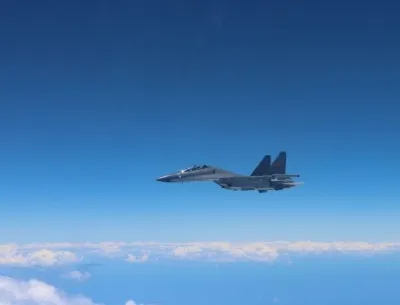
“The threats posed by the CCP are not abstract. They are evident through daily military intimidation, cyber intrusions, and disinformation efforts. Chinese military aircraft have increasingly crossed the median line of the Taiwan Strait, undermining the previously stable boundaries in the region. Cyber attacks are directed at government systems, while coordinated misinformation aims to erode public confidence in institutions,” the report elaborated.
“Beijing’s strategy is transparent: to normalize intimidation, weaken morale, and persuade both Taiwanese citizens and the international community that Taiwan's destiny is predetermined. The CCP's political narrative claims that Taiwan is a 'domestic concern', effectively blocking international mediation and framing any foreign assistance as interference. In this context, Taiwan cannot depend solely on sympathy or external assurances; it must establish its own deterrent capabilities,” it further stated.
The report underscored that while Taiwan's democratic achievements are noteworthy, democracy by itself does not guarantee security. Historical evidence suggests that democracies can fall prey to external aggression in the absence of credible deterrence.
The conclusion is unmistakable: “Legitimacy and vitality do not prevent conquest unless they are supported by the ability to resist.”
Focusing on Taiwan's geography and societal factors as advantageous for asymmetric defense, the report highlighted that the island's mountainous landscapes, densely populated urban areas, and narrow waterways render any invasion exceedingly challenging.
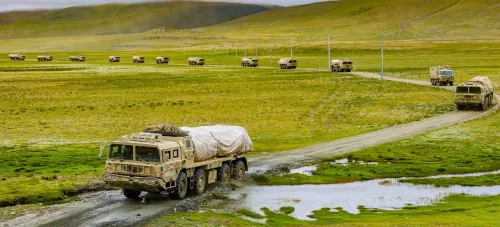
Through investments in mobile missile systems, reinforced infrastructure, and decentralized command frameworks, Taiwan can significantly raise the costs associated with military operations.
“The principle is straightforward: Taiwan cannot engage China’s military power on equal terms. However, it can leverage asymmetry. Compact, mobile, and resilient systems can endure initial assaults and continue to impose costs. Civil defense training can prepare citizens to resist occupation, complicating Beijing’s calculations. The objective is not to defeat China outright but to make aggression an unwise gamble,” it asserted.
Expressing unease regarding the escalating Chinese threat, the report concluded, “Taiwan’s struggle transcends mere survival; it embodies the universal principles of self-determination and freedom. By fostering self-deterrence, Taiwan asserts that democracy is a value worth defending—not only through ideals but through resilience.”
Point of View
It is imperative to recognize the significant implications of Taiwan's security landscape. The necessity for 'self-deterrence' not only speaks to Taiwan's resilience but also underscores the broader context of democratic values in the face of authoritarian threats. This situation demands a robust response that prioritizes national integrity and regional stability.
NationPress
6 Oct 2026
Frequently Asked Questions
What is 'self-deterrence'?
'Self-deterrence' refers to a strategy where a nation develops its capabilities to increase the costs of aggression from adversaries, making hostile actions less appealing.
Why is Taiwan focusing on self-deterrence?
Taiwan is focusing on self-deterrence to protect its democracy from the ongoing threats posed by the Chinese Communist Party, which includes military intimidation and disinformation campaigns.
How does Taiwan plan to implement self-deterrence?
Taiwan plans to implement self-deterrence by investing in mobile missile systems, strengthening infrastructure, and enhancing civil defense training for its citizens.
What are the main threats from the Chinese Communist Party?
The main threats include military intimidation, cyberattacks, and disinformation campaigns aimed at undermining Taiwan's democratic institutions.
What is the significance of Taiwan's geographical features?
Taiwan's mountainous terrain, dense urban centers, and narrow straits present significant challenges for any potential invasion, making asymmetric defense strategies more viable.