Are Concerns Rising Over China’s Military Exercises Near Taiwan Following US Arms Deal?
Synopsis
As military tensions escalate in the Pacific, the U.S.'s arms sale to Taiwan has drawn sharp reactions from China. Beijing's largest wargames in recent years, alongside Taiwan's military readiness drills, heighten concerns of a potential conflict. Will these developments reshape the geopolitical landscape of East Asia?
Key Takeaways
China's military drills around Taiwan signify escalating tensions.
The U.S. arms sale to Taiwan marks a historic commitment to its defense.
Taiwan's strategic location is vital for global trade .
Beijing views Taiwan’s independence as a major challenge to its sovereignty.
Regional players are increasingly involved in the conflict.
New Delhi, December 30 (NationPress) As China intensifies its military exercises near Taiwan following the United States' endorsement of an unprecedented arms package to Taipei valued at $11.1 billion, the focus on this segment of the Pacific has sparked international alarm and scrutiny.
In a recent commentary, China’s state-run People’s Daily criticized Washington’s arms transactions with Taiwan as serving primarily as a "cash machine" for American defense contractors, cautioning that it will not provide a "protective shield for the island".
The US has vested interests in Taiwan due to its position as a global leader in semiconductor production and its strategic geographic importance.
Located at the heart of Asia – with South Korea to the north, Japan to the northeast, and the Philippines to the south, Taiwan is crucial as numerous shipping routes traverse this area.
The National Security Strategy (NSS) of the United States highlights that one-third of global shipping navigates through the South China Sea, underlining its significant implications for the US economy.
"Thus, preventing a conflict over Taiwan, ideally by maintaining military superiority, is vital. We will also uphold our enduring declaratory stance on Taiwan, affirming that the United States opposes any unilateral changes to the status quo in the Taiwan Strait," the document stated, released earlier this month.
The People’s Daily reiterated Beijing’s position, noting that the arms sales package from Washington has led Taiwan's President Lai Ching-te to plan extensive military expenditures on US arms over the next eight years. This has revealed the collusion between the U.S. and the DPP to undermine the interests of the Taiwanese populace.
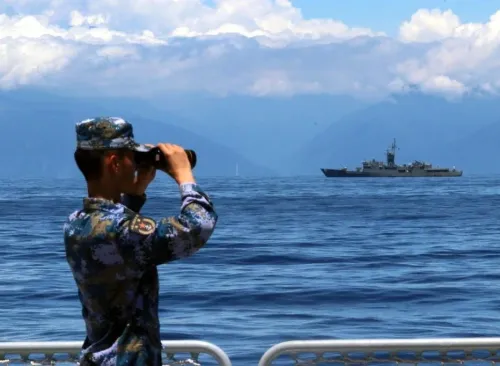
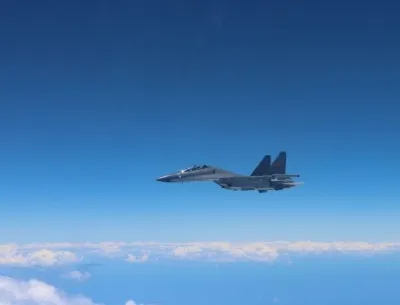
Describing the Chinese People's Liberation Army’s (PLA) series of maneuvers around Taiwan, dubbed "Justice Mission 2025", the commentary outlined the deployment of ground, aerial, naval, and rocket forces to deter "Taiwan independence" movements and external interventions.
The article emphasized: "This conveys a clear message that Beijing remains poised to thwart any secession attempts aimed at detaching Taiwan from the motherland. Each act of provocation will encounter stronger counteractions. The PLA is prepared to engage at any given time and is confident of victory when confronted with conflict."
The international community is increasingly concerned as tensions in the region escalate to unprecedented levels.
China perceives Taiwan as a "core national interest" intertwined with its national rejuvenation, while the US regards Taipei as a vital ally in promoting democracy, security, and global trade.
Beijing's "Justice Mission 2025", initiated on Monday, represents its most significant military exercises in recent history, simulating a blockade of Taiwan’s ports and conducting various offensive and defensive drills.
Taiwan's military has also undertaken readiness exercises, alerting that China may seek to take control of the island by 2027.
While these military drills threaten to disrupt maritime and aerial traffic, they simultaneously raise fears of broader conflict throughout East Asia.
Beijing views Taiwan as part of its sovereign territory, with reunification deemed crucial for the "great rejuvenation of the Chinese nation" by 2049.
Taiwan’s pursuit of independence is seen as a direct challenge to China’s authority. The island is strategically located at the heart of the "First Island Chain", which is vital for the world’s leading economies to access the Pacific. This chain consists of a series of Pacific islands stretching from the Kamchatka Peninsula, through Japan, the Ryukyu Islands, Taiwan, the northern Philippines, and down to Borneo and the Malay Peninsula. It serves both as a natural barrier and a base for projecting power, reinforcing Washington’s alliances while containing Beijing’s influence in the Western Pacific.
This perspective was also echoed in the US NSS, which noted that this chain "provides direct access to the Second Island Chain and divides Northeast and Southeast Asia into two distinct regions".
In the meantime, regional stakeholders like Japan and the Philippines have become embroiled in the conflict, with Japan's Prime Minister Sanae Takaichi asserting that any aggression towards Taiwan could lead to military involvement from Tokyo, while naval vessels from Manila have been reported in the vicinity.
Point of View
We recognize the complexities of the situation surrounding Taiwan and the broader implications for international relations. The ongoing military exercises by China and the U.S.'s arms sales to Taiwan present a critical juncture that requires careful monitoring and diplomatic efforts to avoid potential conflict.
NationPress
22 Sept 2026
Frequently Asked Questions
What is the significance of the U.S. arms sale to Taiwan?
The U.S. arms sale to Taiwan, valued at $11.1 billion, is significant as it enhances Taiwan's defense capabilities amidst rising military threats from China and reflects the U.S.'s commitment to supporting Taiwan's security.
What are China's military drills around Taiwan?
China's military drills, dubbed 'Justice Mission 2025', are designed to demonstrate military readiness and deter any moves towards Taiwanese independence, simulating a blockade and conducting various offensive and defensive operations.
How does Taiwan's location impact global trade?
Taiwan's strategic location at the crossroads of Asia makes it a critical point for global shipping routes, with one-third of global shipping passing through the South China Sea, affecting economic stability in the region.
What is the U.S.'s stance on Taiwan's independence?
The U.S. maintains a policy against any unilateral changes to the status quo in the Taiwan Strait and emphasizes the importance of deterring conflict while supporting Taiwan's self-defense capabilities.
What implications do the rising tensions have for East Asia?
The rising tensions between China and Taiwan could lead to increased military presence and potential conflicts in East Asia, impacting regional stability and international relations among major powers.