Why is the US Urging Restraint Amid China’s Military Drills Near Taiwan?
Synopsis
The United States has raised alarms regarding China’s largest military exercises near Taiwan, highlighting concerns over escalating tensions that could destabilize the region. As Beijing conducts extensive drills, the US calls for restraint and dialogue, emphasizing the importance of peace across the Taiwan Strait.
Key Takeaways
US expresses concern over China's military exercises around Taiwan.
Calls for restraint and meaningful dialogue from China.
Heightened military activities raise risks of miscalculation in the region.
International community voiced unease over rising tensions.
The Taiwan Strait is crucial for global trade and security .
Washington, January 2 (NationPress) The United States has expressed serious concern regarding China's unprecedented military maneuvers near Taiwan, indicating that Beijing's actions and rhetoric pose risks of escalating tensions in the region and jeopardizing stability in the Taiwan Strait.
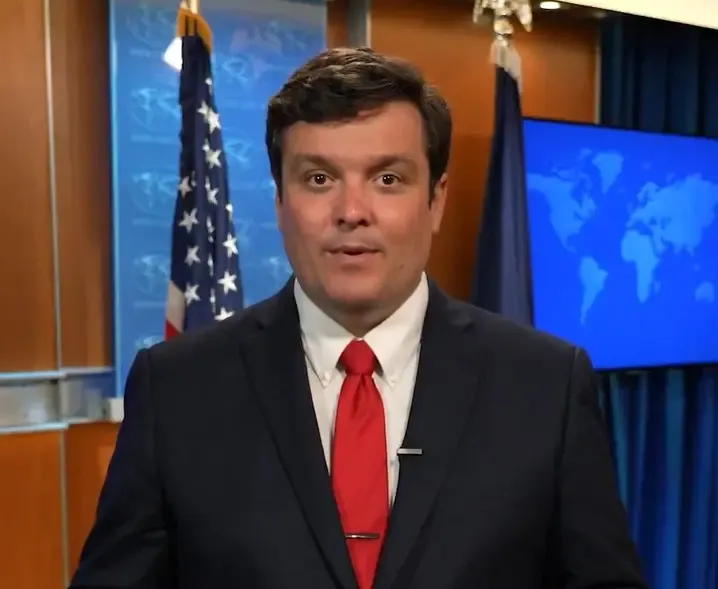
In response to the reports of these extensive drills, US State Department Principal Deputy Spokesperson Tommy Pigott emphasized that China should reduce military pressure and seek diplomatic channels for communication.
“China's military actions and rhetoric directed towards Taiwan and other regional entities heighten tensions without necessity,” Pigott stated in a release dated January 1. “We call on Beijing to show restraint, halt military pressure on Taiwan, and instead, engage in constructive dialogue.”
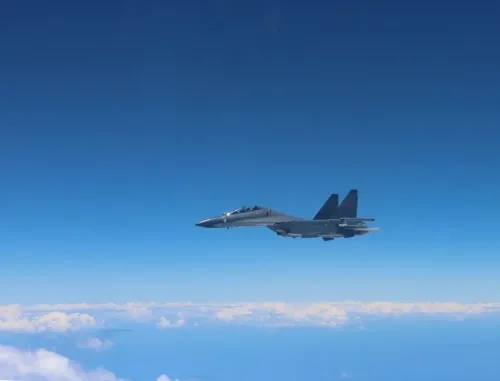
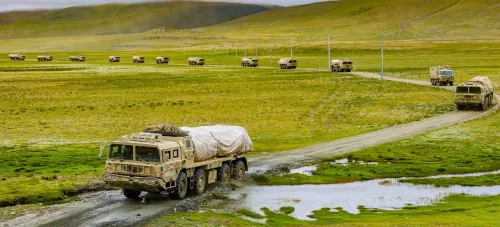
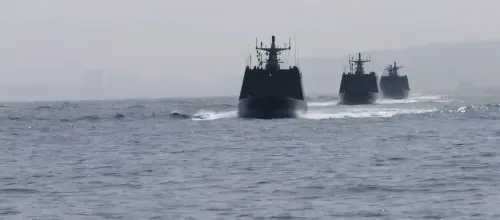
This statement follows China's completion of “Justice Mission 2025,” a large-scale military exercise held from December 29 to 31, which involved coordinated operations by the People’s Liberation Army’s army, navy, air force, and rocket forces. The drills aimed to evaluate joint combat capabilities in a simulated blockade scenario around Taiwan, which included strategies focused on sealing crucial ports, executing precision strikes, and disrupting supply routes.
During the exercise, Taiwanese authorities reported detecting 77 Chinese military aircraft and 17 naval vessels. In response, Taiwan scrambled fighter jets and implemented defensive measures, which included deploying barriers like explosive barrels at river mouths as part of their readiness.
The scale and timing of these drills have raised alarms among several US allies and partners. Governments and organizations from the European Union, the United Kingdom, Japan, and Australia have voiced their concerns regarding the increasing military pressure in the Taiwan Strait, warning that such actions heighten the risk of miscalculations.
Beijing characterized these exercises as a warning to what it labels as separatist forces and connected them to recent developments in US-Taiwan defense relations, including an $11.1 billion arms sale to Taipei from the US. Chinese officials have consistently framed military activity around Taiwan as a response to external interference.
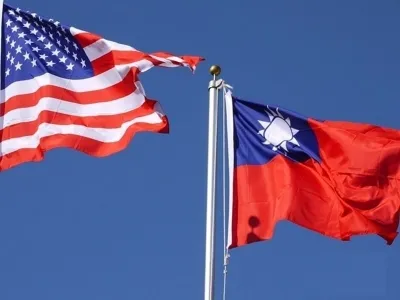
Reiterating Washington's stance, Pigott stated, “The United States advocates for peace and stability across the Taiwan Strait and opposes any unilateral changes to the status quo, whether through force or coercion.”
US officials have continually emphasized that stability in the Taiwan Strait holds global importance due to its critical role in international trade, supply chains, and regional security. These latest drills, marked as the largest of their kind, have intensified scrutiny of China's military posture towards Taiwan.
Chinese President Xi Jinping, in his New Year’s address, reaffirmed the objective of reunification with Taiwan, a message coinciding with the conclusion of the military exercises. Taiwan’s government has consistently rejected Beijing's sovereignty claims, asserting that the island’s future can only be determined by its own populace.
Since 1949, Taiwan has been governed independently of mainland China, establishing its own democratic political system, military, and economy. Beijing views Taiwan as a renegade province and has repeatedly asserted its ambition to integrate it with the mainland.
A recent report by the independent Congressional Research Service highlighted that tensions stemming from China's military activities in the Indo-Pacific extend beyond the Taiwan Strait and form part of a broader pattern of coercion and pressure in disputed maritime regions.
The report indicates that US officials have long advocated for resolving disputes in the region without coercion, adhering to international law while ensuring freedom of navigation and overflight.
The CRS report further emphasizes that while the United States acknowledges the People’s Republic of China as the sole legitimate government of China, it maintains long-standing policy frameworks aimed at supporting peace and stability in the Taiwan Strait and opposing the use of force to alter existing arrangements. These policies, the report notes, have shaped US engagement in the region for decades and remain pivotal to Washington’s approach amid escalating regional tensions.
Point of View
It's crucial to approach the situation with a balanced perspective. While the military drills conducted by China are undoubtedly concerning, it's imperative to highlight the importance of dialogue and diplomatic engagement. The stability of the Taiwan Strait is not just a regional issue but one that resonates globally, impacting international trade and security. We must advocate for peaceful resolutions and uphold the principles of international law.
NationPress
24 Sept 2026
Frequently Asked Questions
What were the objectives of China's military drills near Taiwan?
The drills aimed to test joint combat capabilities and simulate a blockade around Taiwan, including precision strikes and disruptions of supply routes.
How did Taiwan respond to the Chinese military exercises?
Taiwan scrambled fighter jets and implemented defensive measures, including deploying barriers like explosive barrels at river mouths.
What is the US stance on the situation in the Taiwan Strait?
The US supports peace and stability in the Taiwan Strait and opposes unilateral changes to the status quo through force or coercion.
What has been the international reaction to China's military activities?
Governments from the EU, UK, Japan, and Australia have expressed concern over rising military pressure in the Taiwan Strait, warning of increased risks of miscalculation.
What is the significance of the Taiwan Strait in global trade?
The Taiwan Strait is a vital passage for international trade, and stability in the region is essential for maintaining global supply chains and security.