India and Sri Lanka's Partnership: A Blueprint to Elevate Northern Province to a High-Growth Frontier

Synopsis
A new report advocates for India and Sri Lanka to collaborate in transforming Sri Lanka's Northern Province into a high-growth hub, emphasizing regulatory reforms and strategic investments. Discover how this initiative could reshape the region's economic landscape.
Key Takeaways
Collaboration between India and Sri Lanka is crucial for economic transformation.
Establishment of a 'Northern Single-Window Authority' to streamline regulations.
Implementation of Indian Rupee (INR) for direct trade to reduce volatility.
Incentives like preferential visas and tax holidays to attract investment.
Specialized Export Processing Zones (EPZs) proposed for regional integration.
New Delhi, March 4 (NationPress) The collaboration between the governments of India and Sri Lanka is essential for transforming Sri Lanka’s Northern Province into a thriving "Frontier Province" by implementing a tailored fast regulatory framework, according to a report released on Wednesday.
A publication from the Daily FT proposed the establishment of a 'Northern Single-Window Authority' with the authority to issue licenses, work permits, and environmental approvals within a month. Additionally, it suggested offering 5-to-10-year preferential visas for Indian tech professionals.
The report further advocated for the formal adoption of the Indian Rupee (INR) for direct trade settlements within the Northern Provincial Economic Zones to mitigate exchange rate fluctuations affecting MSMEs.
“This initiative mirrors the successful high-growth, industry-centric models found in Southern Indian states, leveraging India’s financial resources and markets to make the North a lasting conduit for mutual prosperity,” stated the Sri Lanka-based media outlet.
It encouraged Sri Lanka to capitalize on its geographical closeness to the trillion-dollar economy of Southern India by integrating directly into global value chains via specialized maritime and digital infrastructures.
The report also called on authorities to provide 10-year corporate income tax holidays along with complete exemptions from Customs Import Duty (CID), Value Added Tax (VAT), and the Ports and Airports Development Levy (PAL) for all machinery and construction materials imported during the project's development.
Moreover, it recommended that Sri Lanka emulate South India by establishing specialized Export Processing Zones (EPZs) in Jaffna and Mannar, which would be linked to the supply chains of Chennai and Coimbatore.
In a separate recent analysis, experts noted that the only way for Sri Lanka to successfully enter the AI arena is by joining forces with India.
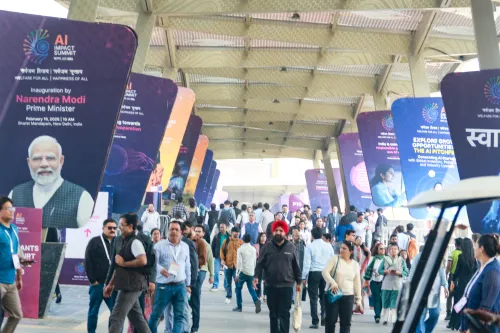
Sri Lanka’s President Anura Kumara Dissanayake emphasized during the AI Summit that nations lagging in AI development might experience heightened vulnerabilities since this emerging trend poses risks to shared goals of inclusive, equitable, and sustainable progress.
Point of View
The proposed collaboration between India and Sri Lanka represents a significant opportunity for mutual economic benefit. By leveraging India's robust markets and financial resources, both countries can foster growth and stability in the Northern Province, enhancing bilateral relations.
NationPress
25 Oct 2026
Frequently Asked Questions
What is the proposed regulatory framework for Sri Lanka's Northern Province?
The report suggests establishing a 'Northern Single-Window Authority' to streamline the process of issuing licenses, work permits, and environmental clearances within 30 days.
How will the Indian Rupee be utilized in trade?
The proposal includes formalizing the use of the Indian Rupee (INR) for direct trade settlements to reduce exchange rate volatility affecting MSMEs.
What incentives are being proposed for Indian tech professionals?
The report calls for offering 5-to-10-year preferential visas for Indian tech professionals to facilitate their involvement in the region.
What tax benefits are being suggested for businesses?
The report advocates for 10-year corporate income tax holidays and exemptions from various import duties and taxes for machinery and construction materials.
Why is collaboration with India crucial for Sri Lanka's AI development?
Experts believe that partnering with India is essential for Sri Lanka to effectively join the AI race and mitigate vulnerabilities associated with technological lag.