Trump Addresses Mount Rushmore on Eve of America's 250th Anniversary
Synopsis
President Trump addressed the nation at Mount Rushmore on July 3, 2026, the eve of America's 250th independence anniversary, celebrating American exceptionalism, warning of a communist threat, and calling for legislative action ahead of the 2026 midterms.
Key Takeaways
President Trump delivered remarks at Mount Rushmore on July 3, 2026 , the eve of the 250th anniversary of American independence.
Trump called America 'the oldest republic on Earth' and 'the most successful, most accomplished, most exceptional nation ever to exist in human history.' He described communism as the greatest threat to the United States, greater than World War I , World War II , Pearl Harbor , or 9/11 , and claimed it killed ' 100 million people ' in the last century.
Trump called for ending the Senate filibuster and passing the 'Save America Act,' claiming it would prevent Republican electoral losses for ' 100 years .' He cited unverified figures of ' $19.2 trillion ' in investments entering the U.S. over 12 months , attributing them to tariff policy.
The address previewed themes likely to dominate the 2026 midterm election cycle, including immigration, cultural identity, and economic nationalism.
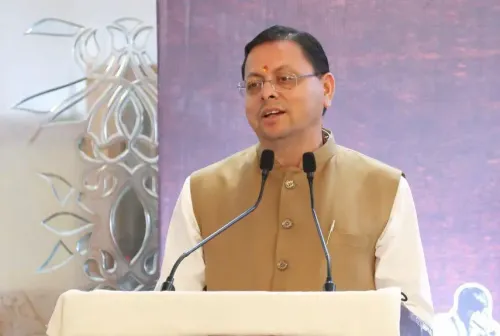
President Donald J. Trump delivered a sweeping address at Mount Rushmore, South Dakota, on the eve of America's 250th anniversary of independence, on July 3, 2026, celebrating American exceptionalism while issuing a sharp warning against what he called a resurgence of communism within the United States.
Context
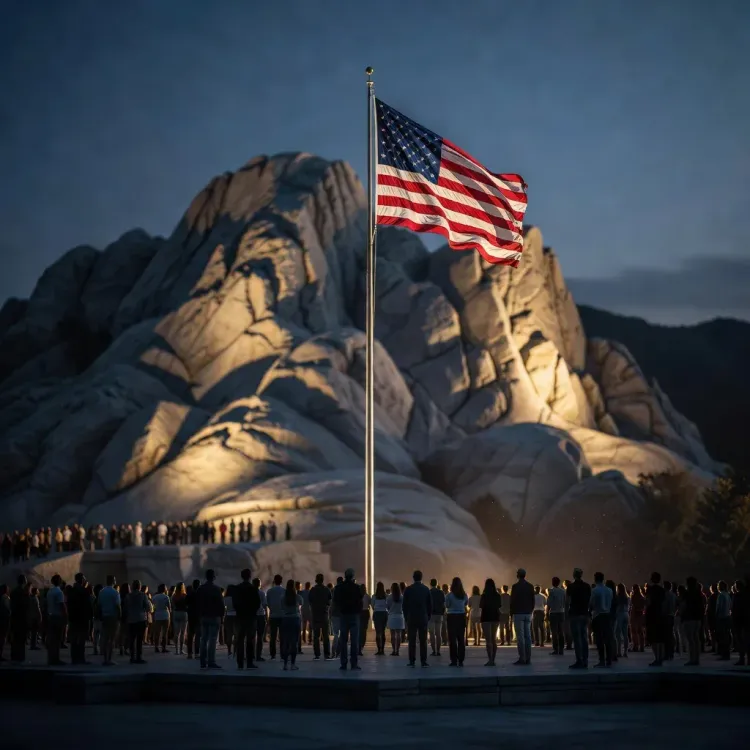
Speaking beneath the carved faces of George Washington, Thomas Jefferson, Abraham Lincoln, and Theodore Roosevelt, Trump framed the semiquincentennial as a moment of both celebration and resolve. 'At 250 years, America is the oldest republic on Earth,' he declared, calling the birth and survival of the American nation 'quite simply the best and most incredible thing ever to happen on this planet by human hands.' The address marked his second major speech at the monument, following a similar appearance in July 2020 during his first term, when he defended national monuments against what he described as radical cultural movements.
The setting — the Black Hills of the Dakotas — lent symbolic weight to remarks that wove together national pride, civilisational history, and electoral politics. Trump saluted the four presidents on the mountain as 'men of action, men of ambition, men of daring, men of destiny,' crediting them with declaring, winning, saving, and securing American freedom respectively.
Policy Backdrop
A significant portion of the address was devoted to what Trump characterised as a 'communist menace' threatening American liberty. 'Communism is a mortal threat to American liberty. It is the greatest threat to our country, including World War I, World War II, Pearl Harbor, or even 9-11,' he said, adding that the ideology 'killed 100 million people just in the last century alone.' He drew a sharp binary: 'You can be loyal to Karl Marx or you can be loyal to America. You can be a communist or you can be a patriot. You cannot be both.'
Trump also touched on legislative ambitions, calling for the termination of the Senate filibuster and the passage of what he referred to as the 'Save America Act,' claiming it would secure electoral dominance for his party for '100 years.' These claims fall outside independently verifiable territory and were presented as part of his political argument rather than enacted policy.
On the economy, he cited figures that are unverified from available data, claiming '$19.2 trillion' in investment flowing into the United States over 12 months, attributing it to his administration's tariff policies and the November election result. He also referenced new automobile and manufacturing plants being built 'at a number we've never, ever seen before.'
Stakeholders and Impact
The address was directed squarely at a domestic conservative audience, with Trump invoking shared cultural touchstones — the Second Amendment, English as the national language, religious freedom, and a tradition of self-reliance. 'In America, we do not need anyone's permission to say what we think and to live as we please, to worship as we choose, or to keep and bear arms,' he said.
Trump also addressed immigration in ideological terms, characterising those he called communists as including 'newcomers to our country who embrace ideas totally opposed to our way of life.' He called for critics who 'tell our children that we live on stolen land or that our heroes were oppressors' to be rejected, framing such narratives as attacks not just on the past but on America's future.
The speech carried implications for the upcoming 2026 midterm elections, with Trump explicitly warning that Republicans 'can only lose the midterms if we allow ourselves to lose the midterms if we are foolish, stupid, and unwise,' tying legislative action to electoral strategy.
What's Next
The July 4, 2026 national celebrations follow the address as the centrepiece of the semiquincentennial. The White House is expected to oversee large-scale commemorations across the country marking 250 years since the signing of the Declaration of Independence on July 4, 1776. Legislative proposals referenced in the speech, including the so-called Save America Act and any move on the filibuster, will face scrutiny in Congress in the weeks ahead. Trump closed with a pledge: 'This is not an ending. This is only the beginning of the Golden Age of America.'
Point of View
Echoing his 2020 address at the same site but with sharper ideological edges. The explicit labelling of domestic political opponents as 'communists' and the call to 'send them into exile' represents an escalation in rhetoric that goes beyond standard anniversary commemoration. By tying the filibuster debate and the Save America Act directly to a patriotic set-piece, Trump is using the 250th anniversary as a launching pad for the 2026 midterm campaign. For observers in India and the broader Indo-Pacific, the speech's emphasis on American civilisational supremacy and military strength signals continuity in an assertive U.S. posture on the world stage.
NationPress
4 Jul 2026
Frequently Asked Questions
What did Trump say at Mount Rushmore on July 4 2026?
President Trump delivered a major address at Mount Rushmore on July 3, 2026, the eve of America's 250th independence anniversary, celebrating American exceptionalism and warning that communism represents the greatest threat to U.S. liberty, greater even than World War II or 9/11.
Why did Trump speak at Mount Rushmore in 2026?
Trump chose Mount Rushmore as the venue to mark the United States' semiquincentennial — 250 years of independence — drawing symbolic weight from the monument's carvings of Washington, Jefferson, Lincoln, and Theodore Roosevelt, presidents he credited with declaring, winning, saving, and securing American freedom.
What is the Save America Act Trump mentioned?
Trump called for the termination of the Senate filibuster and the passage of what he called the 'Save America Act,' claiming the legislation would prevent Republican electoral losses for 100 years. The bill had not been independently verified or enacted at the time of the speech.
What is America's 250th anniversary in 2026?
July 4, 2026 marks the semiquincentennial of the United States — 250 years since the signing of the Declaration of Independence on July 4, 1776. It is one of the most significant national milestones in American history.
What did Trump say about communism in his Mount Rushmore speech?
Trump called communism 'a mortal threat to American liberty' and claimed it was the greatest threat the country has ever faced, including World War I, World War II, Pearl Harbor, and 9/11. He said the ideology killed 100 million people in the last century and drew a direct line between Marxist ideology and current domestic political opponents.