Trump and Xi Begin Historic State Visit at White House
Synopsis
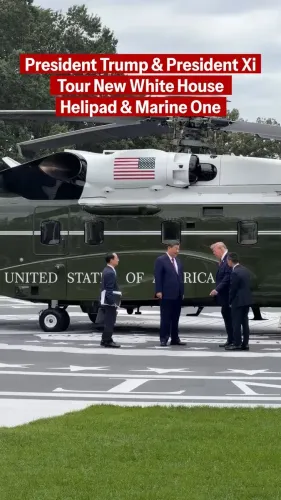
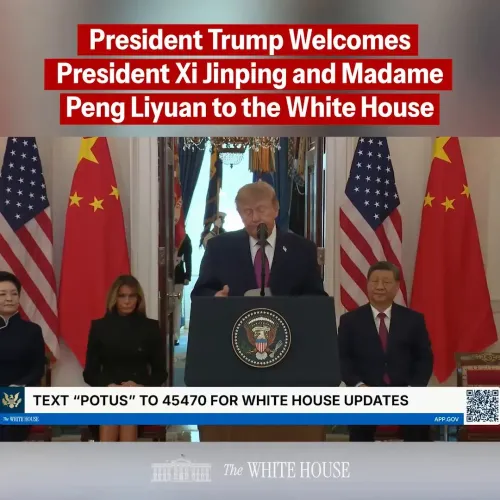
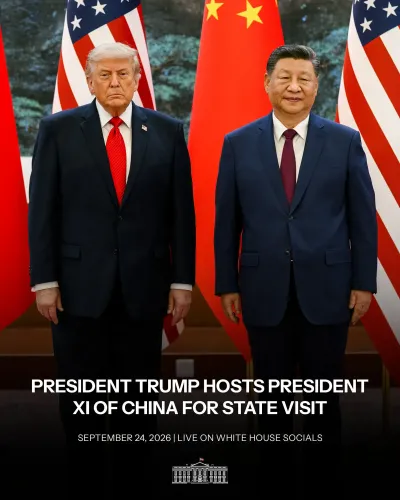
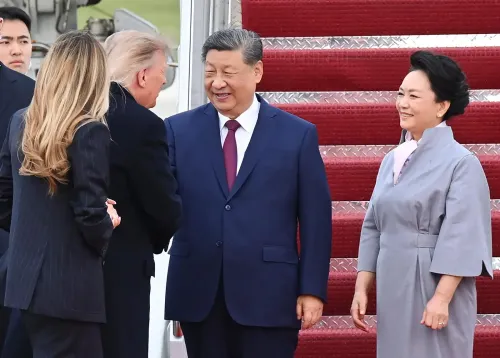
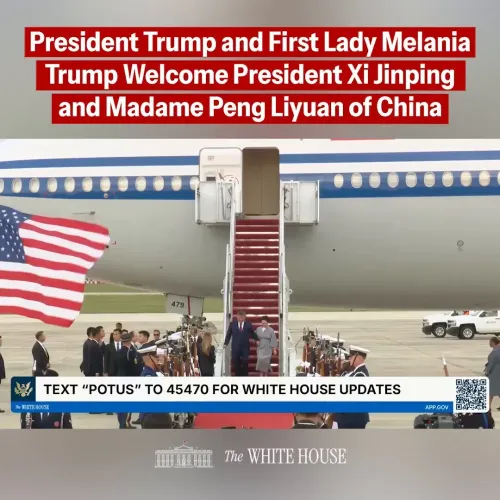
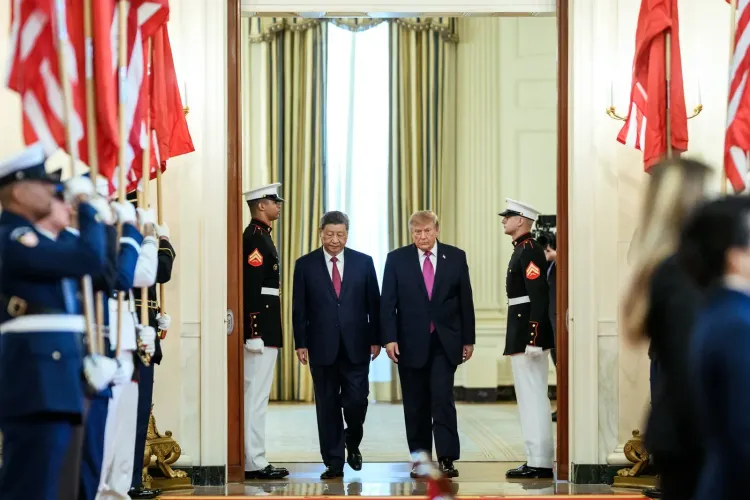
President Donald J. Trump and Chinese President Xi Jinping entered the White House State Floor on September 24, 2026, for a formal state visit — the highest diplomatic honour Washington can extend — signalling a significant reset in US-China relations after years of trade conflict and strategic competition.
Key Takeaways
President Trump and Chinese President Xi Jinping entered the White House State Floor together on September 24, 2026 for a formal state visit.
A state visit is the highest diplomatic protocol one nation can extend to another, carrying significant symbolic and political weight.
The last major structured bilateral between the two leaders took place at Mar-a-Lago in 2017 , making this a notably elevated engagement.
US-China relations during Trump's first term were defined by a trade war launched in 2018 and partially addressed by the Phase One trade agreement of January 2020 .
Observers worldwide — including in India — are watching for joint statements on trade, technology, and any scheduled follow-on meetings at forums like the G20 .
Two of the world's most consequential leaders crossed the threshold of the White House's State Floor together on Thursday, September 24, 2026 — President Donald J. Trump and Chinese President Xi Jinping, in a moment the White House itself described as 'historic.' The optics alone carried enormous weight: a formal state visit between Washington and Beijing, in the house where some of the sharpest US-China confrontations of the modern era were forged.
A State Floor entrance that signals intent
State visits are the highest diplomatic honour one nation can extend to another — a carefully choreographed protocol that goes well beyond a working lunch. By receiving Xi Jinping with full state-visit honours at the White House, the Trump administration is signalling a deliberate reset in the register of engagement between the world's two largest economies. The last time the two leaders held a structured bilateral at this level, it was a 2017 meeting at Mar-a-Lago — a setting notably less formal than the State Floor.
From tariff war to state welcome — the road here
The arc of US-China relations across Trump's first term was defined by escalation: tariffs launched in 2018 on hundreds of billions of dollars in Chinese goods, technology bans, and a grinding strategic rivalry over regional influence in Asia. The one major de-escalation landmark was the Phase One trade agreement signed in January 2020, which paused some hostilities but left the structural tensions intact. A full state visit in 2026 — with both flags flying at the residence of the American president — marks a dramatically different posture.
What the world is watching for now
Diplomatic theatre matters only as far as the substance that follows. Trade negotiators, business leaders, and governments from Tokyo to Brussels to New Delhi will be scrutinising every joint statement and readout for concrete movement — fresh trade understandings, technology guardrails, or even a scheduled follow-on meeting at a multilateral forum like the G20. For India, any recalibration of the US-China relationship carries direct strategic implications, touching supply-chain positioning, regional security architecture, and the future of groupings like the Quad.
The two leaders have walked into one of the most storied rooms in global diplomacy. What they walk out with is the story the world is waiting to read.
Point of View
And both sides know it. For the Trump administration, hosting Xi Jinping with full honours suggests a strategic calculation that managed engagement serves American interests better than sustained confrontation. For India, any durable US-China rapprochement reconfigures the geometry of Indo-Pacific strategy: a less adversarial Washington-Beijing axis could soften pressure on Beijing from the Quad, complicate India's own China policy leverage, and redraw supply-chain narratives. The substance that emerges — trade terms, technology access rules, regional security red lines — will determine whether this is a genuine pivot or an elaborate reset in atmospherics only.
NationPress
25 Sept 2026
Frequently Asked Questions
What is the significance of a US state visit for China's president?
A state visit is the highest diplomatic honour one country can extend to another, involving full ceremonial protocol at the White House. It signals that Washington considers the relationship a top-tier strategic priority, distinct from routine bilateral meetings.
What was the last major Trump-Xi bilateral meeting before this?
The most notable prior bilateral under Trump's first term was the 2017 summit at Mar-a-Lago , held to discuss trade imbalances and the North Korea nuclear issue — a far less formal venue than the White House State Floor.
What was the US-China Phase One trade deal?
The Phase One trade agreement was signed in January 2020 during Trump's first term. It paused some tariff escalations and committed China to increased purchases of American goods, but left broader structural trade tensions unresolved.
How does the Trump-Xi state visit affect India?
Any significant realignment in US-China relations directly affects India 's strategic environment — influencing the Quad's cohesion, supply-chain diversification flows toward India, and New Delhi 's own diplomatic leverage with Beijing .
What outcomes are expected after the Trump-Xi White House meeting?
Analysts are watching for joint statements on trade, potential new economic understandings, technology guardrails, and whether the two sides will schedule follow-on engagements at multilateral forums such as the G20 .