Trump Honours Six Scientists with Top US Science and Tech Medals
Synopsis
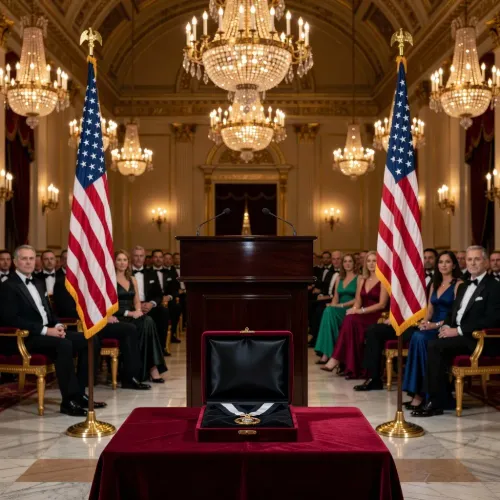
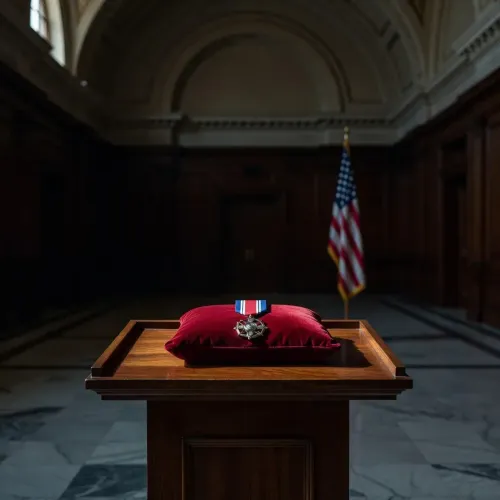
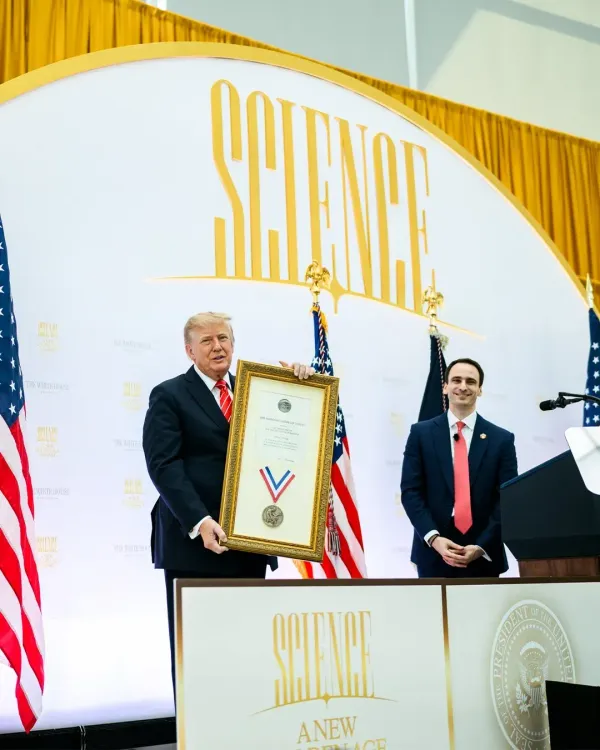
President Donald J. Trump, alongside Science and Technology Policy Director Michael Kratsios, awarded six recipients the National Medal of Science and the National Medal of Technology and Innovation at the White House on October 8, 2026 — the United States' highest honours in science and technology.
Key Takeaways
Trump and Director of Science and Technology Policy Michael Kratsios co-presented the medals at a White House ceremony on October 8, 2026 .
Six recipients were honoured across both the National Medal of Science and the National Medal of Technology and Innovation — America's two highest scientific honours.
The White House described the laureates as 'patriots,' framing scientific excellence within a national competitiveness and security context.
The Office of Science and Technology Policy (OSTP) director's visible role at the ceremony signals science as a priority in the current administration.
The dual-medal ceremony comes amid heightened US focus on maintaining technological leadership over strategic rivals, particularly in AI, semiconductors, and biotechnology.
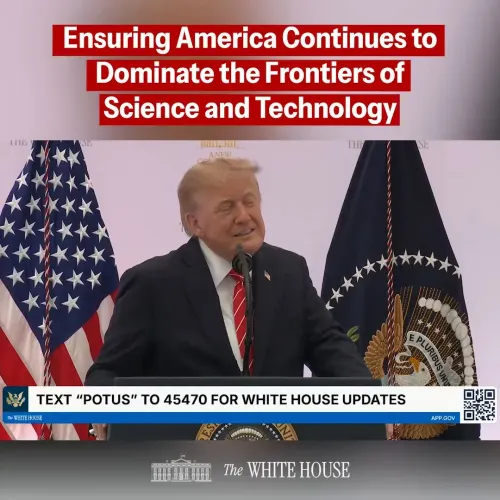
Six Americans who have pushed the boundaries of human knowledge walked out of the White House on Thursday, October 8, 2026, carrying the United States' highest honours in science and technology — a ceremony that underscores the Trump administration's stated commitment to keeping America at the frontier of discovery.
President Donald J. Trump, joined by Director of Science and Technology Policy Michael Kratsios, presented the National Medal of Science and the National Medal of Technology and Innovation to six recipients, whom the White House described as 'patriots.' The dual-medal ceremony places scientific achievement squarely inside a patriotic frame — a deliberate signal from an administration that has repeatedly argued national competitiveness begins in the laboratory.
America's Two Highest Scientific Honours — What They Mean
The National Medal of Science and the National Medal of Technology and Innovation are presidentially bestowed honours established by Congress to recognise individuals who have made outstanding contributions to knowledge in the physical, biological, mathematical, engineering, and social sciences, and to the commercialisation and application of technology respectively. They are not awarded every year on a fixed schedule; a White House ceremony to present both medals simultaneously to a combined slate of six laureates is a notable occasion.
Michael Kratsios, the Director of the Office of Science and Technology Policy (OSTP), flanked the President at the ceremony — a visible signal that science policy sits close to the top of the current White House agenda. The OSTP director serves as the President's principal adviser on science, technology, engineering, and mathematics, making Kratsios a central figure in shaping US research priorities and federal innovation strategy.
The Patriot Frame Around Scientific Excellence
The White House's choice to call the six recipients 'patriots' is deliberate language in a competitive global moment. Washington has in recent years tied scientific leadership explicitly to national security, economic strength, and strategic independence — from semiconductor manufacturing to artificial intelligence and biotechnology. Honouring scientists and technologists in this vocabulary reinforces the argument that discovery is not just a cultural good but a strategic imperative.
For Indian observers, the ceremony carries particular resonance: the US science and technology ecosystem has long drawn heavily from Indian-origin researchers, engineers, and innovators, many of whom have been previous recipients of these very medals. The ceremony is a reminder of the pipeline that connects Indian talent to the world's most prestigious scientific institutions.
What the Ceremony Tells Us About US Science Policy Right Now
A joint presentation of both medals — Science and Technology and Innovation — in a single White House event, with the OSTP director visibly co-presenting, signals an administration actively working to project strength on research and development at a moment of intense global competition with China and other technology powers. Whether that signal is backed by budget commitments in federal R&D spending is the question that scientists and policymakers will watch closely in the months ahead.
Six laureates, two medals, one White House ceremony — and a very loud message about where America says its future is being built.
Point of View
The ceremony is a soft-power statement: the US is still the world's premier destination for scientific recognition and ambition. The real test, however, lies in whether ceremonial honour translates into sustained federal investment in basic research and innovation infrastructure.
NationPress
9 Oct 2026
Frequently Asked Questions
Who received the National Medal of Science in 2026?
The White House announced that six recipients were honoured at the October 2026 ceremony, though the individual names were not specified in the official post. The medals were presented by President Trump alongside OSTP Director Michael Kratsios.
What is the National Medal of Science?
The National Medal of Science is the United States' highest honour for scientific achievement, awarded by the President to individuals who have made outstanding contributions in the physical, biological, mathematical, engineering, and social sciences. It is established by Congress and awarded at White House ceremonies.
What is the National Medal of Technology and Innovation?
The National Medal of Technology and Innovation is the US government's highest honour for technological achievement, recognising individuals or groups who have made lasting contributions to America's competitiveness and quality of life through the development, commercialisation, and management of technology.
Who is Michael Kratsios?
Michael Kratsios serves as the Director of the Office of Science and Technology Policy (OSTP) under President Trump. He is the President's principal adviser on science, technology, engineering, and mathematics policy, and plays a central role in shaping US federal research and innovation strategy.
Why does the US science medal ceremony matter for India?
The US science and technology ecosystem has historically drawn significant talent from India, with several Indian-origin researchers and engineers receiving these medals over the years. The ceremony highlights the prestige and global reach of American scientific institutions, which remain major destinations for Indian researchers and students.