Trump Previews '60 Minutes' Interview, Eyes Senate Help
Synopsis
President Donald J. Trump announced a '60 Minutes' interview for November 8, 2026, framing it as a showcase of his two-year record while explicitly tying his remaining legislative ambitions to cooperation from the Republican-controlled Senate.
Key Takeaways
Trump announced a live interview on 60 Minutes airing Sunday, November 8, 2026 .
The statement was shared by the official White House account on X.
Trump cited two years of administration achievements he hoped the programme would highlight.
He conditioned future 'unbelievable' policy delivery on cooperation from the Republican Senate .
60 Minutes has long served as a high-reach platform for presidents to frame their records to a broad audience.
The statement doubles as public pressure on Capitol Hill , framing the Senate as the decisive variable in his agenda's success.
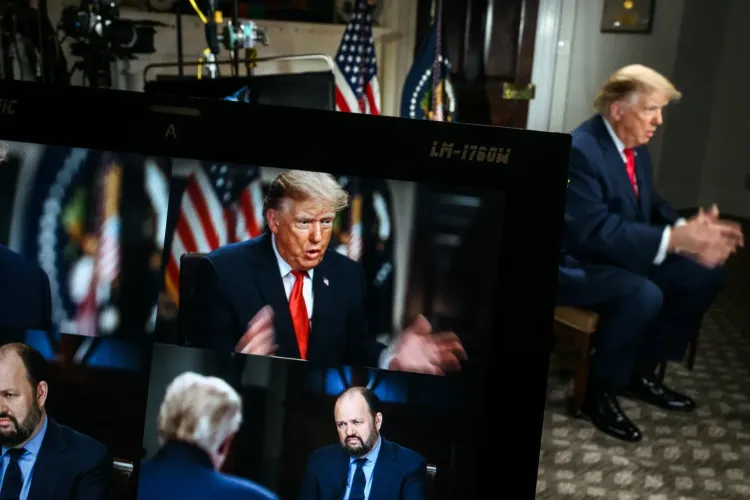
President Donald J. Trump signalled a prime-time push on Sunday, November 8, 2026, announcing he would sit down with 60 Minutes that night — and using the moment to remind the country just how much, in his view, hinges on the Republican Senate.
The White House shared Trump's own words directly: 'I will be interviewed tonight on 60 Minutes. Hopefully, they will show all the good things we've done over the past 2 years... If we get help from the Republican Senate, we can still do things that are unbelievable!' The statement is part rallying cry, part legislative pressure — a signal aimed squarely at Capitol Hill as much as the viewing public.
Why a 60 Minutes Seat Still Carries Weight
60 Minutes, the long-running CBS program, has served as a preferred stage for American presidents and candidates seeking to reach a large, politically mixed audience outside the cable-news echo chamber. Sitting presidents have used the platform to frame their records, absorb tough questions on live tape, and project a sense of steady command. For Trump, the interview represents an opportunity to consolidate the narrative around his administration's first two years back in office.
The phrasing — 'hopefully, they will show all the good things' — carries a characteristic edge, nodding to Trump's long-running friction with mainstream broadcast outlets while still choosing one of their most prominent stages. It is a tension that has defined his media strategy across both his terms.
The Senate Calculation Behind the Curtain
The more pointed message in Trump's statement is the one addressed to the Republican Senate. Under the U.S. Constitution, the Senate holds decisive power over legislation, treaties, and confirmations — meaning even a president with a clear agenda requires upper-chamber cooperation to convert priorities into law. Trump's 'unbelievable' promise is explicitly conditional: delivery depends on Senate alignment.
Historically, presidents use high-visibility media moments not just to speak to voters but to apply public pressure on lawmakers from their own party. By broadcasting his legislative ambitions on a programme watched by millions, Trump frames Senate resistance — should it emerge — as the obstacle between the administration and results. The strategy is as old as the modern presidency. The stakes, as Trump tells it, are anything but ordinary.
The interview is set to air tonight. What specifics Trump chooses to highlight — and what the programme's editors choose to run — will shape the week's political conversation in Washington and well beyond.
Point of View
Trump effectively turns any future Senate inaction into a visible political liability for those lawmakers. This mirrors a well-worn presidential playbook of using media visibility to generate legislative leverage. The interview's framing and edit choices will reveal as much about the current media-executive dynamic as about the administration's actual record.
NationPress
8 Nov 2026
Frequently Asked Questions
When is Trump's 60 Minutes interview airing?
President Trump announced the interview would air on the night of Sunday, November 8, 2026 , as confirmed by the official White House post on X.
What did Trump say about the Republican Senate?
Trump stated that 'if we get help from the Republican Senate, we can still do things that are unbelievable,' signalling his remaining legislative agenda depends on Senate cooperation.
Why do US presidents appear on 60 Minutes?
60 Minutes reaches a large, politically diverse television audience, making it one of the few mainstream platforms where presidents can speak beyond partisan media ecosystems and frame their records directly.
What is the role of the Republican Senate in Trump's agenda?
Under the U.S. Constitution, the Senate must pass legislation before it reaches the president's desk. Without sufficient Republican Senate votes, key presidential priorities cannot become law — which is why Trump's statement frames Senate help as essential.
What has Trump highlighted about his two-year record?
The White House post does not specify particular achievements; Trump said he hoped the 60 Minutes programme would 'show all the good things we've done over the past 2 years,' with specifics expected to emerge in the interview itself.