Trump Invokes Faith as Foundation of American Exceptionalism
Synopsis
President Donald J. Trump, via the White House, invoked faith as the cornerstone of American history — from the founding to abolition — as the United States prepares to mark 250 years of the Declaration of Independence on July 4, 2026.
Key Takeaways
President Trump stated that the Declaration of Independence invokes the Creator four times , framing America's founding in explicitly religious terms.
He credited faith with driving westward expansion, abolishing slavery, and building the United States into 'the most exceptional nation in the history of the world.' The statement was released on June 27, 2026 , one week before the 250th anniversary of the Declaration of Independence .
In 2017 , Trump signed Executive Order 13798 on religious liberty, establishing a policy pattern that the current statement reinforces rhetorically.
The United States Semiquincentennial Commission is expected to announce further official programming tied to July 4, 2026 .
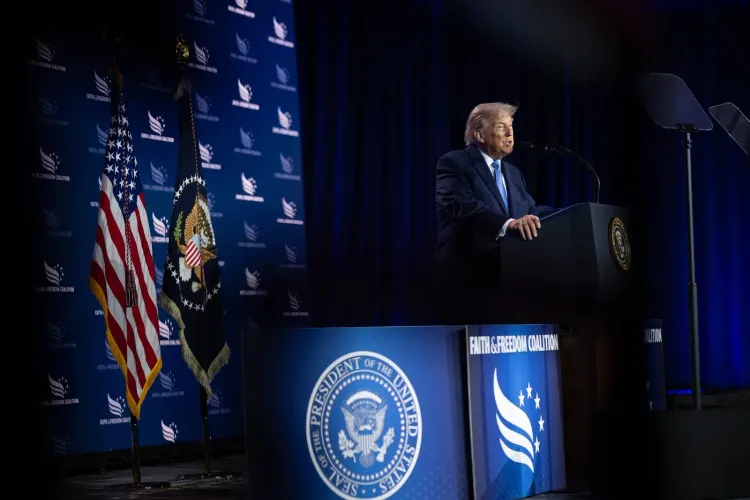
The White House shared a statement from President Donald J. Trump on Saturday, June 27, 2026, invoking religious faith as the driving force behind America's founding, westward expansion, and abolition of slavery, as the nation prepares to mark the 250th anniversary of the Declaration of Independence.
Context
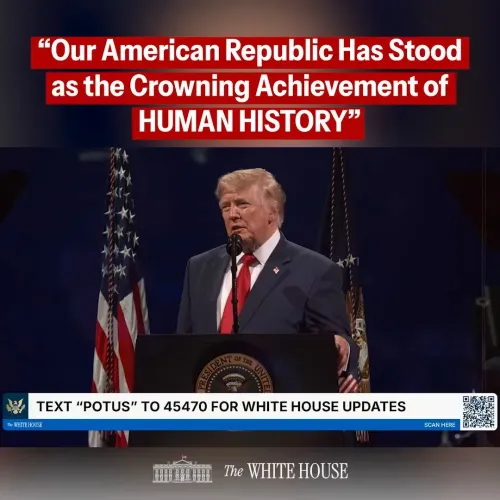
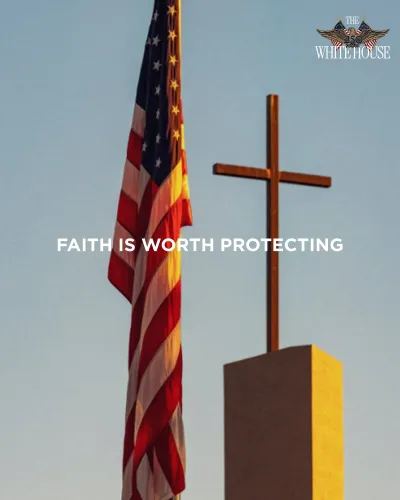
In the statement, President Trump declared: '250 years ago next week, our Founders invoked the Creator four times in the Declaration of Independence.' He went on to assert that 'faith pushed the pioneers to journey West, faith led Americans to abolish slavery, and faith built this country into the most exceptional nation in the history of the world.' The remarks frame the entirety of the American national story through the lens of religious conviction.
The Declaration of Independence, adopted on July 4, 1776, does reference a Creator in articulating the natural rights of citizens — a point frequently cited in debates over the relationship between religion and American governance. The statement was shared as the country approaches the semiquincentennial, the 250th anniversary of the founding document.
Policy Backdrop
President Trump has consistently woven religious-liberty themes into his presidency. In 2017, during his first term, he signed Executive Order 13798, directing federal agencies to protect faith-based organisations and individual conscience rights. That order signalled a broader policy posture of elevating religious freedom as a first-order concern of the executive branch.
Presidential rhetoric linking American identity to providential history is not new — it has recurred across administrations — but it holds particular prominence in Republican political messaging, especially around Independence Day. The 2026 timing amplifies this tradition, with the semiquincentennial providing a once-in-a-generation platform to shape national narratives around exceptionalism and faith.
Stakeholders and Impact
The statement is directed most immediately at religious communities and conservative voters, for whom the fusion of faith and national identity is a core political value. By anchoring the remark in the text of the Declaration of Independence itself — noting the four explicit references to a Creator — Trump grounds the appeal in the founding document rather than in partisan assertion alone.
The framing that 'faith led Americans to abolish slavery' is likely to draw scrutiny from historians and civil-rights scholars who emphasise secular, constitutional, and political-economy arguments alongside religious ones in explaining 19th-century abolitionism. The statement does not elaborate on the mechanisms or movements it references.
What's Next
All eyes will be on official programming tied to the United States Semiquincentennial Commission as July 4, 2026 approaches. Executive or legislative actions framing the anniversary around themes of religious freedom and national exceptionalism are being closely watched. The White House statement signals that faith will be a prominent thread in the administration's semiquincentennial narrative.
As America prepares for one of the most symbolically significant dates in its history, the political contest over how the nation's founding story is told — and whose values it is said to reflect — is set to intensify in the days ahead.
Point of View
He moves the argument from opinion to founding document, making it harder to dismiss as mere political rhetoric. The framing of abolition as a faith-driven achievement is particularly strategic, pre-empting criticism that religious-liberty conservatism is indifferent to racial justice. Ahead of July 4, 2026, this statement is likely the opening salvo in a broader White House effort to define what the 250th anniversary means for the country.
NationPress
25 Sept 2026
Frequently Asked Questions
What did Trump say about faith and the Declaration of Independence?
President Trump stated that the Founders invoked the Creator four times in the Declaration of Independence and that faith was responsible for westward expansion, the abolition of slavery, and making America 'the most exceptional nation in the history of the world.'
When is the 250th anniversary of the Declaration of Independence?
The 250th anniversary, known as the semiquincentennial, falls on July 4, 2026 , one week after Trump's statement was shared by the White House on June 27, 2026.
How many times does the Declaration of Independence mention God or the Creator?
President Trump's statement says the Founders invoked the Creator four times in the Declaration of Independence, a claim consistent with the document's references to 'Nature's God,' 'Creator,' 'Supreme Judge of the world,' and 'divine Providence.'
What is Trump's record on religious liberty as president?
During his first term, President Trump signed Executive Order 13798 in 2017, directing federal agencies to protect faith-based organisations and conscience rights, establishing religious liberty as a policy priority of his administration.
What is the US Semiquincentennial Commission?
The United States Semiquincentennial Commission is the official body overseeing programming and commemorations for America's 250th anniversary on July 4, 2026; its planned events and any related executive actions are being closely watched.