White House Links American Republic's Survival to Faith
Synopsis
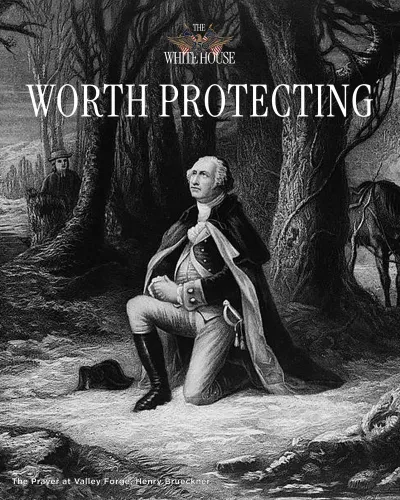
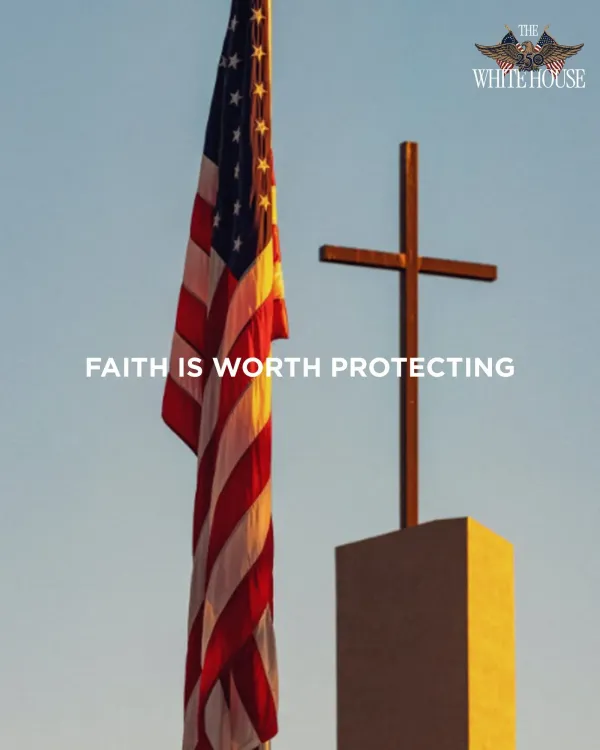
The White House posted on 5 July 2026 that 'there is no great American republic without FAITH,' invoking a founding-era argument that religious faith is a civic precondition for American self-governance. The message follows Independence Day and fits a long bipartisan pattern of linking faith to republican durability.
Key Takeaways
The White House posted on 5 July 2026 that 'there is no great American republic without FAITH.' The message was shared one day after Independence Day , a period when such statements have historically intensified.
The sentiment echoes John Adams , who argued the Constitution was designed only for a moral and religious people.
The National Day of Prayer , established by Congress in 1952 , reflects the institutional recognition of faith in American civic life.
Faith-based executive initiatives dating to 2001 formalised federal partnerships with religious organisations.
The post leaves 'FAITH' undefined by denomination, framing it as a broad civic value rather than a sectarian one.
The White House, the official communications account of the Executive Office of the President of the United States, posted a pointed declaration on 5 July 2026, stating: 'There is no great American republic without FAITH.' The message, shared a day after Independence Day, frames religious faith as a foundational precondition for American self-governance.
Context
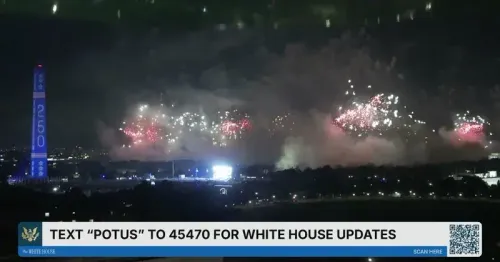
The post arrives in the immediate aftermath of 4 July celebrations marking 250 years of American independence. White House statements linking faith to republican institutions have historically intensified around patriotic observances, and this message follows that long-standing pattern. The capitalisation of 'FAITH' in the original post signals deliberate emphasis on the word as a civic, not merely religious, concept.
The sentiment echoes a tradition traceable to the founding era. John Adams, the second President of the United States, famously argued that the Constitution was 'made only for a moral and religious people' and was 'wholly inadequate to the government of any other.' Such framings have been invoked across administrations and party lines as reminders of the cultural underpinnings of democratic self-rule.
Policy Backdrop
The institutional recognition of faith in American public life has a formal legislative history. The National Day of Prayer was established by a joint resolution of Congress in 1952, creating an annual observance that invites citizens to pray for the nation. The observance has since been marked by presidential proclamations each year, reinforcing the constitutional accommodation of religious expression in civic life.
In 2001, faith-based community initiatives were formalised through executive order, expanding federal partnerships with religious organisations in the delivery of social services. These policy milestones reflect a bipartisan acceptance, at least at the institutional level, that religious communities are integral stakeholders in American governance and public welfare.
Stakeholders and Impact
The White House message speaks most directly to America's religious communities, which span a vast spectrum of denominations, traditions, and faiths. For these communities, an explicit presidential-level affirmation of faith's role in sustaining the republic carries both symbolic and political weight. It signals that the executive branch views religious identity not as a private matter but as a civic asset.
For secular Americans and those who favour a stricter interpretation of the separation of church and state, such declarations can raise questions about inclusivity and the boundaries of government expression on religion. The post does not specify any denomination or creed, leaving 'FAITH' as a broad, pluralistic term — a framing that has been used by prior administrations to navigate this tension.
What's Next
Observers will watch for follow-up White House statements or executive actions touching on religious liberty, national values, or related commemorations in the months ahead. The July 2026 post may serve as a rhetorical anchor for broader policy messaging around faith-based initiatives or constitutional freedoms. Whether it is accompanied by legislative proposals or remains a statement of cultural principle will define its longer-term significance.
As the United States navigates a period of deep social and political polarisation, declarations that invoke shared foundational values — however contested their interpretation — will continue to draw close scrutiny from communities across the political spectrum.
Point of View
Amplifying the message's cultural resonance at a moment of national reflection. By capitalising 'FAITH' and leaving it unattached to any specific creed, the post attempts to claim broad civic ground while still energising religiously observant constituencies. The statement is as much a cultural signal as a policy position, and its downstream impact will depend on whether it is followed by concrete executive or legislative action on religious liberty.
NationPress
3 Oct 2026
Frequently Asked Questions
What did the White House say about faith and America?
The White House posted on 5 July 2026 that 'there is no great American republic without FAITH,' asserting that religious faith is a foundational requirement for American self-governance.
Why did the White House post about faith after Independence Day?
White House statements linking faith to republican institutions have historically intensified around patriotic observances like Independence Day, a pattern that dates back across multiple administrations.
What is the National Day of Prayer in the United States?
The National Day of Prayer is an annual observance established by a joint resolution of Congress in 1952, inviting American citizens to pray for the nation; it is typically marked by a presidential proclamation.
Did the Founding Fathers believe faith was necessary for the American republic?
Yes, founding-era leaders such as John Adams argued that the Constitution was designed only for a moral and religious people, a view that has been cited across generations to link civic virtue with religious faith.
What are faith-based initiatives in US government policy?
Faith-based initiatives, formalised by executive order in 2001, expanded federal partnerships with religious organisations to deliver social services, reflecting a bipartisan acceptance of religious communities as civic stakeholders.