White House: Faith Has Forged American Greatness
Synopsis
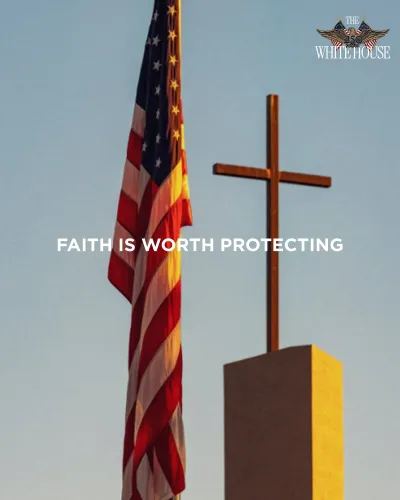
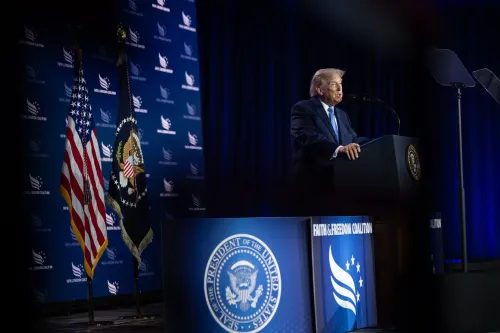
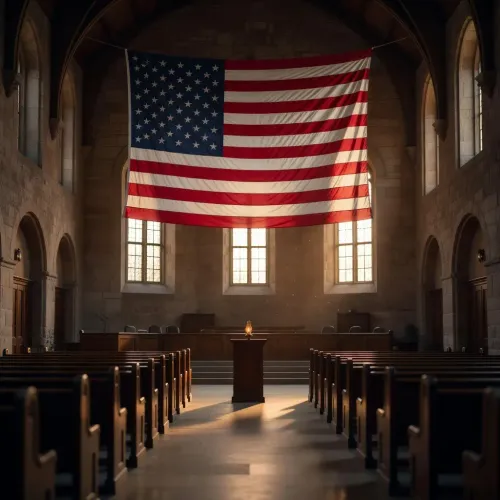
The White House on 26 June 2026 posted a statement asserting that 'American greatness has been forged by people of faith,' reinforcing a long-standing tradition of presidential rhetoric that links religious conviction to national identity and the country's founding values.
Key Takeaways
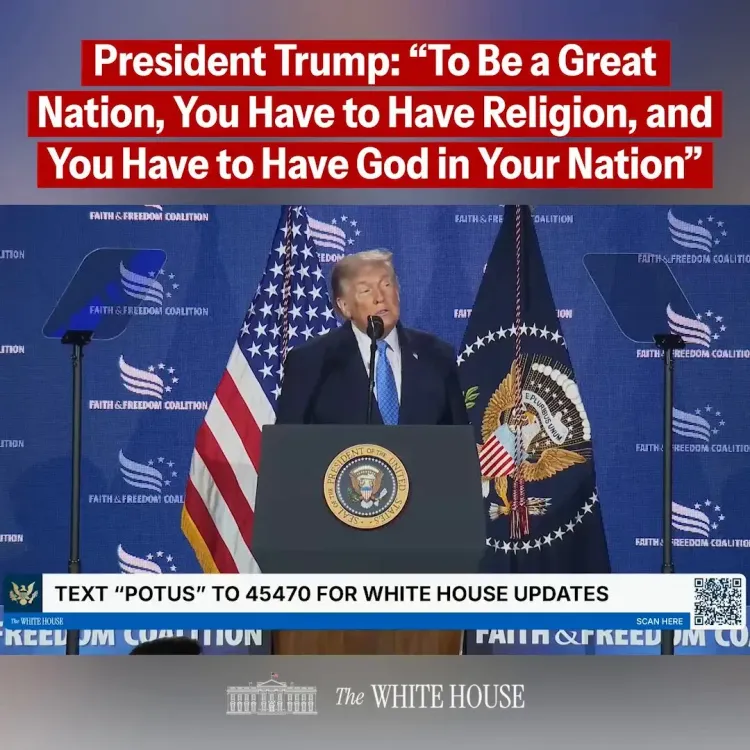
The White House posted on 26 June 2026 stating 'American greatness has been forged by people of faith.' The statement was accompanied by a video and the American flag emoji, though the video's specific content was not independently verified.
The First Amendment , ratified in 1791 , protects the free exercise of religion and has underpinned US religious liberty discourse for over two centuries.
White House messaging linking faith to American identity has appeared consistently across multiple administrations in proclamations and public addresses.
Faith communities — spanning Christian, Jewish, Muslim, Hindu, Sikh, and other traditions — are the primary audience for such statements.
The post may signal upcoming White House events or proclamations tied to religious freedom or national observances.
The White House, the official communications account of the Executive Office of the President of the United States, posted a statement on Friday, 26 June 2026, asserting that religious faith has been a foundational force in shaping the American nation.
Context
The post, accompanied by the American flag emoji and a video, stated: 'American greatness has been forged by people of faith.' The message is brief but carries the weight of a long tradition in White House communications that links national identity to religious conviction. No specific event, legislation, or individual was named in the post.
The statement was issued on a Friday evening in Washington DC, a timing that often coincides with broader cultural or ceremonial messaging cycles from the Executive Office.
Policy Backdrop
The First Amendment to the United States Constitution, ratified in 1791, enshrined the free exercise of religion as a foundational right, separating the state from the establishment of any official religion while protecting individual and communal worship. This dual guarantee has made religious liberty a recurring theme in American political discourse across centuries.
White House statements invoking faith and national identity have appeared across administrations of both major parties, surfacing most prominently in inaugural addresses, National Day of Prayer proclamations, and remarks tied to religious holidays. The pattern reflects a durable strand of American civil religion — the idea that divine providence has guided the republic's history.
Stakeholders and Impact
The statement speaks directly to faith communities across the United States, which span Christian, Jewish, Muslim, Hindu, Sikh, Buddhist, and other religious traditions. These communities collectively represent the vast majority of the American population and have historically been active participants in civic and political life.
For Indian-Americans and members of South Asian diaspora faith communities — among the fastest-growing religious demographics in the United States — such affirmations from the White House carry particular resonance, as they signal official recognition of religious diversity as part of the American story.
Advocacy groups focused on religious freedom, both domestically and internationally, often watch White House messaging on faith closely, as presidential rhetoric can signal policy priorities around issues such as international religious freedom designations and domestic protections for faith-based organisations.
What's Next
The post may presage follow-on White House events or formal proclamations tied to religious freedom or upcoming national observances. The attached video, whose specific content could not be independently verified at the time of publication, may elaborate on the administration's framing of faith's role in American public life.
As the United States continues to navigate debates over the intersection of religion and governance — from faith-based social services to international religious freedom policy — statements such as this one serve as markers of the administration's rhetorical posture on one of the country's most enduring cultural questions.
Point of View
This kind of rhetorical groundwork often precedes concrete policy moves — from strengthening faith-based initiative funding to elevating international religious freedom on the diplomatic agenda. The timing and medium (social media video) suggest the administration is actively cultivating this constituency ahead of potential policy announcements.
NationPress
25 Sept 2026
Frequently Asked Questions
What did the White House say about faith and America?
The White House posted on 26 June 2026 that 'American greatness has been forged by people of faith,' affirming religious conviction as a core element of American national identity.
What is the First Amendment and how does it protect religion in the US?
The First Amendment, ratified in 1791, prohibits the government from establishing an official religion and guarantees citizens the free exercise of their own religion, making religious liberty a foundational US right.
Why does the White House frequently mention faith in its communications?
White House statements linking faith to American identity reflect a long tradition of civil-religious rhetoric visible across multiple administrations, used in inaugural addresses, National Day of Prayer proclamations, and cultural messaging.
How does White House religious messaging affect faith communities in the US?
Such statements signal official recognition of faith communities — including Christian, Jewish, Muslim, Hindu, Sikh, and other groups — as central to American civic life, which can influence policy priorities around religious freedom protections.
Could this White House post lead to new religious freedom policies?
Analysts note that White House rhetoric affirming faith often precedes formal policy actions such as religious freedom proclamations, faith-based initiative funding decisions, or international religious freedom designations, though no specific policy was announced in this post.