CM Saini Hosts Army Chief, Western Command Head at Chandigarh Residence
Synopsis
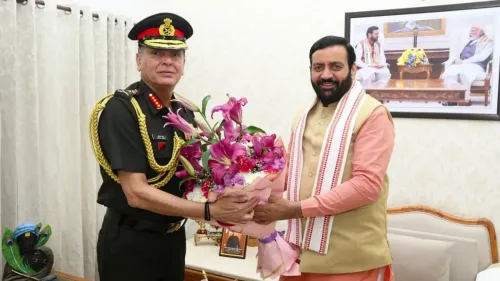
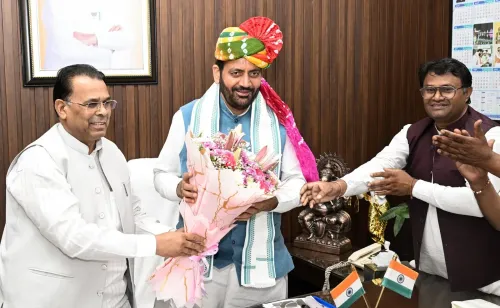
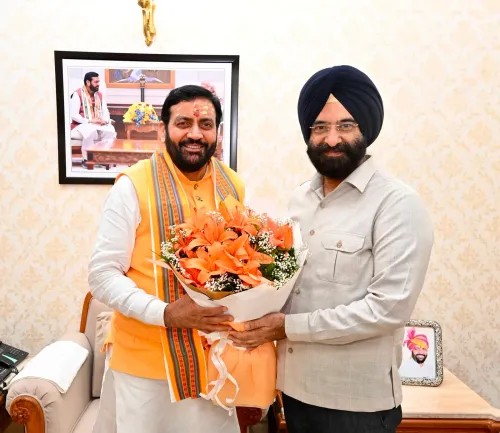
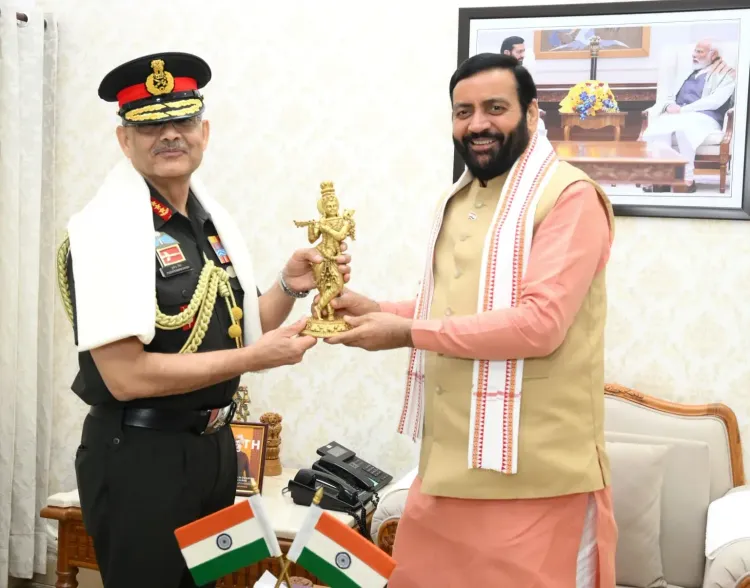
Haryana Chief Minister Nayab Singh Saini hosted Army Chief General Dheeraj Seth and Western Command Commander Lt Gen Pushpendra Pal Singh at his official Chandigarh residence on 11 August 2026, holding discussions on several important subjects.
Key Takeaways
Haryana CM Nayab Singh Saini received Army Chief General Dheeraj Seth and Lt Gen Pushpendra Pal Singh at Sant Kabir Kutir , Chandigarh, on 11 August 2026 .
The meeting covered 'several important subjects,' though no specific agenda items were publicly disclosed.
Western Command is headquartered near Chandigarh and oversees India's western borders, giving the visit direct operational relevance to Haryana.
Haryana is a major source of Army recruits, making civil-military coordination a standing priority for the state government.
No joint statement was issued; follow-up actions will signal how substantive the discussions were.
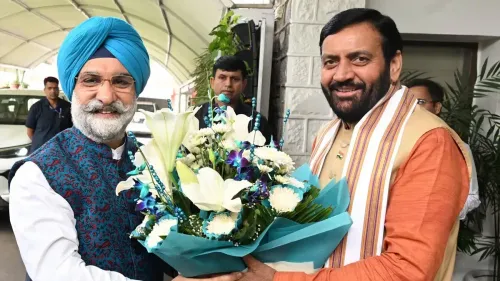
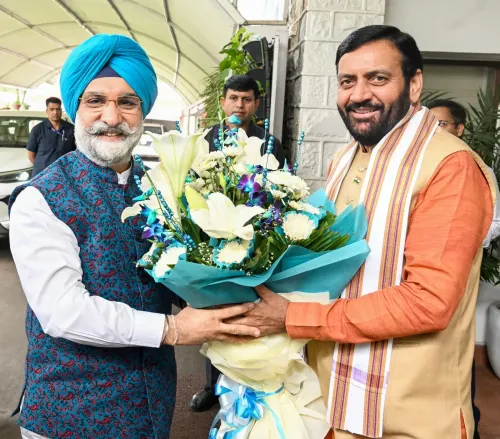
Senior military leadership came calling at the seat of Haryana's government on Tuesday, 11 August 2026, when Haryana Chief Minister Nayab Singh Saini received Indian Army Chief General Dheeraj Seth and Western Command Commander Lieutenant General Pushpendra Pal Singh at Sant Kabir Kutir — the Chief Minister's official residence in Chandigarh. The meeting, described by Saini as warm and substantive, covered what he called 'several important subjects.'
Posting on X in Hindi, Saini wrote: 'Sant Kabir Kutir (Mukhyamantri Aawas) mein Bhartiya Thal Sena Pramukh General Dheeraj Seth ji evam Pashchimi Kamand ke Commander Lieutenant General Pushpendra Pal Singh ji ka aatmiya swagat kiya.' — 'Today I extended a warm welcome to Indian Army Chief General Dheeraj Seth and Western Command Commander Lieutenant General Pushpendra Pal Singh at Sant Kabir Kutir (Chief Minister's residence). On this occasion, meaningful discussions were held with both senior military officers on several important subjects.'
Why Western Command Matters to Haryana
Haryana sits squarely within the operational footprint of Western Command, which is headquartered near Chandigarh and oversees India's borders with Pakistan. That geography gives visits like this one a layer of operational relevance beyond routine courtesy calls. The state also lies within the extended National Capital Region, making civil-military coordination on internal security a standing item on any agenda.
Interactions between state chief ministers and senior Army commanders — while not unusual — typically touch on themes such as ex-servicemen welfare, land for defence infrastructure, recruitment drives, and disaster-response coordination. Haryana has historically supplied a disproportionately large share of the Indian Army's personnel, giving the state government a direct stake in military affairs at both the policy and community level.
No Joint Statement — But the Visit Signals Engagement
No formal joint communiqué was issued following the meeting, and the specific agenda items were not disclosed publicly. The Chief Minister's characterisation of the discussions as 'sarthak charcha' — 'meaningful dialogue' — suggests the exchange went beyond protocol. Whether the meeting produces any visible follow-up, such as infrastructure commitments or coordinated recruitment events, will indicate how substantive the agenda truly was.
For now, the optics alone carry weight: the state's top elected official and the Army's two most senior officers in the region, in the same room, talking. In a state where military families are a significant political constituency, that image is rarely accidental.
Point of View
A BJP chief minister in a state with deep military roots, being seen engaging the Army's top brass reinforces both security credentials and community ties with ex-servicemen families who form a key electoral constituency. The absence of a public agenda, however, keeps the meeting firmly in the category of relationship-building rather than policy announcement. Watch for any follow-up on ex-servicemen welfare schemes or land-use coordination, which would elevate this from optics to outcome.
NationPress
25 Sept 2026
Frequently Asked Questions
Why did the Indian Army Chief visit Haryana CM Nayab Singh Saini?
Army Chief General Dheeraj Seth and Western Command Commander Lt Gen Pushpendra Pal Singh called on Haryana CM Nayab Singh Saini at his Chandigarh residence on 11 August 2026 for discussions on several important subjects, though the specific agenda was not publicly disclosed.
What is Sant Kabir Kutir?
Sant Kabir Kutir is the official residence and office of the Chief Minister of Haryana, located in Chandigarh.
What is Western Command of the Indian Army?
Western Command is one of the Indian Army's seven operational commands, headquartered near Chandigarh. It oversees military operations along India's western borders with Pakistan.
What is the significance of Haryana in Indian Army recruitment?
Haryana has historically contributed a disproportionately large number of soldiers to the Indian Army, making civil-military coordination and ex-servicemen welfare a high-priority issue for the state government.
Was any agreement or joint statement issued after the CM Saini-Army Chief meeting?
No formal joint statement or agreement was issued following the 11 August 2026 meeting. The Chief Minister described the discussions as 'meaningful' but did not specify outcomes.