Trump honours Satya Nadella as Vance bars Microsoft from green card programme
Synopsis
On the same day Trump placed the National Medal of Technology around Satya Nadella's neck, Vance barred Microsoft from sponsoring foreign workers for green cards and suspended six Indian IT giants — Infosys, Wipro, Tata, Cognizant, HCL and Capgemini — from the PERM programme. The split-screen moment crystallises the Trump administration's core tension: celebrate the immigrant success story while restricting the very pathways that create the next one.
Key Takeaways
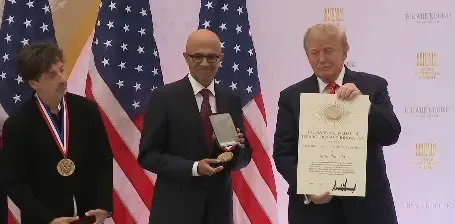
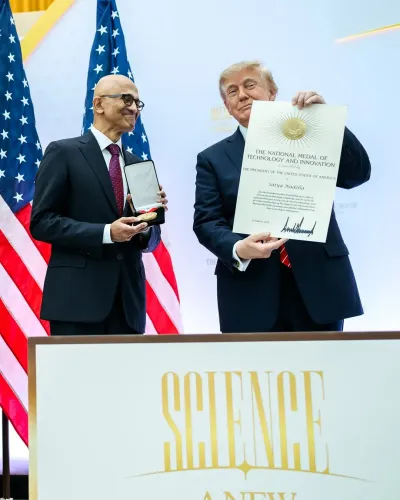
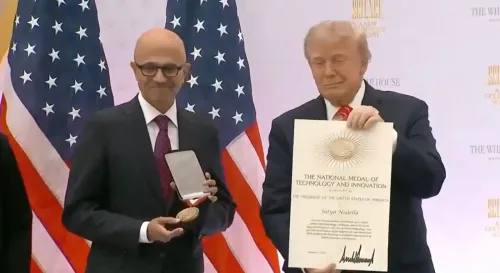
Donald Trump awarded Satya Nadella the National Medal of Technology and Innovation at the New Golden Age Summit on 9 October 2026 .
JD Vance accused Microsoft of laying off 6,000 American workers while receiving 6,300 H-1B approvals and nearly 3,000 green cards — though no direct replacement link was established in the transcript.
Labour Secretary Keith Sonderling suspended Microsoft and Adobe from the PERM programme, along with Cognizant , Infosys , Tata , Wipro , HCL , and Capgemini .
The suspension halts new and pending labour certification applications but does not cancel existing H-1B visas or revoke already-granted permanent residency.
Administration officials also announced J-1 visa investigations at nine universities including Harvard , Yale , Stanford , MIT , and Caltech .
Trump announced a goal of building a quantum computer for scientific discovery by 2028 .
US President Donald Trump on 9 October 2026 awarded Indian-origin Microsoft CEO Satya Nadella the National Medal of Technology and Innovation at the New Golden Age Summit in Washington, even as Vice President JD Vance announced the same day that Microsoft had been barred from sponsoring foreign workers for permanent residency — a contradiction that a reporter raised directly at Vance's press conference.
Trump's tribute to Nadella
Speaking at the summit, where six prominent technology leaders received the National Medal of Science or the National Medal of Technology and Innovation, Trump credited Nadella with reshaping the company over more than three decades. “For more than three decades, Satya Nadella has been a key figure in the transformation of Microsoft, revolutionizing the company and empowering businesses, students, and consumers from all over the world with some of the most capable software ever built or ever even conceived,” Trump said. He specifically highlighted Nadella's role in building Microsoft's cloud computing business and positioning the company as an early leader in superintelligence.
Nadella, who was born in Hyderabad and became Microsoft's chief executive in 2014, responded on X: “Thank you, @POTUS, for this incredible honor today. I’m humbled to stand alongside so many giants of American innovation and looking forward for what we can continue to do together to advance technology and drive American prosperity.”
Vance's enforcement announcement
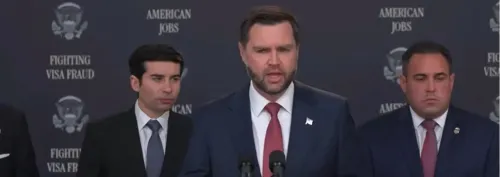
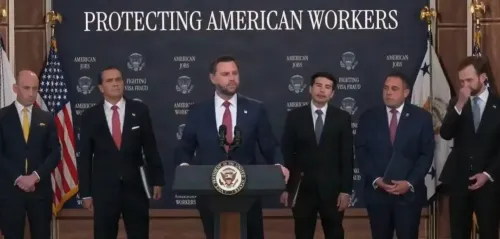
Hours before the ceremony, Vance accused Microsoft of laying off 6,000 American workers while benefiting from 6,300 H-1B visa approvals and nearly 3,000 green cards. He argued that companies were using foreign workers to undercut American wages. When a reporter asked Vance to explain the apparent contradiction, he defended the distinction between honouring Microsoft's achievements and scrutinising its employment practices.
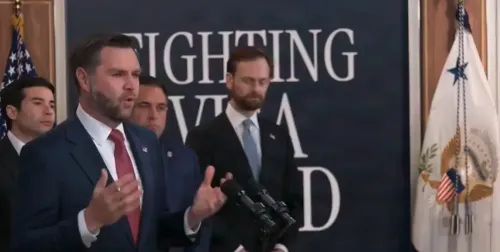
“Microsoft is a great American company and we have a great relationship with them,” Vance said. “We’re going to continue to support Microsoft and have a great relationship with Microsoft, but we’re also going to deny them the ability to apply for these permanent residences until they show that they’re going to get serious about putting American workers first,” he added.
It is worth noting that the figures cited by Vance were presented as allegations. The publicly available transcript did not establish that the workers laid off by Microsoft were directly replaced by individual H-1B employees.
PERM suspensions and Indian IT companies
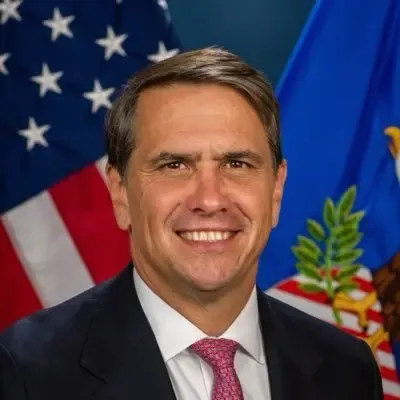
Labour Secretary Keith Sonderling announced that the Department of Labour was suspending Microsoft and Adobe from the Permanent Labour Certification (PERM) programme, citing ongoing federal investigations. Six major IT services companies were also named: Cognizant, Infosys, Tata, Wipro, HCL, and Capgemini.
“We will not accept any new or process any pending permanent labor certification applications involving these companies,” Sonderling said. The PERM programme is a critical step in employment-based green card applications. The suspension affects new and pending labour certification applications but does not, by itself, cancel existing H-1B visas or revoke permanent residency already granted. Notably, several of the named companies have substantial operations in India and employ large numbers of technology professionals in the United States.
The 'exceptional talent' question
Vance drew a distinction between what he called truly elite foreign talent — citing Elon Musk and AMD CEO Lisa Su as examples — and the routine use of foreign workers to replace Americans at lower wages. Both Musk and Su were among the technology leaders honoured by Trump at the summit.
A reporter challenged Vance on how the government could identify the next Elon Musk, given that successful entrepreneurs rarely arrive with established records of achievement. Vance said the administration would examine whether an applicant possessed skills unavailable among American workers and whether they brought exceptional abilities. “We want a lot of other people to come into the United States of America if they have truly elite specialized skills,” he said. Critics argue that such a standard is difficult to operationalise objectively, particularly for younger engineers and researchers whose accomplishments are still years away.
University investigations and Trump's technology targets
At the same press conference, administration officials announced investigations into the use of J-1 visas at nine prominent American universities, including Harvard, Yale, Stanford, MIT, and Caltech, alleging that some institutions were using foreign researchers in ways that disadvantaged American workers. Those allegations remain subject to investigation.
At the summit, Trump announced a target of developing a quantum computer for scientific discovery by 2028 and highlighted the Genesis Mission and the White House Accord on Superintelligence — ambitions that observers note depend heavily on the very specialised international talent the administration is now restricting.
For Indian professionals, who have historically formed the largest group of H-1B beneficiaries, the PERM suspensions could introduce significant uncertainty over long-term career pathways in the United States — even as Nadella's own trajectory from Hyderabad to the helm of Microsoft continues to be celebrated as an emblem of American technological leadership.
Point of View
Superintelligence and semiconductors while restricting the immigration pipelines that built that capacity. Suspending Infosys, Wipro, Tata, HCL and Cognizant from PERM simultaneously is a statement about Indian IT's outsourcing model, but it also hits the very engineers those firms place in American R&D roles. Vance's 'exceptional talent' carve-out sounds principled until you ask who decides — and the answer, apparently, is the same administration that cited layoff numbers without establishing a direct replacement chain. Nadella's medal is genuine; the enforcement action is also genuine. The question the administration has not answered is how you build the next Nadella while dismantling the ladder he climbed.
NationPress
9 Oct 2026
Frequently Asked Questions
Why did the Trump administration bar Microsoft from the green card programme?
Vice President JD Vance accused Microsoft of laying off 6,000 American workers while receiving 6,300 H-1B visa approvals and nearly 3,000 green cards, arguing the company was using foreign workers to undercut American wages. The Labour Department consequently suspended Microsoft from the PERM programme pending federal investigations, though the transcript cited did not establish a direct link between specific layoffs and H-1B hires.
What is the PERM programme and what does the suspension mean?
PERM, or Permanent Labour Certification, is a Department of Labour process that employers must complete as part of sponsoring foreign workers for employment-based green cards. The suspension means the department will not accept new or process pending PERM applications from the named companies. It does not cancel existing H-1B visas or revoke permanent residency already granted to employees.
Which Indian IT companies were named in the PERM suspension?
Labour Secretary Keith Sonderling named six major IT services firms: Cognizant, Infosys, Tata, Wipro, HCL, and Capgemini. Microsoft and Adobe were also suspended. Several of these companies have large operations in India and employ significant numbers of technology professionals in the United States.
What honour did Satya Nadella receive and what did he say?
Nadella received the National Medal of Technology and Innovation from President Trump at the New Golden Age Summit on 9 October 2026. In a post on X, Nadella said he was 'humbled to stand alongside so many giants of American innovation' and looked forward to continuing to advance technology and drive American prosperity.
How does this affect Indian professionals seeking US permanent residency?
Indian nationals have historically been the largest group of H-1B beneficiaries and rely heavily on employer-sponsored PERM filings as a route to permanent residency. The suspension of major Indian IT firms and Microsoft from PERM could significantly complicate or delay the green card process for employees of those companies, introducing fresh uncertainty over long-term career pathways in the United States.