Trump Hosts Xi at White House in Rare State Visit
Synopsis
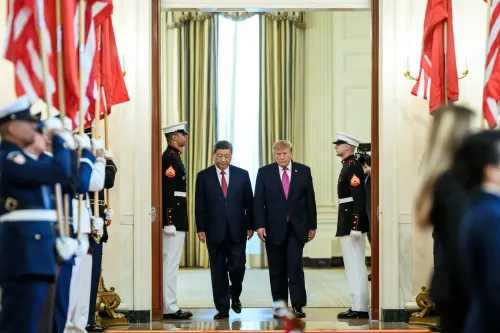
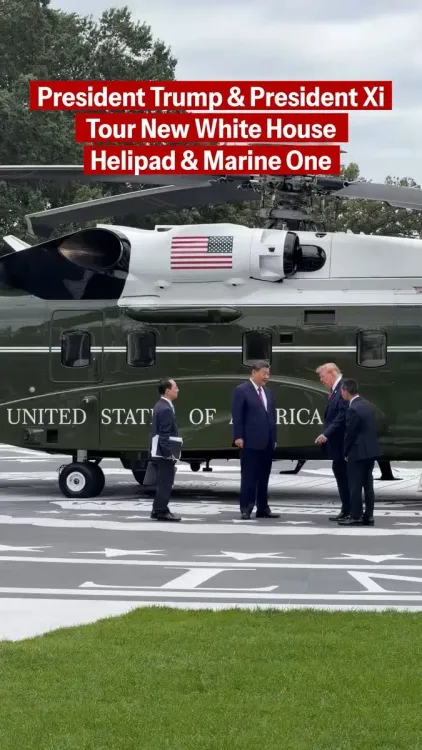
President Donald J. Trump personally escorted Chinese President Xi Jinping on a tour of the White House's new helipad during a full state visit on September 24, 2026 — the highest-level US-China diplomatic engagement in years, with trade, technology, and regional security on the agenda.
Key Takeaways
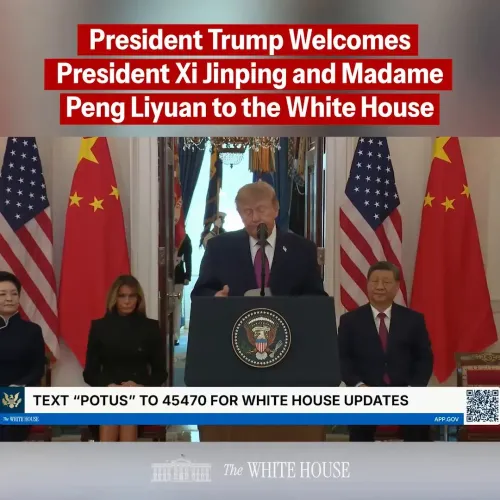
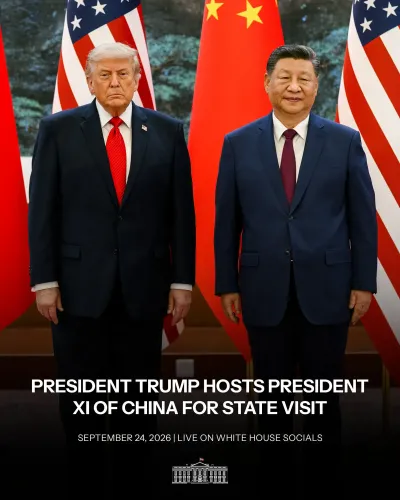
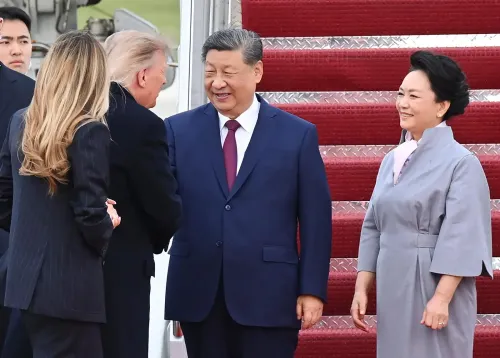
President Trump hosted President Xi Jinping at the White House for a formal state visit on September 24, 2026 .
Trump personally guided Xi on a tour of the White House's newly installed helipad — a gesture underscoring personal diplomatic warmth at the outset of the talks.
The two leaders have a documented history of summitry dating to 2017 , including meetings at Mar-a-Lago and on the margins of G20 gatherings.
US-China state visits historically address trade disputes, technology export controls, and Indo-Pacific security concerns.
Any joint statement, agreed framework, or communiqué language emerging from the visit will be closely watched by governments and markets worldwide, including in India .
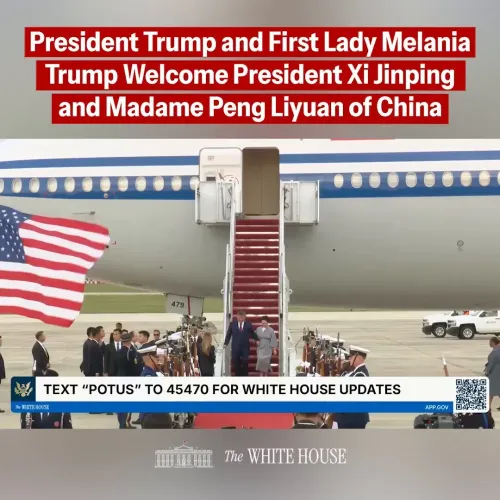
In a moment that signals the highest register of diplomatic engagement between the world's two largest economies, President Donald J. Trump personally guided President Xi Jinping of China on a tour of the White House's new helipad on Thursday, September 24, 2026 — a gesture that blends the ceremonial with the strategic at a state visit watched closely by capitals worldwide.
A helipad tour and the symbolism of personal hospitality
State visits are choreographed down to the minute, and Trump's decision to personally escort Xi through a newly installed facility on the White House grounds is a deliberate signal of warmth. In the language of summitry, a private tour is far more than a photo opportunity — it is an invitation into a principal's personal space, a tool that experienced leaders deploy to set the emotional tone before the harder conversations begin at the table.
The two leaders have a documented history of face-to-face diplomacy. Xi made a landmark visit to the United States in 2017, holding talks with Trump at Mar-a-Lago and later at the White House. The relationship was tested repeatedly through trade disputes, technology controls, and competing regional security priorities — yet both sides have consistently kept the door open to direct leader-level contact.
US-China ties and what brings the two to the White House today
High-level in-person diplomacy between Washington and Beijing went through an extended quiet period in the early 2020s before resuming with renewed intensity. A full state visit — the gold standard of bilateral engagement, complete with ceremonial arrivals, state dinners, and joint press opportunities — represents a deliberate decision by both governments to invest political capital in the relationship.
US-China summits have historically served as the pressure valve for disputes that, left unmanaged, can escalate into market-rattling confrontations. Trade balances, semiconductor export controls, Taiwan, and the South China Sea are the perennial files on the table whenever these two presidents sit down. The outcome of today's state visit — any joint statement, agreed framework, or even a communiqué's tone — will be parsed by governments, investors, and analysts from New Delhi to Brussels before the day is out.
What to watch as the visit unfolds
The helipad tour is the opening frame; the substance will emerge in the hours that follow. Watch for any joint statement language on trade tariffs, a possible extension of existing export-control carve-outs, or a signal on future summit timelines. Even the absence of a joint statement — replaced by separate readouts — would itself be a data point about how far the two sides were willing to go in formalising their agreements.
For India and other Indo-Pacific stakeholders, the temperature of this summit carries direct consequence: a warmer Washington-Beijing axis reshapes the diplomatic geometry that has defined the region since 2020.
Point of View
And Trump's personal helipad tour is the kind of interpersonal confidence-building that has historically preceded substantive concessions in US-China negotiations. For India, the visit is a reminder that Washington's Indo-Pacific partnerships are always conditioned by the temperature in the room between the two superpowers. A warm Trump-Xi summit does not automatically undercut US-India ties, but it does compress the diplomatic space New Delhi counts on when managing its own simultaneous relationships with both Washington and Beijing. The test is what the joint statement — if there is one — actually commits the two sides to.
NationPress
25 Sept 2026
Frequently Asked Questions
What is the significance of Xi Jinping's state visit to the White House in 2026?
It represents the highest level of formal US-China diplomatic engagement, a full state visit, signalling that both governments are investing significant political capital in stabilising and potentially advancing their bilateral relationship on issues like trade, technology, and regional security.
What did Trump and Xi do during the state visit on September 24?
President Trump personally gave President Xi a tour of the White House's new helipad as part of the state visit programme on September 24, 2026, a gesture typical of the personal hospitality leaders extend at the start of high-stakes summits.
What issues are typically discussed at US-China state visits?
US-China summits have historically addressed trade tariffs and deficits, semiconductor and technology export controls, Taiwan, South China Sea navigation, and broader Indo-Pacific security architecture.
How does the Trump-Xi summit affect India?
Any significant warming of US-China ties reshapes the diplomatic geometry of the Indo-Pacific, affecting the strategic partnerships and pressure points that India relies on when managing its own relationships with both Washington and Beijing.
Have Trump and Xi met before?
Yes. Xi visited the United States in 2017 for meetings at Mar-a-Lago and the White House. The two leaders also held bilateral talks on the sidelines of G20 summits in 2018 and 2019, primarily focused on trade negotiations.