Can China Only Purchase Oil from U.S. Markets?
Synopsis
In a bold move, President Trump declares that China must buy oil exclusively from the U.S. or its controlled markets. This strategic decision aims to limit Chinese influence in Venezuela and strengthen American leverage over global energy. Discover how this policy shift could reshape international oil dynamics and impact global prices.
Key Takeaways
China must purchase oil only from U.S. or U.S.-controlled markets.
The move aims to limit China's influence over Venezuelan energy.
U.S. companies will help rebuild Venezuela's energy infrastructure.
The decision is expected to impact global oil prices and U.S.-China relations.
The U.S. remains committed to being the world's leading energy supplier.
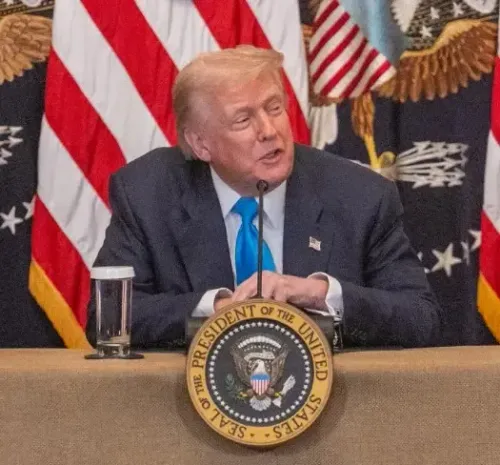
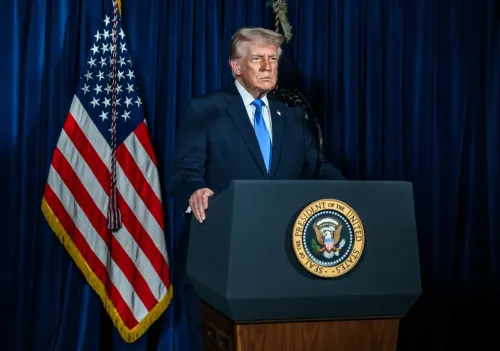
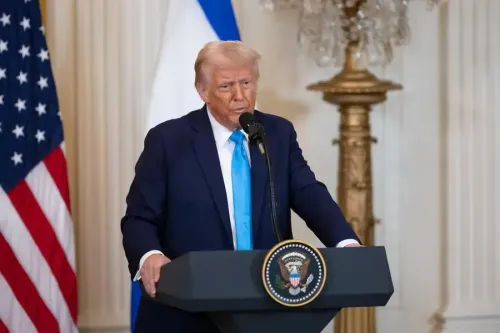
Washington, Jan 10 (NationPress) President Donald Trump announced that China will be limited to acquiring oil exclusively from the United States or from markets under the control of Washington, characterizing this action as part of a larger initiative to strengthen U.S. influence over international energy trade.
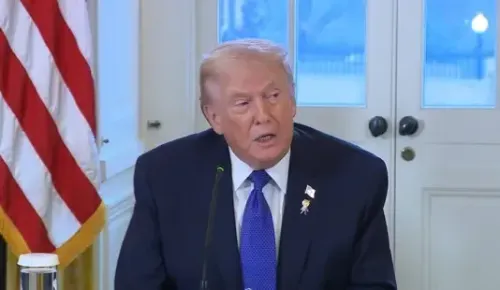
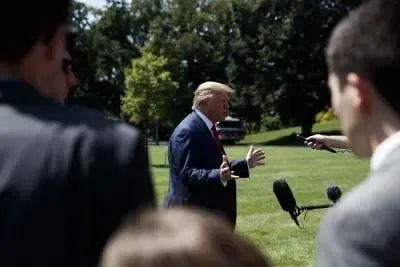
In a statement made at the White House after discussions with oil and gas industry leaders, Trump indicated that China would no longer be permitted to procure Venezuelan oil independently but would instead need to utilize U.S.-approved channels.
“China can buy all the oil they want from us there or in the United States,” Trump told the press.
He clarified that the new policy would affect both oil derived from Venezuela under U.S.-authorized agreements and those sourced from domestic production.
“China and Russia and everybody else is able to go,” Trump remarked, noting that purchases would be made under conditions established by Washington.
Trump emphasized that this decision aims to thwart China from solidifying a strategic presence in Venezuela amid ongoing instability and sanctions.
“If we didn’t do this, China would have been there,” Trump stated. “And Russia would have been there.”
He asserted that Venezuela's geographical closeness to the United States made foreign dominance unacceptable.
“This is sort of a next-door neighbor if you think about it,” Trump said.
The President reiterated that Washington has communicated to Beijing that it will not accept Chinese control or influence over Venezuelan energy resources.
“I told China, and I told Russia, we get along with you very well,” Trump noted. “We like you very much. We don’t want you there.”
He outlined that the new framework would enable China to satisfy its energy requirements while ensuring U.S. strategic superiority.
“We are open for business almost immediately,” Trump declared.
The President remarked that U.S. military and economic interventions have altered the power dynamics in Venezuela and prompted a reconfiguration of global oil access.
“If we didn’t do this, China would have been there and Russia would have been there, maybe they both would have been there together,” Trump explained.
Trump asserted that the United States now governs the conditions under which Venezuelan oil could reach worldwide markets.
“We’re empowered to make that deal,” he affirmed.
He indicated that U.S. oil firms would reconstruct Venezuela’s energy infrastructure under American safeguards, eliminating the circumstances that historically allowed oil to reach what he termed “bad actors.”
“Those sanctions were not enforced,” stated Energy Secretary Chris Wright during the gathering. “That oil just floated out.”
Trump emphasized that the new strategy would avert such scenarios by placing production, refining, and distribution under U.S. supervision.
“We’re going to be working with Venezuela,” Trump assured. “You’re dealing with us directly.”
He stressed that Chinese access to oil would be strictly commercial rather than strategic.
“They need a lot of oil,” Trump remarked, referring to China. “Russia doesn’t need so much.”
Trump reiterated that the United States is ready to provide energy on a large scale.
“We are the most energy-dominant country in the world,” he declared.
He noted that this arrangement would also lead to reduced global oil prices while bolstering U.S. influence.
“This leads to lower taxes and a lot of jobs for Americans,” Trump added.
Trump dismissed claims that limiting China’s access would heighten tensions, asserting that the policy reflects economic realities instead of confrontation.
“I like China,” Trump said. “I like the people of China.”
He concluded that the framework guarantees that energy commerce, rather than geopolitical competition, shapes the relationship.
“We are open for business in the United States and we are open for business in Venezuela,” Trump stated.
China stands as the world’s largest oil importer and has historically sourced crude from a diverse array of suppliers, including Venezuela.
Point of View
It is crucial to recognize the implications of President Trump's announcement regarding China's oil purchases. The strategy to limit Chinese access to oil from Venezuela signifies a pivotal shift in U.S. foreign policy, aimed at maintaining geopolitical control and ensuring energy security. This approach reflects the complexities of international relations, particularly in the context of energy dependency, and raises questions about the long-term consequences for global markets and diplomatic relations.
NationPress
17 Oct 2026
Frequently Asked Questions
Why is China restricted to buying oil from the U.S.?
President Trump stated that the restriction aims to consolidate U.S. leverage over global energy flows and prevent Chinese influence in Venezuela.
What are the implications of this new oil policy?
The policy may reshape international oil dynamics, impact global prices, and strengthen U.S. energy dominance.
How does this affect U.S.-China relations?
While the policy is designed to limit Chinese control over Venezuelan energy assets, it may also strain diplomatic relations between the two nations.
What role does Venezuela play in this situation?
Venezuela's proximity to the U.S. and its oil resources make it a strategic point of interest, prompting the U.S. to take action against foreign influence.
Will this decision affect global oil prices?
Trump indicated that this arrangement could lead to lower global oil prices while reinforcing U.S. influence.