US denaturalisation drive: Trump moves to strip 40 citizens in largest crackdown
Synopsis
The Trump administration has filed denaturalisation complaints against 40 naturalised Americans — the largest such effort in modern US history — spanning espionage, immigration fraud, and concealed crimes. The move, which includes a former Navy sailor convicted of selling secrets to China, signals a sweeping new front in the administration's immigration enforcement strategy: going after citizenship already granted.
Key Takeaways
The Trump administration has moved to strip 40 naturalised Americans of citizenship in what officials call the largest denaturalisation effort in modern US history.
Complaints were filed in federal courts between 21 August and 2 October 2025 .
Allegations span immigration fraud, fraudulent marriages, concealed crimes, tax fraud, espionage, and offences involving minors.
Former US Navy sailor Jinchao Wei , convicted of espionage-related offences, faces citizenship revocation; he was sentenced to 200 months in prison.
Attorney General Todd Blanche and Assistant AG Brett A.
Shumate framed the drive as a national security and integrity measure.
Critics warn the broad scope sets a precedent that could be expanded beyond the current case list.
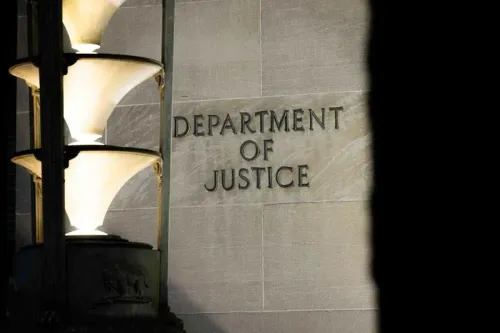
The Trump administration has launched what it describes as the largest denaturalisation effort in modern US history, filing complaints to revoke the citizenship of 40 naturalised Americans on charges ranging from immigration fraud and concealed criminal conduct to espionage and acting as an agent of a foreign government. The Justice Department confirmed that the complaints were filed in federal courts across the United States between 21 August and 2 October 2025.
Scale and Scope of the Drive
The 40 defendants originate from a wide range of countries. Allegations include immigration and identity fraud, fraudulent marriages, concealed criminal records, tax fraud, and offences involving minors. Officials described the volume of complaints filed within a single period as unprecedented under the current administration.
Attorney General Todd Blanche said: 'Today's announcement marks the largest denaturalization effort in modern history. From an individual convicted of espionage to others convicted of sexual offenses against minors, these defendants concealed critical facts from the U.S. government and represent serious criminal offenders. Under President Trump's leadership, the Department of Justice will continue to employ the denaturalization process to maintain our national security and protect the American people.'
The Espionage Case at the Centre
Among the highest-profile targets is Jinchao Wei, a China-born former US Navy sailor convicted of espionage-related offences. According to the department, Wei enlisted in the Navy in 2021 and by February 2022 had allegedly begun conspiring to sell military secrets to China. He obtained US citizenship in May 2022 under provisions designed to fast-track naturalisation for those serving honourably in the armed forces.
Wei was convicted in August 2025 of conspiracy to commit espionage, espionage, and unlawful export of technical data related to defence articles. He was sentenced to 200 months in prison and discharged from the Navy.
The department also cited a separate individual referred to as Li, who allegedly worked at the direction of officers of China's Ministry of State Security to obtain information about Chinese dissidents, pro-democracy advocates, Falun Gong members, and US-based organisations.
What Officials Said
Assistant Attorney General Brett A. Shumate of the Justice Department's Civil Division stated: 'Every single one of these individuals lied their way into US citizenship. This administration will continue to pursue the largest denaturalization effort in department history to restore trust and integrity in U.S. citizenship. Our message is clear: the United States will not tolerate deception in the naturalization process.'
Broader Context and What It Means
Denaturalisation — the legal process of revoking citizenship already granted — has historically been rare in the United States, reserved for cases of war crimes, concealed Nazi activity, or serious fraud. The Trump administration's use of the mechanism at this scale marks a sharp escalation from previous administrations, which had pursued far fewer such proceedings annually.
Critics argue that the breadth of the campaign — covering crimes as varied as espionage and minor fraud — risks setting a precedent that could be applied more expansively over time. Civil liberties groups have previously warned that denaturalisation proceedings put the burden on defendants to disprove government allegations, often years after citizenship was granted.
This comes amid a broader immigration enforcement push by the administration that has included expedited deportations, expanded border measures, and restrictions on asylum. The denaturalisation drive adds a new dimension: targeting those already inside the legal citizenship framework.
How federal courts rule on these 40 complaints will likely set important legal benchmarks for future denaturalisation efforts.
Point of View
Seldom-used tool — invoked for Nazis hiding war crimes, not for tax fraud or minor immigration misrepresentation. Filing 40 complaints in a single period reframes it as a routine enforcement instrument, which is a significant legal and civil liberties threshold to cross. The inclusion of genuinely serious cases — a convicted spy, a foreign intelligence operative — alongside less grave allegations is a deliberate bundling strategy: it makes the whole package harder to oppose. Courts, however, will treat each complaint individually, and the outcomes on the lower-severity cases will define the outer limits of this new enforcement posture. That is the story worth watching.
NationPress
6 Oct 2026
Frequently Asked Questions
What is denaturalisation and why is the US pursuing it?
Denaturalisation is a legal process through which the government revokes citizenship already granted to a naturalised individual. The Trump administration is pursuing it against 40 people it alleges concealed critical facts — including criminal records, fraud, and espionage — to obtain US citizenship.
Who is Jinchao Wei and what did he do?
Jinchao Wei is a China-born former US Navy sailor who was convicted in August 2025 of conspiracy to commit espionage, espionage, and unlawful export of defence-related technical data. He enlisted in the Navy in 2021, allegedly began passing military secrets to China by February 2022, and obtained US citizenship in May 2022 under a fast-track programme for military personnel. He was sentenced to 200 months in prison.
What crimes are the 40 defendants accused of?
The allegations vary widely across the 40 cases, covering immigration and identity fraud, fraudulent marriages, concealed criminal records, tax fraud, sexual offences involving minors, espionage, and acting as an agent of a foreign government.
How does this compare to past denaturalisation efforts in the US?
Historically, denaturalisation proceedings in the US have been rare, primarily used in cases involving war criminals who concealed their pasts. The filing of 40 complaints within a single window is described by the Justice Department itself as the largest such effort in modern US history, representing a sharp escalation in scale and scope.
What happens next in these cases?
The denaturalisation complaints have been filed in federal courts across the United States. Each case will be litigated individually; defendants must contest the government's allegations. How courts rule on these proceedings — particularly the lower-severity cases — will set legal precedents for future denaturalisation efforts by this or subsequent administrations.