Trump Considers Military Action Against Iran Amid Escalating Tensions
Synopsis
As tensions rise, President Donald Trump is evaluating a controversial military operation to seize Iran's uranium. Meanwhile, Iran threatens retaliation against a possible US ground invasion. Diplomatic talks are underway, yet progress remains elusive amidst a backdrop of soaring oil prices.
Key Takeaways
Iran threatens retaliation against a possible US invasion.
Trump is considering a military operation to seize uranium.
Military plans could involve elite special forces.
Pentagon may deploy an additional 10,000 troops.
Diplomatic talks are ongoing, but progress is limited.
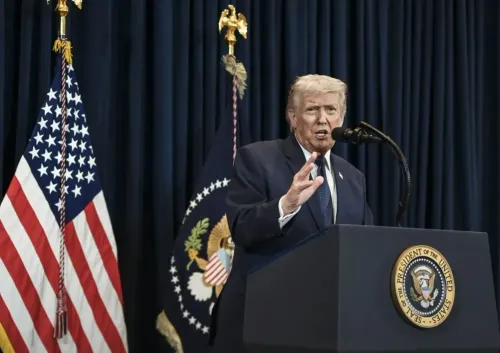
Washington, March 30 (NationPress) Iran has issued a stern warning of retaliation should the United States initiate a ground invasion. This comes as President Donald Trump contemplates a high-stakes military initiative aimed at seizing Tehran's uranium. Concurrently, regional leaders are advocating for talks to diffuse tensions, as reported by US media sources.
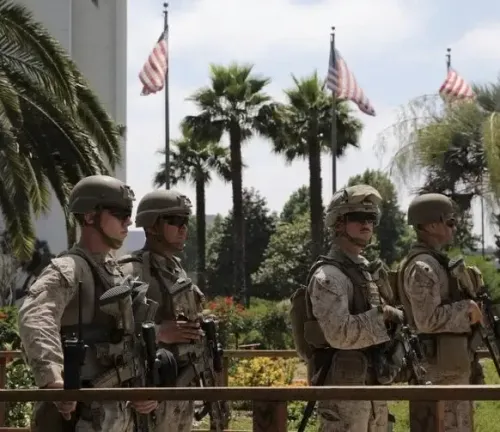
The alert from Tehran arrives amidst indications of a potential escalation. The 31st Marine Expeditionary Unit has been deployed to the Middle East, while US military strategists are evaluating plans that could involve American troops on the ground for an extended period, according to The New York Times.
Central to ongoing discussions is a proposal under consideration by Trump to extract approximately 1,000 pounds of uranium from Iran—an operation described by US officials as intricate and perilous. “Trump hasn’t yet decided whether to issue the command,” officials informed The Wall Street Journal, noting that the president is balancing the risks to US forces against the objective of thwarting Iran's nuclear ambitions.
If given the green light, this operation might see elite special forces securing nuclear facilities while contending with Iranian missile and drone attacks, and extracting radioactive materials from a hostile conflict zone, experts have indicated. “This is not a simple operation,” retired General Joseph Votel stated in an interview with the Journal.
In tandem with these military considerations, the Pentagon is gearing up for a more extensive ground campaign that could last several weeks. Such an endeavor would expose US troops to a variety of threats, including drones, missiles, and improvised explosive devices, as reported by The Washington Post.
Discussions have also touched on increasing troop levels, with the Pentagon reportedly “thinking about deploying an additional 10,000 ground troops” to the area to enhance operational capabilities, according to US officials cited by The Wall Street Journal.
Despite the escalating military presence, diplomatic initiatives are also in motion. Recently, Pakistan facilitated talks involving foreign ministers from Saudi Arabia, Turkey, and Egypt, aiming to cease hostilities and reopen the Strait of Hormuz, according to The New York Times.
However, neither the United States nor Iran has participated in these negotiations, and there are few signs of immediate advancement.
As a consequence of the ongoing conflict, oil prices have surged past $100 a barrel amid fears of supply chain disruptions, particularly through the vital Strait of Hormuz, a crucial global shipping route.
Point of View
It is crucial to highlight the delicate balance between military strategy and diplomatic efforts in the ongoing US-Iran conflict. While military action may seem necessary to deter Iran's nuclear ambitions, the risks involved could have far-reaching consequences for both nations and global stability. A nation-first approach must prioritize dialogue and peaceful resolutions.
NationPress
22 Sept 2026
Frequently Asked Questions
What military action is Trump considering against Iran?
President Trump is contemplating a complex military operation to extract nearly 1,000 pounds of uranium from Iran.
What has Iran threatened in response to US actions?
Iran has warned it would retaliate if the US were to launch a ground invasion.
What are the potential risks of the proposed operation?
The operation could expose US troops to Iranian missiles and drones while securing nuclear sites.
Are there any diplomatic efforts to resolve the conflict?
Yes, diplomatic talks involving several regional powers are underway, but neither the US nor Iran is participating.
How have oil prices been affected by the conflict?
Oil prices have surged above $100 a barrel amid concerns over potential supply disruptions through the Strait of Hormuz.