Trump plans Florida aerospace show to rival Paris Air Show in 2 years
Synopsis
Trump's Kennedy Space Center address was part campaign rally, part industrial vision: a 1,900-acre aerospace mega-show at Florida's old shuttle landing strip that he claims will beat Paris within two years. Paired with lunar and Mars pledges already on NASA's books, the speech signals a White House intent on making American aerospace dominance visible — and commercially bankable — on home soil.
Key Takeaways
Trump announced plans for a 1,900-acre aerospace exhibition venue at Kennedy Space Center , Florida, on 7 November 2026 .
The venue aims to surpass the Paris Air Show within approximately two years , covering commercial aircraft, private aviation, and space technology.
Trump projected hundreds of thousands of visitors annually and hundreds of billions of dollars in deals at the proposed show.
He reiterated the goal of returning US astronauts to the Moon before the end of his term; NASA's Artemis IV lunar landing is targeted for 2028 .
NASA's Space Reactor-1 Freedom nuclear-propulsion Mars mission is targeting launch before end of 2028 .
Trump also championed supersonic passenger aircraft, drones, eVTOL, and autonomous flight development.
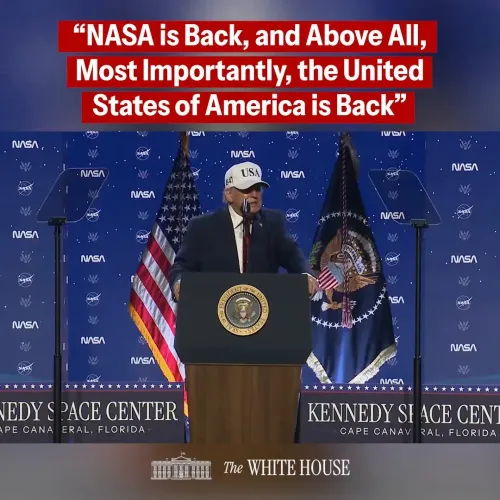
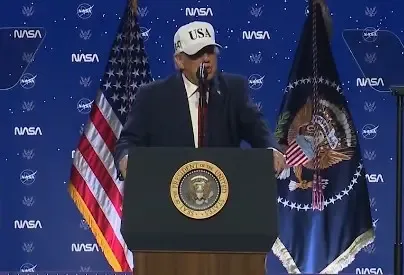
US President Donald Trump on 7 November 2026 unveiled plans for a massive aerospace exhibition venue at Florida's former space shuttle landing facility at Kennedy Space Center, vowing to create a show that would surpass the Paris Air Show within approximately two years. The announcement came during Trump's address at MAX POWER, the aerospace technology expo and air show running from 6 to 8 November at and around Kennedy Space Center.
The Proposed Exhibition Venue
Trump outlined plans for a 1,900-acre venue that would bring together commercial aircraft, private aviation, and space technology under one roof — or rather, one sprawling Florida landscape. The former shuttle landing strip and surrounding land, he argued, offer natural advantages for aircraft displays, space demonstrations, and new exhibition buildings.
'We're going to have a show the likes of which has never been done before,' Trump said, adding: 'We dominate and we should have the biggest show.'
Trump projected hundreds of thousands of visitors annually, billions of dollars in economic activity, and hundreds of billions of dollars in deals struck at the venue. He said the site would continue to expand over the coming years.
Why Trump Wants the US to Lead
Trump pointed directly to major aerospace exhibitions in Paris, Britain, and Dubai, arguing that since American companies already hold a prominent position in aerospace and defence, the United States should host the world's premier showcase for the industry. His framing was explicit: a leading country in aviation and space should not be flying to other nations to unveil its biggest products and secure its largest deals.
Notably, the US has long been a dominant force in commercial aircraft manufacturing — home to Boeing — as well as in private space launch, with companies such as SpaceX, Blue Origin, and others reshaping the global industry. Critics, however, may argue that established shows like Paris carry decades of diplomatic and commercial infrastructure that a new venue would take considerable time to replicate.
Lunar, Mars and Supersonic Ambitions
Trump used the address to reiterate several broader aerospace goals. He praised NASA Administrator Jared Isaacman and reaffirmed his ambition to return American astronauts to the lunar surface before the end of his term. NASA's published programme lists Artemis III to test integrated systems in Earth orbit in 2027, with an Artemis IV lunar landing targeted for 2028.
Trump also repeated plans for a nuclear-powered spacecraft bound for Mars. NASA announced the Space Reactor-1 Freedom mission in March, targeting launch before the end of 2028. The robotic mission would demonstrate nuclear electric propulsion in deep space and deploy a payload of small helicopters to explore Mars — separate from any crewed Mars mission.
On aviation, Trump recalled travelling on the Concorde and lamented the end of supersonic passenger service. 'This may be the only industry in the world where we've gone backwards,' he said, before adding: 'But no more, no more — we're going way forward.' He promoted development of supersonic aircraft designed to operate without disruptive sonic booms, as well as drones, electric vertical takeoff and landing (eVTOL) aircraft, and autonomous flight systems.
What Happens Next
No formal legislative proposal or funding mechanism for the exhibition venue was announced. The address combined near-term ambitions for an expanded aerospace event at Kennedy Space Center with longer-term exploration targets — many of which, including the lunar and Mars programmes, were already part of NASA's published roadmap. How quickly the venue takes shape will depend on federal land agreements, private investment commitments, and the logistical complexity of building world-class exhibition infrastructure at an active space facility.
Point of View
No federal land agreement, no timeline for groundbreaking. Established shows like Paris carry seventy-plus years of diplomatic access and procurement culture that cannot be replicated by runway footage. The more consequential part of Trump's speech may actually be the sustained political backing he is signalling for NASA's Artemis and nuclear propulsion timelines, both of which face real schedule pressure. An air show can be built; a Moon landing cannot be announced into existence.
NationPress
7 Nov 2026
Frequently Asked Questions
What did Trump announce at Kennedy Space Center on 7 November 2026?
Trump announced plans for a 1,900-acre aerospace exhibition venue at Florida's former space shuttle landing facility at Kennedy Space Center, with the stated goal of surpassing the Paris Air Show within about two years. The announcement was made during his address at the MAX POWER aerospace expo running from 6 to 8 November.
How does the proposed US aerospace show compare to the Paris Air Show?
The Paris Air Show is widely regarded as the world's premier aerospace exhibition, with decades of diplomatic and commercial history. Trump's proposed Florida venue would rival it in scale — 1,900 acres — and ambition, but no formal funding or construction timeline has been announced yet.
What are Trump's current NASA goals for the Moon and Mars?
Trump reaffirmed his goal of returning American astronauts to the lunar surface before the end of his term. NASA's published schedule has Artemis III testing systems in Earth orbit in 2027 and Artemis IV targeting a lunar landing in 2028. For Mars, NASA's Space Reactor-1 Freedom robotic nuclear propulsion mission is targeting launch before end of 2028.
What aviation technologies did Trump promote in his speech?
Trump promoted supersonic passenger aircraft designed to avoid disruptive sonic booms, drones, electric vertical takeoff and landing (eVTOL) aircraft, and autonomous flight systems. He framed the proposed Florida exhibition as a common platform for these emerging technologies alongside traditional commercial aircraft and space companies.
Where exactly would the proposed aerospace show be held?
The venue would be located at Kennedy Space Center in Florida, using the former space shuttle landing facility and its surrounding 1,900 acres. Trump cited the existing runway and open land as key advantages for accommodating large aircraft displays and space demonstrations.