Did Trump Just Sign an Executive Order to Centralize AI Regulation and Warn About China's Technological Race?
Click to start listening
Synopsis
In a bold move, President Trump has signed an executive order to centralize AI regulations in the US, aiming to bolster innovation and secure America's technological lead over China. This order highlights the critical nature of AI in national security and economic growth, raising important questions about the future of technology regulation.
Key Takeaways
- Unification of AI regulations under a national framework.
- Concerns over state-level regulations hindering innovation.
- Focus on maintaining US leadership in AI against China.
- Importance of AI for economic growth and national security.
- Collaboration with Congress to establish federal guidelines.
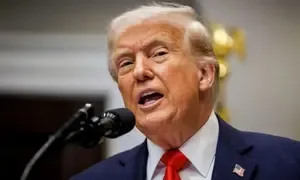
Washington, Dec 12 (NationPress) In a significant move, US President Donald Trump has enacted an executive order that seeks to unify the regulation of artificial intelligence across the United States. He emphasized that inconsistent state regulations could hinder innovation and threaten America’s competitive edge over China in the crucial race for technological supremacy.
“Today, we are witnessing a pivotal signing that underscores our leadership in a remarkable industry — Artificial Intelligence,” Trump stated during the signing ceremony on Thursday. “We are ahead of China and the rest of the world by a substantial margin.”
Trump portrayed AI as a vital strategic competition, asserting that, “There will be a single victor here, and it will either be the US or China. Right now, we are significantly ahead.”
The executive order intends to direct AI advancements under a cohesive national framework, thereby diminishing the influence of state regulations that the administration argues may deter investment in data centers, computing infrastructure, and energy systems.
“If companies are required to obtain approvals from 50 different states, it’s a no-go,” Trump remarked. “Just one negative actor can derail progress.”
A high-ranking official from the administration indicated that the goal is to ensure AI “functions within a unified national framework instead of being hindered by state-level regulations that could cripple the industry,” adding that leadership in AI is essential for “economic growth, job creation, national security, and our technological advantage.”
David Sacks, named the administration’s “AI and crypto czar,” expressed concern about states moving quickly to legislate AI matters. “There are over a thousand bills currently advancing through various state legislatures regarding AI, with more than 100 already approved,” he pointed out, noting that “25% of these are from California, New York, and Illinois.”
Sacks mentioned that the administration will collaborate with Congress to “establish that federal framework” and counter “the most burdensome and excessive state regulations,” while ensuring protections in areas such as child safety.
Speakers during the ceremony also presented AI as a battle of political ideologies. Trump warned that a slowdown in US AI development would grant Beijing a strategic upper hand. “Failing to act would equate to the greatest gift to China that they could ever receive,” he stated.
When asked if his concerns were more about China or the dangers posed by artificial intelligence itself, Trump replied, “Both,” highlighting the rapid advancements already being made in the technology.
“Consider the advancements in medicine and medical research... We are far beyond what we anticipated from the beginnings of AI,” he concluded.
Point of View
It's essential to recognize the significance of this executive order by President Trump. It reflects a proactive approach to ensure that the United States maintains its leadership in artificial intelligence, a critical sector for economic growth and national security. This strategy aims to foster innovation while navigating the challenges posed by state regulations. The focus on AI's strategic implications emphasizes the importance of a unified national policy in a rapidly evolving technological landscape.
NationPress
12/12/2025
Frequently Asked Questions
What is the aim of Trump's executive order on AI?
The executive order aims to centralize the regulation of artificial intelligence in the US to prevent fragmented state-level rules from hindering innovation and to maintain America's competitive edge over China.
Why is the regulation of AI considered important?
AI regulation is crucial for ensuring economic growth, job development, national security, and maintaining a technological edge in global competition.
What are the potential challenges posed by state regulations on AI?
State regulations could lead to inconsistent approvals, deter investment in technology infrastructure, and slow down the pace of innovation in the AI sector.
How many state-level bills are currently being considered for AI regulation?
There are over a thousand bills currently advancing through state legislatures regarding AI, with more than 100 already approved.
What impact could the executive order have on the AI industry?
The executive order could create a more favorable environment for investment and development in the AI industry by ensuring a unified regulatory framework.