Trump unveils Gaza peace roadmap: Hamas disarmament, phased Israeli pullout
Synopsis
Trump's Gaza roadmap is more detailed than any prior US framework — built on 'zero trust' and phased verification, it demands full Hamas disarmament, deploys an International Stabilization Force, and ties Israeli withdrawal to independently confirmed milestones. Whether it holds depends entirely on parties who have broken every prior agreement.
Key Takeaways
Donald Trump announced a phased Gaza peace roadmap on 31 July , calling it a 'historic breakthrough.' The plan demands the complete disarmament of Hamas and all armed groups in Gaza.
Implementation is to begin within 14 days of all-party approval, contingent on a full ceasefire.
A National Committee for the Administration of Gaza would serve as the sole governing and weapons authority during the transition.
An International Stabilization Force would monitor the ceasefire, support police training, and oversee disarmament.
Egypt , Qatar , and Türkiye were credited by Trump as key mediators in the eight-month negotiation process.
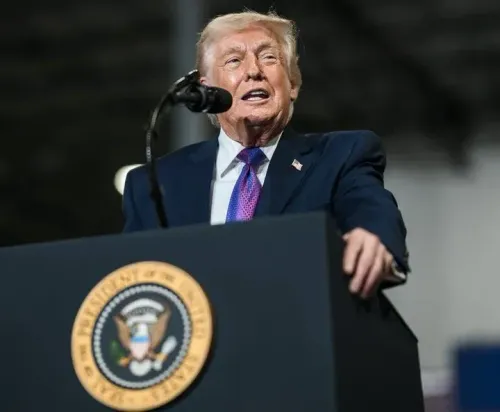
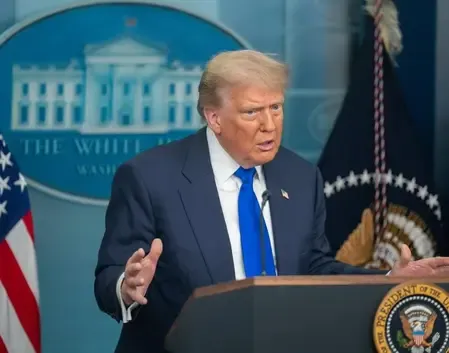
US President Donald Trump on Thursday, 31 July announced what he described as a historic breakthrough in the Gaza conflict, unveiling a phased roadmap that calls for the complete disarmament of Hamas and all other armed groups, the transfer of governance to a new Palestinian transitional authority, and the gradual withdrawal of Israeli forces under an internationally monitored process. The announcement, made via a post on Truth Social, marks the most detailed US-backed peace framework for Gaza since the 7 October attacks.
Key Provisions of the Roadmap
According to a draft roadmap released by the administration, implementation would begin within 14 days of all parties approving the agreement. The document mandates a complete cessation of military operations and fulfilment of all obligations under the existing ceasefire protocol before any subsequent phase can commence.
The plan adopts the principle of 'One Authority, One Law, One Weapon', designating the National Committee for the Administration of Gaza as the sole authority responsible for regulating weapons, issuing licences, and enforcing law across the territory. All civilian and security responsibilities in Gaza would be transferred to this committee during the transitional period.
Disarmament and Security Architecture
The roadmap calls for the dismantling and storage of heavy weapons, tunnels, and military production sites under the supervision of the National Committee and an international monitoring mechanism. Militias operating in Gaza would be dismantled under an agreed timetable. Crucially, surrendered weapons would not be transferred to Israel or any other Palestinian faction — all collected arms would remain under the authority of the transitional administration.
An International Stabilization Force would be deployed to monitor the ceasefire, facilitate humanitarian assistance, support police training, and assist in supervising disarmament. Israeli forces would withdraw gradually according to a timetable linked to verified implementation of the roadmap's security provisions.
What Senior Officials Said
Senior administration officials, speaking during a background briefing, said the roadmap had been negotiated over the past eight months and was designed to address the longstanding absence of trust between Israel and Hamas through a phased, verification-based process rather than political assurances. They described the approach as built on 'zero trust', with every obligation requiring independent confirmation before the next phase is unlocked.
An independent Implementation and Verification Committee would oversee every stage, with progress contingent on confirmed fulfilment of all prior commitments.
Trump's Statement and Regional Diplomacy
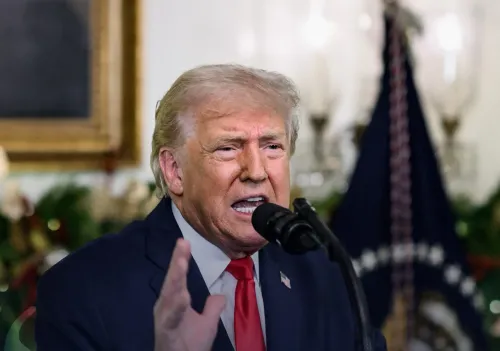
In his Truth Social post, Trump said the Board of Peace had reached a 'HISTORIC agreement for the COMPLETE DISARMAMENT of Hamas and all other armed groups in Gaza.' He described it as 'a monumental step toward lasting PEACE and SECURITY' and a 'major milestone in the implementation of the Trump 20-Point Plan.'
Trump thanked Egypt, Qatar, and Türkiye for their mediation efforts and praised his negotiating team. 'The threat that emerged from Gaza on October 7 will NOT be allowed to rebuild!' he wrote, adding: 'Under this agreement, Gaza will finally be in the hands of a new Palestinian government that serves its PEOPLE.'
Reconstruction and Civil Peace
The proposal also includes a civil peace agreement aimed at ending internal violence in Gaza, prohibiting acts of revenge, armed demonstrations, and military parades during the transition. Reconstruction of Gaza would proceed under international supervision according to a phased timetable prepared jointly by the Board of Peace and the National Committee. The roadmap represents the most structured post-conflict governance framework the US has publicly put forward for the territory, and its reception by Hamas, Israel, and key Arab mediators will determine whether it moves from paper to implementation.
Point of View
Verify everything' architecture is a direct lesson from Oslo-era failures. But the plan's credibility rests on two unknowns: whether Hamas accepts disarmament as a condition for political legitimacy, and whether Israel will cede security control to an untested transitional committee. The eight-month negotiation timeline suggests serious back-channel work, yet the document's release via Truth Social — rather than a formal diplomatic channel — raises questions about whether this is a finalised agreement or a pressure tactic. The role of Egypt, Qatar, and Türkiye as co-guarantors is the plan's most underreported strength; without their sustained enforcement role, the verification mechanism is hollow.
NationPress
31 Jul 2026
Frequently Asked Questions
What is Trump's Gaza peace roadmap?
It is a phased plan announced by US President Donald Trump on 31 July, calling for the complete disarmament of Hamas and all armed groups in Gaza, the transfer of governance to a new Palestinian transitional authority, and a gradual, verified withdrawal of Israeli forces. The roadmap was described as a major milestone in Trump's 20-Point Plan for the region.
When would the Gaza roadmap take effect?
Implementation is set to begin within 14 days of all parties approving the agreement. Each subsequent phase can only proceed after an independent Implementation and Verification Committee confirms that all obligations under the previous phase have been fulfilled.
Who would govern Gaza under the new plan?
The National Committee for the Administration of Gaza would serve as the sole governing authority during the transitional period, responsible for public institutions, essential services, weapons regulation, and internal security, supported by a new Palestinian police force.
What role would international forces play?
An International Stabilization Force would be deployed to monitor the ceasefire, support humanitarian access, assist in police training, and oversee the disarmament process. All collected weapons would remain under the transitional administration — not transferred to Israel or any other Palestinian faction.
Which countries helped negotiate the roadmap?
Egypt, Qatar, and Türkiye were credited by Trump as key mediators. Senior US administration officials said the roadmap was negotiated over eight months and is designed around verification rather than political assurances, given the deep mistrust between Israel and Hamas.