US senator urges ban on Chinese AI models for government contractors
Synopsis
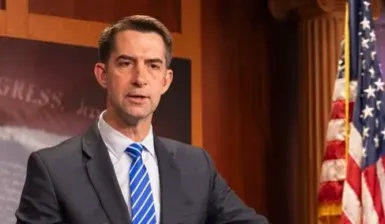
Republican Senator Tom Cotton has written to Commerce Secretary Howard Lutnick demanding a government-wide ban on Chinese AI models for federal contractors — citing a report that nearly 80% of US startups already build on Chinese AI. With defence contractors reportedly using Chinese-model-powered coding tools, Cotton's letter signals Congress is pushing for binding restrictions, not just guidelines.
Key Takeaways
Senator Tom Cotton of Arkansas wrote to Commerce Secretary Howard Lutnick on 30 July 2025 urging a coordinated crackdown on Chinese AI adoption in the US.
Cotton cited a report that nearly 80 per cent of US startups build applications on Chinese AI models, including Qwen and Kimi .
He proposed a government-wide ban on contractor use of Chinese AI models, extending existing DeepSeek restrictions to additional platforms.
Cotton flagged that defence contractors use Cursor 's Kimi-based coding tools to build government software, raising direct security concerns.
Microsoft was reportedly considering DeepSeek as an alternative for its Copilot Cowork platform, a prospect Cotton described as a risk.
The senator called for US AI models to become the global standard, framing the issue as both a national security and geopolitical competition.
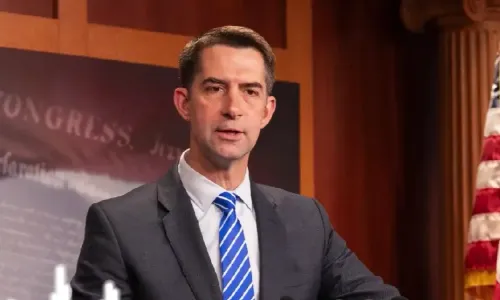
Republican Senator Tom Cotton of Arkansas has called on the Trump administration to adopt a sweeping, multi-pronged strategy to curb American reliance on Chinese artificial intelligence models, warning that national security risks are being subordinated to commercial convenience. In a letter addressed to Commerce Secretary Howard Lutnick on Wednesday, 30 July 2025, and released publicly on Thursday, 31 July 2025, Cotton proposed tighter export controls, broader contractor restrictions, and a push to make American AI the global standard.
What Cotton's Letter Demands
Cotton's core proposal is a government-wide ban on the use of Chinese AI models by federal contractors, extending prohibitions that already exist for DeepSeek to cover additional Chinese models. He noted that the Department of War (DOW) has already barred both agency and contractor use of DeepSeek, and that several other federal agencies have blocked internal access. Cotton argued that widening this ban would send a clear signal that Washington will not trade security for cost savings.
He also called for maintaining strict export controls on advanced computing hardware and semiconductor manufacturing equipment, and for stronger government support of a competitive domestic AI ecosystem capable of rivalling Chinese offerings in both home and international markets.
The Scale of Chinese AI Penetration
Cotton cited a report estimating that nearly 80 per cent of US startups build applications on Chinese AI models — a figure he described as alarming. He pointed to specific commercial examples: Airbnb's chatbot powered by Qwen and Cursor's coding agent built on Kimi. The latter drew particular concern because, according to Cotton, defence contractors use Cursor's coding tools to build software for the government, even though he claimed Chinese models generate 'lower quality, more vulnerable code when the user is American.'
He also flagged that Microsoft was reportedly considering DeepSeek as an alternative for its Copilot Cowork platform, describing the potential move as a risk to supply-chain integrity.
Security Risks: Backdoors and Auditing Gaps
Cotton warned that backdoors may be embedded in open-weight Chinese models and that auditing provides only limited assurances. 'American companies, particularly those that do business with the US government, should never jeopardise our security for higher profits,' he wrote. Critics of open-weight model deployment have long raised similar concerns, but Cotton's letter marks one of the more direct congressional calls for binding restrictions rather than voluntary guidance.
The Broader AI Race Argument
Beyond security, Cotton framed the issue as an economic and geopolitical contest. He argued that the United States must ensure its AI models become the global standard — setting 'standards, norms, and dependencies' — and that allowing Chinese models to dominate global diffusion would cede that structural advantage. He described Communist China as pursuing an 'aggressive AI diffusion strategy' and said Washington must respond with equal ambition.
His vision spans the full capability spectrum: frontier models for defence, critical infrastructure, and advanced scientific research at the high end, and cheaper, efficient models for commercial and consumer workloads where price competitiveness matters more. 'America wins the AI race when we offer models that provide optionality,' Cotton wrote, concluding with a call for prompt action from the administration.
What Comes Next
The letter is a congressional pressure point rather than binding policy, but it arrives as the administration is already tightening AI-related export controls and reviewing supply-chain exposure to Chinese technology. Whether the Commerce Department acts on Cotton's specific recommendations — particularly the government-wide contractor ban — will be a key indicator of how aggressively Washington intends to prosecute the AI competition with Beijing in the months ahead.
Point of View
While striking, comes from a single cited report and deserves independent scrutiny before it drives sweeping policy. The deeper tension Cotton does not fully resolve is that restricting cheaper Chinese models without a credible, affordable American alternative could simply raise costs for small developers without closing the capability gap. The real test is whether the administration pairs any contractor ban with the kind of open-ecosystem investment Cotton also calls for — or whether the restriction arrives alone, leaving US firms squeezed between security mandates and market realities.
NationPress
31 Jul 2026
Frequently Asked Questions
What did Senator Tom Cotton propose regarding Chinese AI models?
Senator Tom Cotton proposed a government-wide ban on the use of Chinese AI models by federal contractors, tighter export controls on advanced semiconductors, and stronger support for a competitive American AI ecosystem. He made these recommendations in a letter to Commerce Secretary Howard Lutnick dated 30 July 2025.
Why is Senator Cotton concerned about Chinese AI models?
Cotton warned that Chinese AI models may contain embedded backdoors and that auditing provides limited security assurances. He also cited a report estimating that nearly 80 per cent of US startups build on Chinese AI models, including tools used by defence contractors to develop government software.
Which Chinese AI models did Cotton specifically name?
Cotton named DeepSeek, Qwen — which powers an Airbnb chatbot — and Kimi, which underpins Cursor's coding agent used by defence contractors. He also noted that Microsoft was reportedly considering DeepSeek for its Copilot Cowork platform.
Are Chinese AI models already banned for US government use?
DeepSeek is already barred for use by the Department of War and several other federal agencies. Cotton's proposal would extend similar prohibitions to additional Chinese AI models and impose a government-wide ban on contractor use, which does not currently exist in that form.
How does Cotton frame the broader US-China AI competition?
Cotton argues the US must not only lead in developing frontier AI models but also ensure American AI becomes the global standard, setting norms and dependencies that rivals cannot easily displace. He described China as pursuing an 'aggressive AI diffusion strategy' and called for the US to match it with a coordinated response spanning security restrictions and open-ecosystem investment.