Chirag Paswan pays tribute to Tulsidas on Jayanti
Synopsis
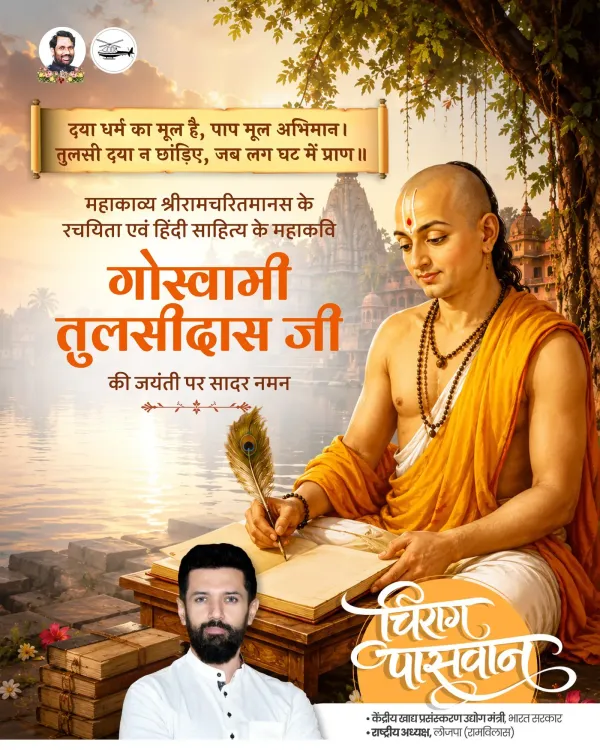
Union Food Processing Minister Chirag Paswan marked Tulsidas Jayanti on 31 July 2026 with a respectful tribute to the 16th-century saint-poet, honouring him as composer of the Ramcharitmanas and a great social reformer whose Awadhi verses transformed devotional life across India.
Key Takeaways
Chirag Paswan , Union Food Processing Minister and national president of Lok Janshakti Party (Ram Vilas) , posted a tribute on 31 July 2026 marking Tulsidas Jayanti.
He described Tulsidas as a great saint, poet and social reformer ( mahaan sant, kavi evam samaj sudharak ).
The post honoured the Ramcharitmanas as an immortal text ( amar granth ) based on the life of Bhagwan Shri Ram.
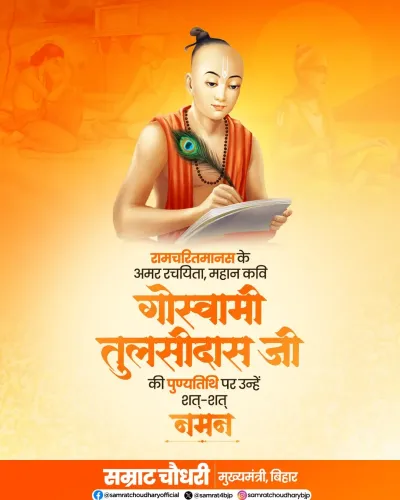
Goswami Tulsidas was a 16th-century saint from Uttar Pradesh who composed the Ramcharitmanas in the Awadhi dialect, making the Ramayana accessible to common people.
Marking Jayantis of literary and religious icons is a long-standing practice among Indian political figures across party lines.
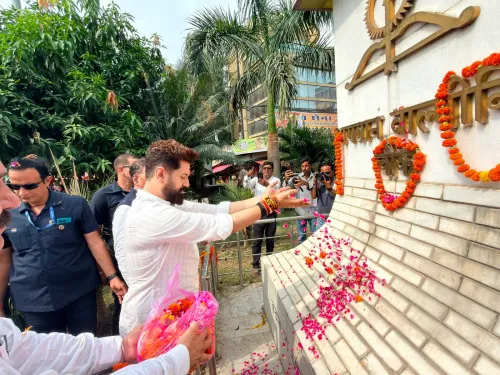
On the birth anniversary of Goswami Tulsidas — the 16th-century saint whose Awadhi verses reshaped how a civilisation reads its own scripture — Union Food Processing Minister Chirag Paswan offered his respects on Friday, 31 July 2026.
Paswan's post offered a saadar naman (respectful salutation) to Tulsidas, describing him as a mahaan sant, kavi evam samaj sudharak — a great saint, poet and social reformer — and the composer of the Ramcharitmanas, the immortal text he called an amar granth based on the life of Maryada Purushottam Bhagwan Shri Ram.
The man behind the Manas
Tulsidas occupies a singular place in the canon of Indian devotional literature. His Ramcharitmanas, composed in the Awadhi dialect of Hindi, brought the Ramayana out of Sanskrit scholarship and into the homes of ordinary people across northern India. Scholars place his life in the 16th century, rooted in what is today Uttar Pradesh, and his verses remain recited, sung and performed across the subcontinent centuries after his death.
His legacy extends beyond poetry. Tulsidas is credited with a democratic impulse — making devotional knowledge accessible to those outside priestly learning — a dimension that gives his Jayanti a cultural resonance well beyond any single community or region.
A ritual of public remembrance
Paswan's tribute follows a well-established pattern in Indian public life: political figures across the spectrum mark the Jayantis of literary and religious icons as a way of anchoring themselves to classical heritage. The gesture carries particular weight for a national party president whose constituency spans Bihar and beyond — regions where Tulsidas's verses are woven into everyday devotional practice.
For a minister whose party, the Lok Janshakti Party (Ram Vilas), draws its core base from communities with deep roots in Ramayana tradition, the tribute is both cultural and political shorthand — a reminder that governance and heritage are not separate conversations in Indian democracy.
The Ramcharitmanas endures not as a relic but as a living text. On Tulsidas Jayanti, the nation's political class and its citizens pause together — and that, in itself, is the story.
Point of View
Whose support base in Bihar and eastern UP has deep roots in Ramayana devotional culture, such gestures are more than ceremonial — they signal cultural alignment. The choice to invoke Tulsidas specifically as a 'social reformer' alongside 'saint and poet' is a subtle but deliberate framing, one that positions classical devotion as progressive rather than merely orthodox. It reflects how Indian political communication increasingly blends the devotional and the civic.
NationPress
31 Jul 2026
Frequently Asked Questions
Who was Goswami Tulsidas?
Goswami Tulsidas was a 16th-century Hindu saint, poet and philosopher from Uttar Pradesh who composed the Ramcharitmanas in the Awadhi dialect of Hindi, making the Ramayana accessible to ordinary people beyond Sanskrit scholarship.
What is the Ramcharitmanas?
The Ramcharitmanas is a major devotional retelling of the Ramayana composed by Tulsidas in Awadhi. It remains one of the most widely read and recited texts in northern India and among Hindi-speaking communities worldwide.
Why did Chirag Paswan post about Tulsidas Jayanti?
Chirag Paswan posted a tribute on Tulsidas Jayanti — the birth anniversary of the saint-poet — to honour his legacy as the composer of the Ramcharitmanas and as a great social reformer, following a long-standing tradition among Indian political figures of publicly marking such anniversaries.
When is Tulsidas Jayanti celebrated?
Tulsidas Jayanti is observed on the birth anniversary of Goswami Tulsidas according to the Hindu calendar, typically falling in July or August. In 2026, Chirag Paswan's tribute was posted on 31 July.
What party does Chirag Paswan lead?
Chirag Paswan is the national president of the Lok Janshakti Party (Ram Vilas), also known as LJP (Ram Vilas), and serves as Union Minister of Food Processing Industries in the central government.