Sonowal pays tribute to Sardar Udham Singh on martyrdom day
Synopsis
Union Minister Sarbananda Sonowal on 31 July paid tribute to Sardar Udham Singh on his balidan diwas. Udham Singh was executed by British authorities on 31 July 1940 after assassinating Michael O'Dwyer in London — an act of retribution for the 1919 Jallianwala Bagh massacre.
Key Takeaways
Sarbananda Sonowal , Union Minister of Ports, Shipping and Waterways, paid tribute to Sardar Udham Singh on 31 July , his martyrdom anniversary.
Udham Singh was executed by British authorities on 31 July 1940 at Pentonville Prison, London , after being convicted of murder.
He assassinated Michael O'Dwyer , former Lieutenant Governor of Punjab, in London on 13 March 1940 — two decades after the Jallianwala Bagh massacre .
The Jallianwala Bagh massacre took place on 13 April 1919 in Amritsar , when British Indian Army troops under Brigadier-General Reginald Dyer killed hundreds of unarmed civilians.
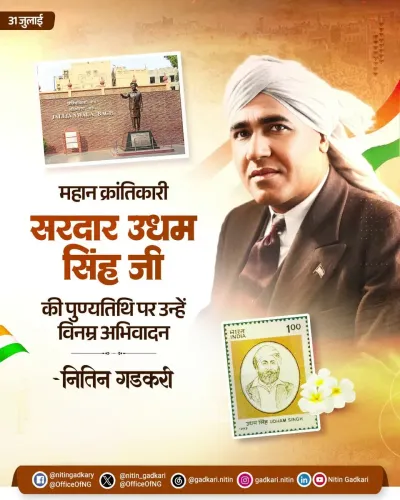
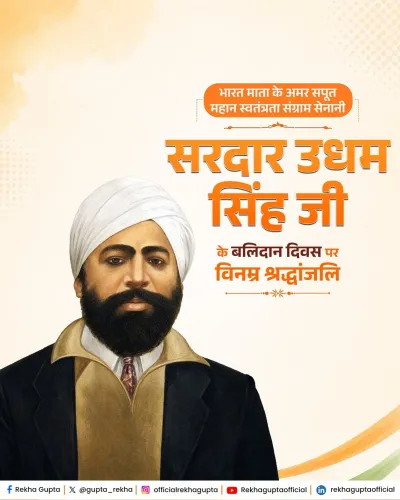
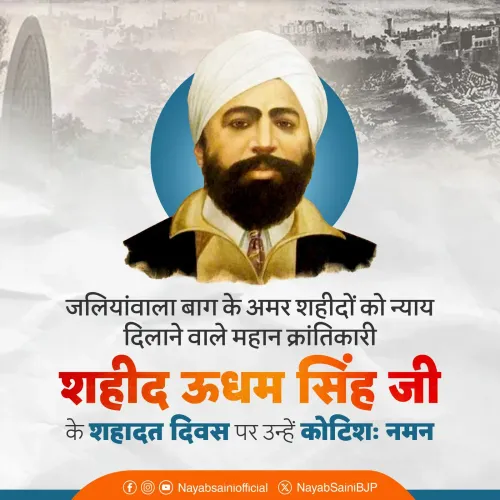
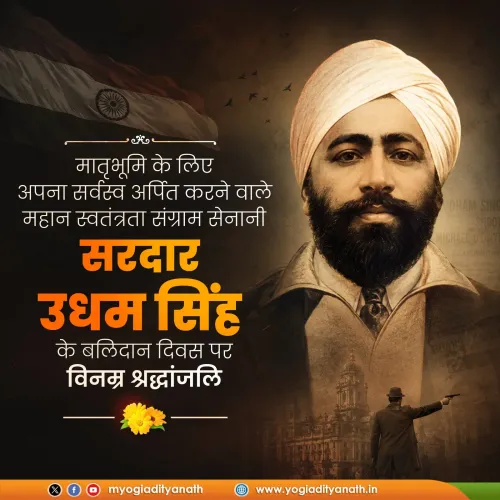
Annual tributes to Udham Singh on 31 July are observed across India's political spectrum as part of a wider tradition of honouring independence-era revolutionaries.
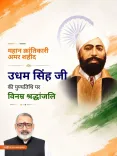
Eighty-six years after a British hangman's noose silenced one of India's most defiant revolutionaries, the nation pauses to remember him. Union Minister of Ports, Shipping and Waterways Sarbananda Sonowal on Friday, 31 July paid homage to Sardar Udham Singh on his balidan diwas — the anniversary of his execution by British authorities in 1940.
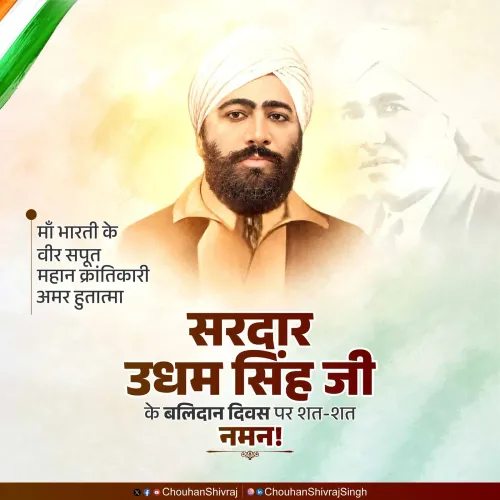
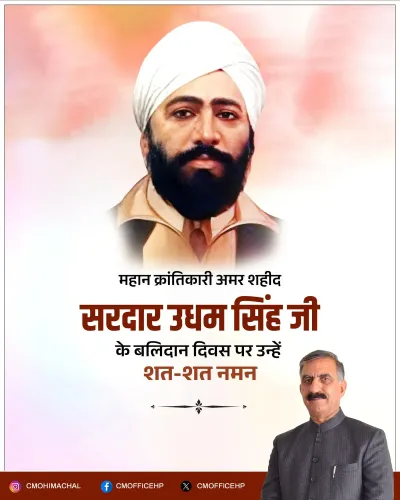
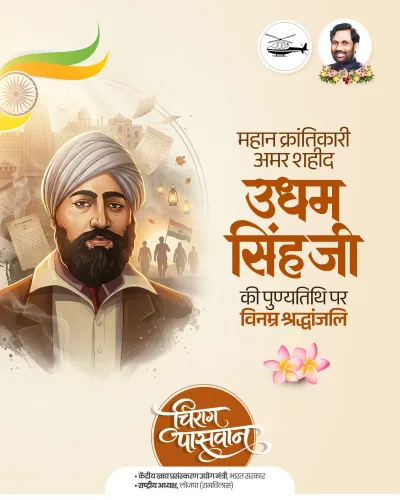
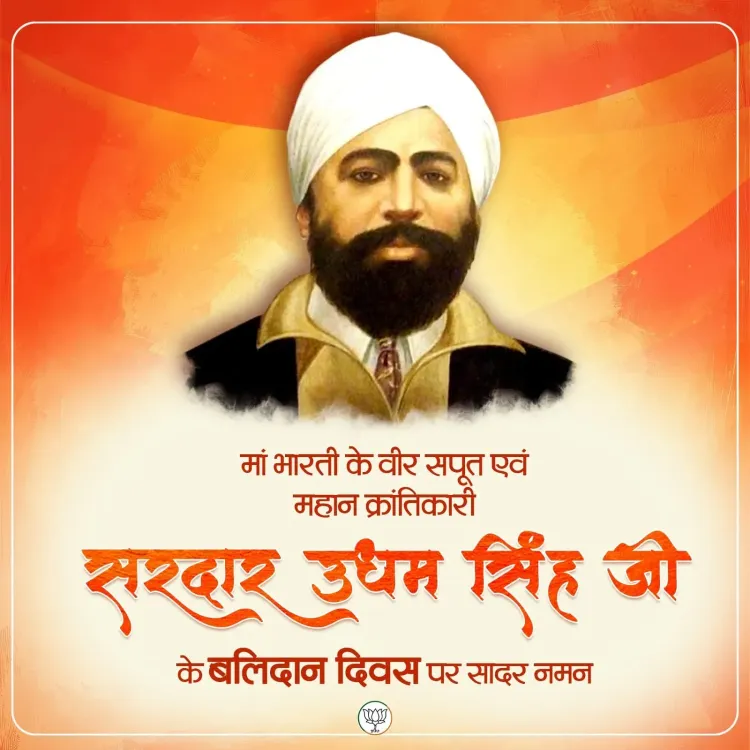
Sonowal's post, in Hindi, read: 'Maa Bharati ke veer sapoot evam mahaan krantikari Sardar Udham Singh ji ke balidan diwas par sadar naman' — 'Respectful salutations on the martyrdom day of the brave son of Mother India and great revolutionary Sardar Udham Singh ji.'
The act that defined a life — and an era
Udham Singh's story is inseparable from one of the darkest days of British colonial rule. On 13 April 1919, Brigadier-General Reginald Dyer ordered his troops to open fire on a peaceful gathering at Jallianwala Bagh in Amritsar, killing hundreds of unarmed civilians — men, women, and children who had nowhere to run. Udham Singh, who witnessed the massacre as a young man, carried that wound for two decades.
His reckoning came on 13 March 1940, when he shot and killed Michael O'Dwyer — the former Lieutenant Governor of Punjab who had endorsed Dyer's action — at a public meeting in London. Tried and convicted, Udham Singh was hanged at Pentonville Prison on 31 July 1940. He was 37. He went to the gallows without regret.
A revolutionary remembered across the political spectrum
Tributes to Udham Singh on 31 July have become an annual fixture in Indian public life, with leaders across party lines invoking his sacrifice. The commemorations reflect a broader national consensus around figures who challenged colonial rule through direct, personal action — men and women whose stories sit outside the mainstream of the independence movement but whose courage is beyond dispute.
For a generation that never lived under the empire, Udham Singh endures as a symbol of the price ordinary Indians paid — and chose to pay — for freedom.
The revolutionary who waited twenty years to avenge Jallianwala Bagh is not easily forgotten. Nor should he be.
Point of View
Figures like Udham Singh carry particular resonance: they represent a muscular, retributive strand of anti-colonial resistance distinct from the Nehruvian mainstream. Invoking Udham Singh on his balidan diwas signals ideological continuity with a tradition of sacrifice that transcends party lines while subtly reinforcing a narrative of bold, uncompromising nationalism. These commemorations rarely translate into policy action, but their cumulative effect shapes the cultural vocabulary of Indian patriotism.
NationPress
31 Jul 2026
Frequently Asked Questions
Why is 31 July observed as Udham Singh's martyrdom day?
31 July marks the day Sardar Udham Singh was executed by British authorities at Pentonville Prison in London in 1940 , following his conviction for the assassination of Michael O'Dwyer . It is observed annually as his balidan diwas across India.
Who was Sardar Udham Singh and what did he do?
Sardar Udham Singh was an Indian revolutionary who assassinated Michael O'Dwyer — the former Lieutenant Governor of Punjab who endorsed the Jallianwala Bagh massacre — in London on 13 March 1940 . He was tried, convicted, and hanged on 31 July 1940 .
What was the connection between Udham Singh and the Jallianwala Bagh massacre?
Udham Singh is believed to have witnessed the Jallianwala Bagh massacre of 13 April 1919 in Amritsar , in which hundreds of unarmed civilians were killed by British Indian Army troops. He spent over two decades seeking retribution, ultimately assassinating the official he held responsible.
Who was Michael O'Dwyer?
Michael O'Dwyer was the Lieutenant Governor of Punjab at the time of the Jallianwala Bagh massacre in 1919 . He endorsed Brigadier-General Reginald Dyer 's decision to open fire on the crowd. Udham Singh assassinated him in London in 1940 .
Why do Indian politicians pay tribute to Udham Singh every year?
Annual tributes to Sardar Udham Singh on 31 July are part of a broader Indian tradition of honouring independence-era revolutionaries who resisted British colonial rule. Leaders across parties participate in these commemorations, reflecting a national consensus on his place in the freedom struggle.