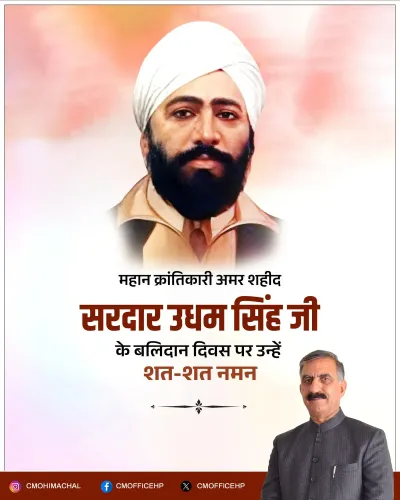
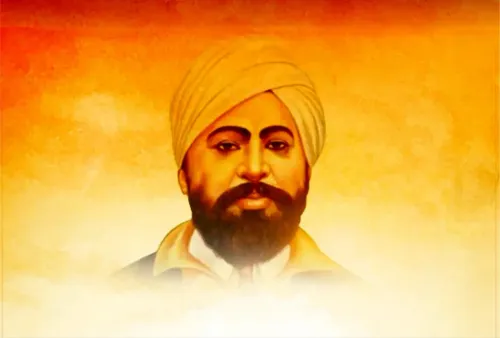
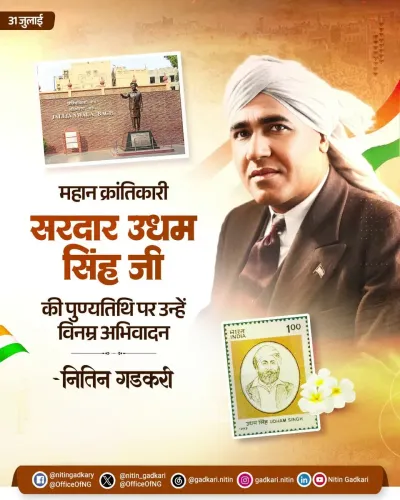
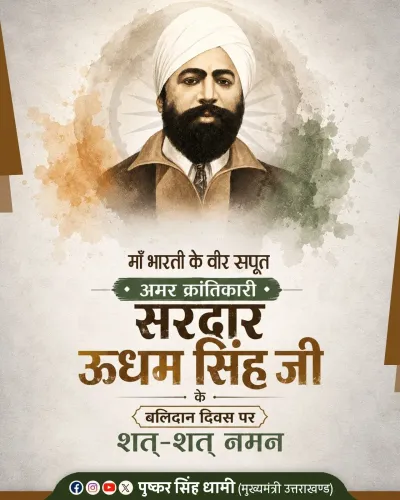
CM Rekha Gupta pays tribute to Sardar Udham Singh on death anniversary
Synopsis
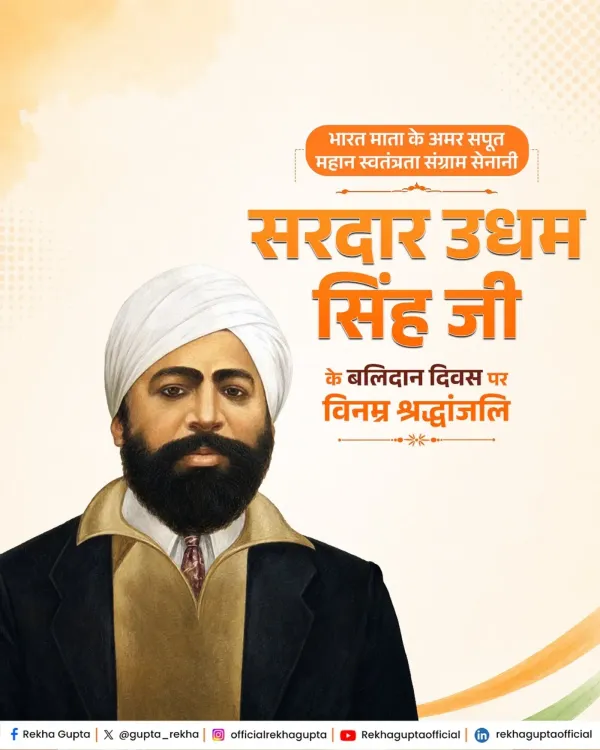
Delhi Chief Minister Rekha Gupta paid tribute to Sardar Udham Singh on his July 31 death anniversary, honouring the revolutionary who avenged the 1919 Jallianwala Bagh massacre by assassinating British official Michael O'Dwyer in London in 1940 before being executed.
Key Takeaways
Delhi CM Rekha Gupta posted a tribute to Sardar Udham Singh on his death anniversary, July 31 .
Udham Singh was executed on July 31, 1940 , after assassinating Michael O'Dwyer in London to avenge the Jallianwala Bagh massacre .
The Jallianwala Bagh massacre took place on April 13, 1919 , in Amritsar , when British troops fired on an unarmed civilian gathering.
CM Gupta described Udham Singh as a symbol of 'undying courage and unparalleled patriotism' who established India's self-respect before the world.
Tributes to Udham Singh on July 31 are observed across party lines as part of a national pattern of commemorating independence-era revolutionaries.
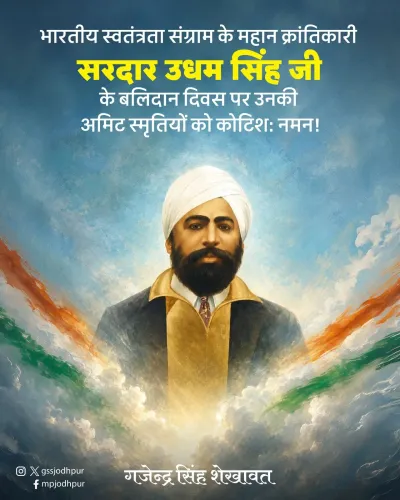
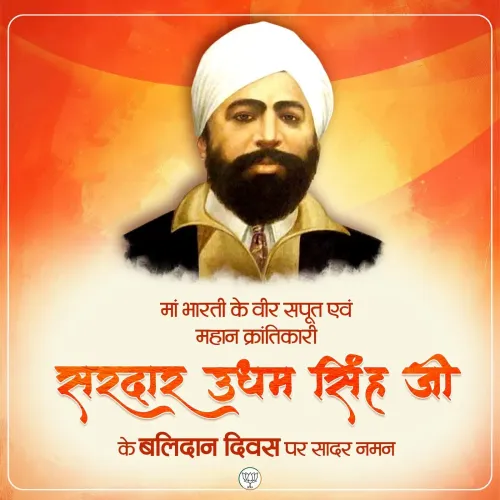
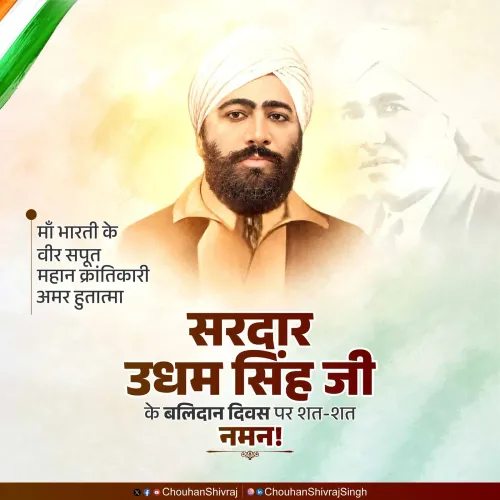
On the death anniversary of one of India's most defiant revolutionaries, Delhi Chief Minister Rekha Gupta on Friday, July 31 paid tribute to Sardar Udham Singh — the man who carried the weight of Jallianwala Bagh across two decades and two continents before exacting a reckoning the world could not ignore.
In her post, CM Gupta described Udham Singh as a symbol of 'undying courage and unparalleled patriotism' (अदम्य साहस और अद्वितीय राष्ट्रभक्ति के प्रतीक), adding that by avenging the Jallianwala Bagh massacre, he had 'established India's self-respect, courage and resolve for justice before the world.'
The act that made Udham Singh immortal
Sardar Udham Singh was present at Jallianwala Bagh, Amritsar, on April 13, 1919, when British troops under the command of General Dyer opened fire on an unarmed crowd gathered for a public meeting. Hundreds of civilians were killed. The massacre became one of the defining atrocities of colonial rule in India.
Udham Singh spent the next two decades in pursuit of one man: Michael O'Dwyer, the Lieutenant Governor of Punjab who had sanctioned the crackdown. On March 13, 1940, at Caxton Hall in London, Udham Singh shot and killed O'Dwyer. He was arrested, tried, and executed on July 31, 1940 — a date now observed each year as his death anniversary.
A tribute woven into national memory
Across the political spectrum, July 31 sees Indian leaders from multiple parties pay homage to Udham Singh. The ritual reflects a broader national consensus that frames revolutionary figures of the independence era as embodiments of courage and sacrifice — themes CM Gupta's tribute echoes directly.
His story was later dramatised and has remained a touchstone in conversations about colonial justice and the price of resistance. CM Gupta's message closes with the note that 'his sacrifice, valour and martyrdom will always inspire the nation' (उनका त्याग, पराक्रम और बलिदान राष्ट्र को सदैव प्रेरित करता रहेगा).
Eighty-six years after the gallows at Pentonville Prison, the name Udham Singh still travels — from history books to the timelines of sitting chief ministers. That reach is itself the answer to what he set out to prove.
Point of View
Figures like Udham Singh — who acted outside institutional channels to deliver justice — carry particular resonance as symbols of assertive, uncompromising patriotism. The emphasis on 'self-respect' and 'justice before the world' subtly echoes contemporary foreign-policy and civilisational themes the party frequently invokes. Such anniversaries offer a low-friction moment of cross-partisan consensus, even as the deeper political framing of colonial history remains contested terrain.
NationPress
14 Sept 2026
Frequently Asked Questions
Who was Sardar Udham Singh and why is he remembered?
Sardar Udham Singh was an Indian revolutionary who assassinated Michael O'Dwyer in London in 1940 to avenge the Jallianwala Bagh massacre of 1919, in which British troops killed hundreds of unarmed civilians in Amritsar. He was executed on July 31, 1940, and is remembered as a symbol of resistance and sacrifice.
What was the Jallianwala Bagh massacre?
The Jallianwala Bagh massacre occurred on April 13, 1919, in Amritsar, Punjab, when British troops under General Dyer opened fire on a large unarmed crowd gathered for a public meeting, killing hundreds of people. It remains one of the most condemned acts of British colonial rule in India.
When is Sardar Udham Singh's death anniversary?
Sardar Udham Singh's death anniversary falls on July 31 each year, marking the date he was executed by hanging at Pentonville Prison in London in 1940.
Who was Michael O'Dwyer and what was his role in Jallianwala Bagh?
Michael O'Dwyer was the Lieutenant Governor of Punjab at the time of the Jallianwala Bagh massacre in 1919. He was widely held responsible for sanctioning the military crackdown in Amritsar. Udham Singh assassinated him in London on March 13, 1940.