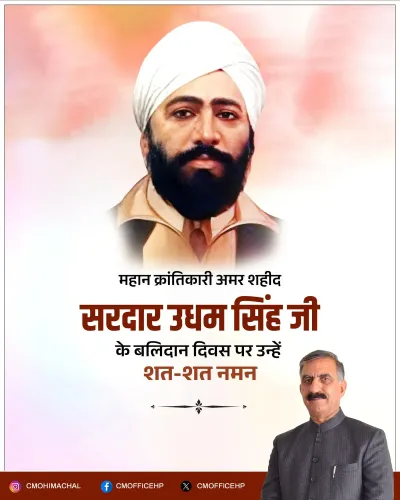
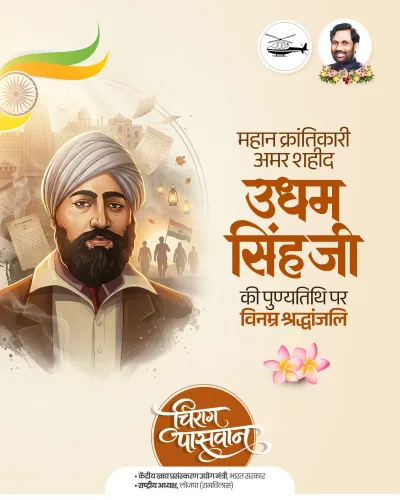
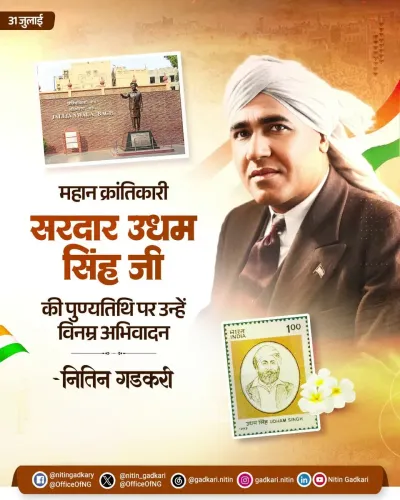
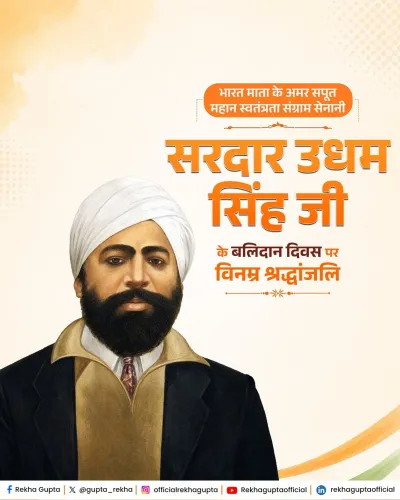
Shekhawat pays tribute to Udham Singh on martyrdom anniversary
Synopsis
Union Culture and Tourism Minister Gajendra Singh Shekhawat honoured Sardar Udham Singh on his martyrdom day, 31 July, recalling the revolutionary who was hanged in London in 1940 for assassinating Sir Michael O'Dwyer in retaliation for the Jallianwala Bagh massacre.
Key Takeaways
31 July 2026 marks the 86th martyrdom anniversary of Sardar Udham Singh, hanged at Pentonville Prison, London, in 1940.
Union Minister Gajendra Singh Shekhawat paid tribute on X, calling Udham Singh a 'great revolutionary of India's freedom struggle.' Udham Singh assassinated Sir Michael O'Dwyer on 13 March 1940 in London, avenging the Jallianwala Bagh massacre of 13 April 1919 .
His remains were repatriated to India in 1974 , decades after his execution.
Annual tributes to freedom-struggle martyrs intensify across parties in the weeks leading up to Independence Day on 15 August .
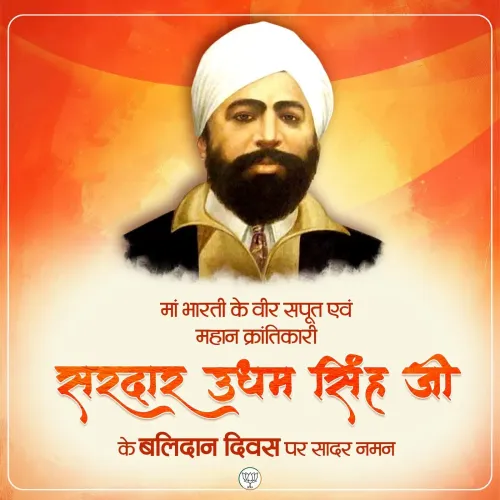
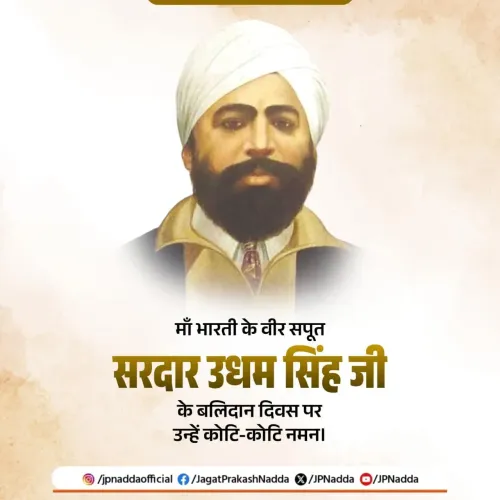
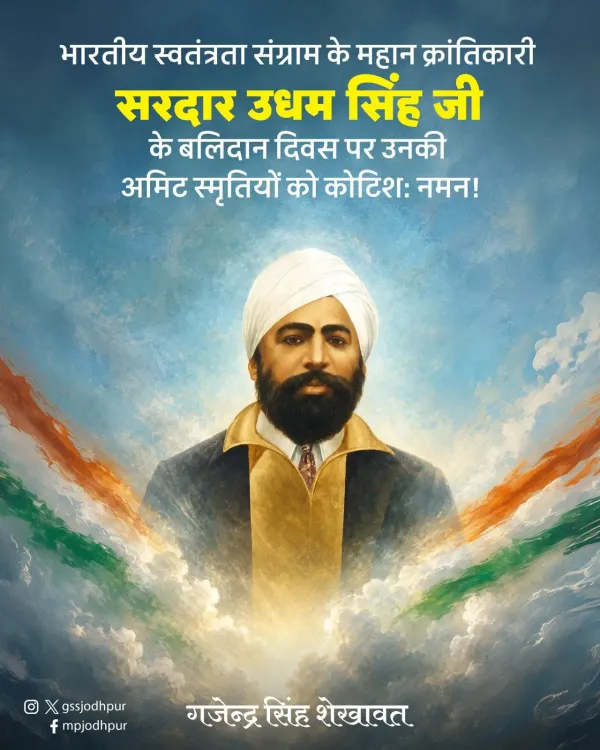
Eighty-six years after Sardar Udham Singh was hanged in a London prison for avenging the Jallianwala Bagh massacre, India's political class paused on 31 July 2026 to remember him — and Union Culture and Tourism Minister Gajendra Singh Shekhawat led that remembrance with a heartfelt post on X.
Shekhawat wrote, 'भारतीय स्वतंत्रता संग्राम के महान क्रांतिकारी सरदार उधम सिंह जी के बलिदान दिवस पर उनकी अमिट स्मृतियों को कोटिशः नमन' — 'On the martyrdom anniversary of the great revolutionary of India's freedom struggle, Sardar Udham Singh, I bow in reverence a million times to his indelible memory.'
The act that made Udham Singh immortal
On 13 March 1940, Sardar Udham Singh walked into Caxton Hall in London and shot dead Sir Michael O'Dwyer, the former Lieutenant Governor of Punjab who had approved Brigadier General Reginald Dyer's order to fire on unarmed civilians at Jallianwala Bagh, Amritsar, on 13 April 1919. That single act of retribution, two decades in the making, turned Udham Singh into one of the most iconic figures of India's armed resistance to British rule.
He was tried, convicted of murder, and executed by hanging on 31 July 1940 at Pentonville Prison, London. His remains were repatriated to India in 1974. Every year on this date, tributes pour in from across the political spectrum — a ritual of remembrance that intensifies as Independence Day on 15 August draws near.
A martyrdom day that unites political India
The annual observance of Udham Singh's martyrdom day is one of the few moments of genuine cross-party consensus in Indian public life. Ministers, chief ministers, and opposition leaders alike invoke his name, reflecting how deeply the revolutionary tradition is embedded in the national memory — and how politically potent the freedom-struggle narrative remains ahead of Independence Day.
For Minister Shekhawat, whose portfolio directly oversees the preservation and promotion of India's cultural heritage, the tribute carries institutional weight beyond the personal. The Ministry of Culture is custodian of the sites, museums, and archives that keep figures like Udham Singh alive in the public imagination.
Sardar Udham Singh did not live to see a free India. But the country he died for has not forgotten his name.
Point of View
Invoking revolutionary icons like Udham Singh broadens its patriotic credentials beyond the RSS-aligned strand of nationalist history. Shekhawat's tribute, coming from the Culture Ministry, also signals that the state apparatus sees itself as the institutional guardian of this memory. With Independence Day weeks away, the frequency of such statements will only rise — each one a quiet argument about which party best honours the sacrifices that made India free.
NationPress
14 Sept 2026
Frequently Asked Questions
Why is 31 July observed as Udham Singh martyrdom day?
Sardar Udham Singh was hanged at Pentonville Prison in London on 31 July 1940 after being convicted of murdering Sir Michael O'Dwyer. The date is observed annually in India as his martyrdom or balidan divas.
Who was Sardar Udham Singh and what did he do?
Sardar Udham Singh was an Indian revolutionary who, on 13 March 1940 , shot and killed Sir Michael O'Dwyer in London to avenge the Jallianwala Bagh massacre of 1919, in which O'Dwyer had approved the order to open fire on unarmed civilians in Amritsar.
What was the Jallianwala Bagh massacre?
On 13 April 1919 , British troops under Brigadier General Reginald Dyer fired on a peaceful gathering of civilians at Jallianwala Bagh in Amritsar, Punjab , killing hundreds. It remains one of the darkest episodes of British colonial rule in India.
Who is Gajendra Singh Shekhawat?
Gajendra Singh Shekhawat is a senior BJP leader, Lok Sabha MP from Jodhpur, Rajasthan , and currently serves as India's Union Minister of Culture and Tourism in the central government.
When were Udham Singh's remains brought back to India?
Sardar Udham Singh's remains were repatriated from the United Kingdom to India in 1974 , more than three decades after his execution in London.