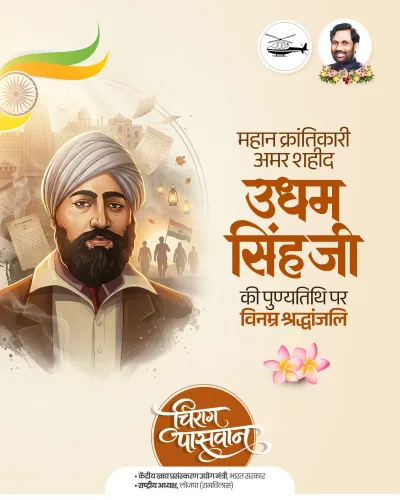
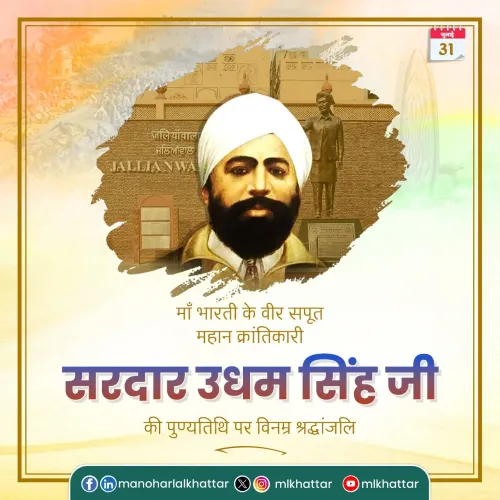
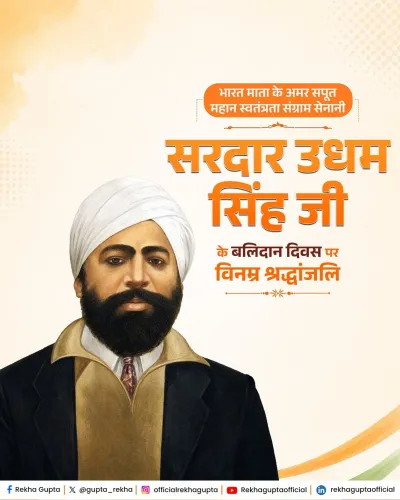
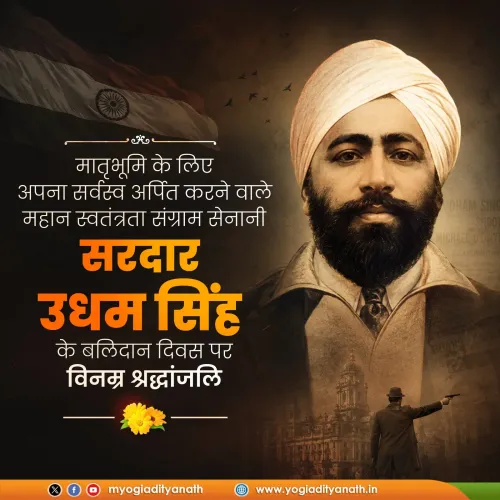
Gadkari pays tribute to Sardar Udham Singh on death anniversary
Synopsis
Union Minister Nitin Gadkari marked the death anniversary of revolutionary Sardar Udham Singh on 31 July 2026, honouring the man executed in 1940 for assassinating Michael O'Dwyer in retaliation for the Jallianwala Bagh massacre.
Key Takeaways
Nitin Gadkari posted a tribute to Sardar Udham Singh on his death anniversary, 31 July 2026 .
Udham Singh was executed by British authorities on 31 July 1940 in London.
He assassinated Michael O'Dwyer on 13 March 1940 at Caxton Hall, London, in retaliation for the 1919 Jallianwala Bagh massacre .
Tributes to Udham Singh on this date are a cross-party tradition in Indian political life, with special resonance in Punjab .
No specific policy or legislative action is attached to the commemoration.
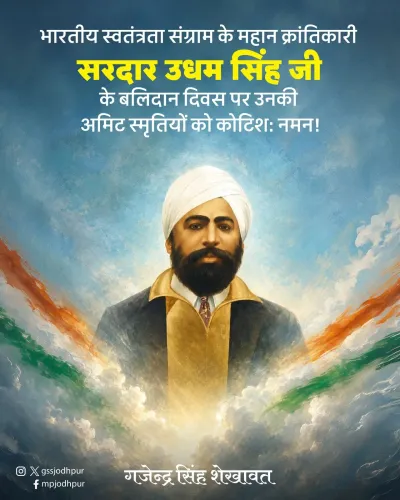
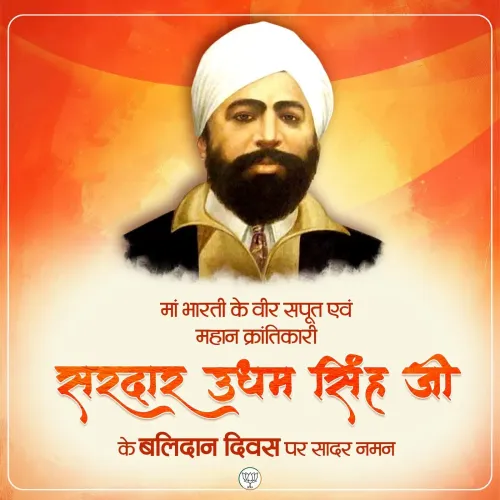
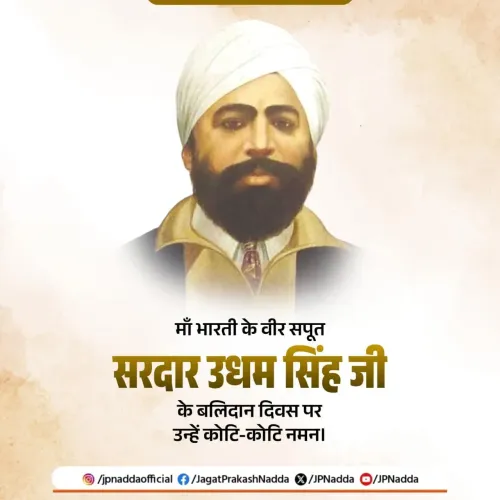
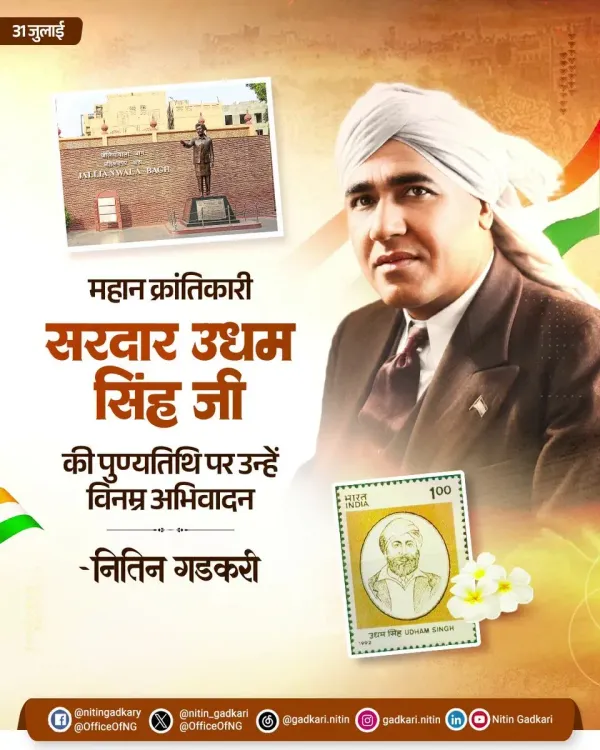
On the death anniversary of one of India's most defiant revolutionaries, Union Road Transport and Highways Minister Nitin Gadkari offered his respects to Sardar Udham Singh on 31 July 2026, honouring the man who carried the wound of Jallianwala Bagh across oceans and decades.
Gadkari posted on X: 'महान क्रांतिकारी सरदार उधम सिंह जी की पुण्यतिथि पर उन्हें विनम्र अभिवादन' — 'Humble salutations to the great revolutionary Sardar Udham Singh on his death anniversary.'
The act that history remembers
Sardar Udham Singh was executed by British authorities on 31 July 1940 in London — the price he paid for assassinating Michael O'Dwyer, the former Lieutenant Governor of Punjab who had sanctioned the orders that led to the Jallianwala Bagh massacre of 1919. Udham Singh had witnessed the carnage as a young man. He waited over two decades, crossed continents, and on 13 March 1940 shot O'Dwyer dead at Caxton Hall, London. He went to the gallows without remorse. His act was not impulsive — it was a reckoning, methodical and cold, carried out in the heart of the empire that had ordered the killing. That is why his name endures not merely as a footnote but as a symbol of the cost ordinary Indians were willing to bear.A commemoration that crosses party lines
Tributes to Udham Singh on 31 July are a consistent feature of Indian political life, offered by leaders across the ideological spectrum. The date holds particular resonance in Punjab and among the Sikh community, for whom Jallianwala Bagh remains a living wound, not a closed chapter of history. Gadkari's tribute follows this well-established pattern of official commemoration of the freedom struggle. The revolutionary's legacy — patient, unrelenting, ultimately fatal — continues to frame how India remembers those who chose resistance over petition.Point of View
Including its more militant strand. Udham Singh sits outside the mainstream Gandhian narrative, and his commemoration by a Cabinet minister underlines how the revolutionary tradition has been folded into official nationalist memory. The tribute carries no immediate policy weight, but it speaks to a broader contest over whose sacrifices the Indian state chooses to honour most visibly.
NationPress
14 Sept 2026
Frequently Asked Questions
Who was Sardar Udham Singh?
Sardar Udham Singh was an Indian revolutionary who assassinated Michael O'Dwyer, the former Lieutenant Governor of Punjab, in London on 13 March 1940, in retaliation for the 1919 Jallianwala Bagh massacre. He was executed by British authorities on 31 July 1940.
Why is 31 July significant for Sardar Udham Singh?
31 July marks the death anniversary of Sardar Udham Singh, who was hanged by British authorities on this date in 1940 in London after being convicted for the assassination of Michael O'Dwyer.
What was the Jallianwala Bagh massacre?
The Jallianwala Bagh massacre took place on 13 April 1919 in Amritsar, Punjab, when British Indian Army troops fired on a large unarmed gathering, killing hundreds. Michael O'Dwyer, as Lieutenant Governor of Punjab, had sanctioned the military action.
Why did Nitin Gadkari pay tribute to Udham Singh?
Nitin Gadkari, Union Minister of Road Transport and Highways, posted a tribute on X to mark the death anniversary of Sardar Udham Singh on 31 July 2026, calling him a 'great revolutionary' — part of a consistent pattern of official Indian political commemorations of freedom-struggle figures.
Where was Sardar Udham Singh from?
Sardar Udham Singh was from Punjab, India. His act of retaliation for the Jallianwala Bagh massacre holds enduring significance particularly for the Punjabi and Sikh community.