Congress wins Nagpur MLC seat, avoids washout in 28-seat biennial polls
Synopsis
Congress escaped a dreaded zero-seat tally in the 28-seat MLC biennial elections — but only just. A single win in Nagpur, against losses in Karnataka (its own-governed state) and Bihar to a brand-new party, lays bare how far the grand old party has slipped from a force to a footnote in state-level legislative politics.
Key Takeaways
Congress won 1 of 28 seats in biennial MLC elections across Uttar Pradesh , Bihar , Maharashtra , and Karnataka — a strike rate of 3.57% .
The sole win came from Nagpur Graduates' constituency , where Abhijeet Wanjari retained the seat for Congress.
In Karnataka , Congress was shut out despite being in power; JD(S) candidate A.
Ranganath defeated sitting MLC Puttanna by around 900 votes in Bengaluru Teachers'.
In Bihar , sitting Congress MLC Madan Mohan Jha lost the Darbhanga Teachers' seat to Jan Suraaj Party's Suresh Prasad Rai ; the RJD fielding its own candidate reportedly split the INDIA Bloc vote.
The BJP and its allies won a majority of the 28 contested seats across the four states.
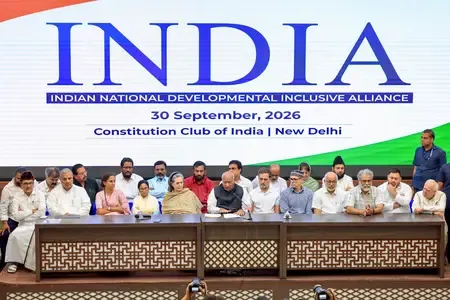
Congress's role in Opposition alliance politics is increasingly limited, with regional parties — SP , RJD , NCP-SP , Sena (UBT) — carrying most of the electoral weight.
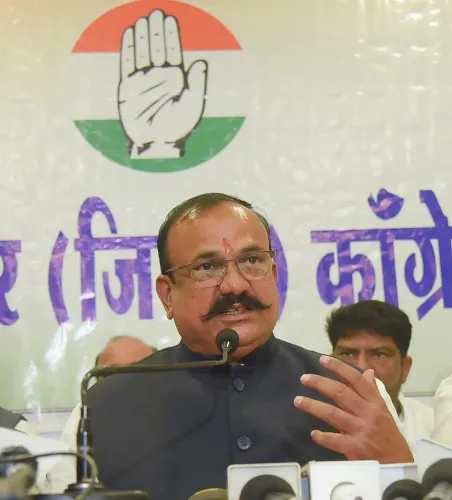
The Indian National Congress salvaged a solitary win from the biennial Legislative Council (MLC) elections held across four states for 28 seats, with its sole victory coming from the Nagpur Graduates' constituency in Maharashtra. The narrow escape — a strike rate of just 3.57% — prevented a complete whitewash that the party's rivals had publicly anticipated, even as several Bharatiya Janata Party (BJP) leaders had already begun mocking a prospective 'zero' tally on social media.
The One Win That Mattered
Congress candidate Abhijeet Wanjari retained the Nagpur Graduates' seat, which party leaders described as a 'bastion.' For a party that has struggled to cross the three-digit mark in recent Lok Sabha elections and has been recording slipping performances in consecutive state Assembly polls, even a single Council seat carries outsized symbolic value. The win gives Congress workers and local leaders a rare rallying point after a string of setbacks.
Party leaders argued the Nagpur result demonstrates that Congress 'still holds pockets of support' among specific voter groups, particularly graduates, and that the overall results were 'mixed' rather than a total rejection — a framing that critics are likely to contest given the broader numbers.
Key Losses: Karnataka and Bihar
The losses were, in several cases, as politically significant as the one win. In Karnataka — a state where Congress currently holds power — the party was shut out entirely. Its highest-profile defeat came in the Bengaluru Teachers' constituency, where Janata Dal (Secular) candidate A. P. Ranganath, a constituent of the BJP-led National Democratic Alliance (NDA), defeated sitting Congress MLC Puttanna by approximately 900 votes. Losing an incumbent seat to an NDA partner in the party's own-governed state was widely regarded as a major setback.
In Bihar, the Darbhanga Teachers' constituency proved equally painful. Sitting MLC and two-time winner Madan Mohan Jha, the Congress candidate, lost to Suresh Prasad Rai of the Prashant Kishor-founded Jan Suraaj Party (JSP) in a closely fought contest — marking a breakthrough for the new political outfit at Congress's direct expense. Reports noted that the INDIA Bloc vote was split at Darbhanga because Rashtriya Janata Dal (RJD), led by Laloo Yadav, fielded its own candidate, reportedly weakening Congress's traditional support base.
The Bigger Picture: Congress's Shrinking Footprint
Across Uttar Pradesh, Bihar, Maharashtra, and Karnataka, Congress won just one of the 28 contested seats. The main electoral weight of the Opposition in these states has visibly shifted to regional formations — the Samajwadi Party in Uttar Pradesh, the RJD in Bihar, and the Nationalist Congress Party – Sharadchandra Pawar faction and Shiv Sena (Uddhav Balasaheb Thackeray) in Maharashtra. The results reinforce a pattern: Congress's role in alliance politics is increasingly transactional, with regional partners allocating it a limited number of seats to avoid vote-bank fragmentation rather than treating it as an equal force.
The BJP and its allies won a majority of the contested seats, further consolidating their legislative presence across the bicameral states. Every MLC seat adds to a party's representation in state Legislative Councils, enabling participation in debates, committees, and legislative coordination — meaning Congress's thin showing limits its institutional voice at the state level as well.
What Comes Next
The Nagpur win offers Congress a modest organisational anchor in Vidarbha, a region of long-standing political importance in Maharashtra. However, the broader electoral arithmetic from these MLC elections will add pressure on the party's leadership to address its weakening state-level organisation ahead of upcoming Assembly polls. Whether the party can convert a symbolic hold on graduate voters in Nagpur into a wider electoral rebuild remains the central question.
Point of View
Where the party controls government machinery, to an NDA constituent is the kind of result that should prompt introspection, not spin. The Darbhanga loss to a months-old party founded by Prashant Kishor is equally telling: if a new entrant with no legacy machinery can peel away a two-time MLC's vote base, the Congress's grass-roots connect is far weaker than its national leadership acknowledges. The Nagpur win is real, but using it as a shield against that larger reckoning would be a strategic mistake.
NationPress
29 Oct 2026
Frequently Asked Questions
How many MLC seats did Congress win in the biennial elections?
Congress won just one seat out of 28 contested in the biennial Legislative Council elections held across Uttar Pradesh, Bihar, Maharashtra, and Karnataka — a strike rate of 3.57%. The sole victory came from the Nagpur Graduates' constituency in Maharashtra, where Abhijeet Wanjari retained the seat.
Who won the Nagpur Graduates' constituency MLC seat for Congress?
Abhijeet Wanjari won the Nagpur Graduates' constituency for Congress, retaining what party leaders called a 'bastion.' The win was Congress's only success across all four states and prevented the party from recording a zero-seat tally.
Why did Congress lose the Bengaluru Teachers' MLC seat in Karnataka?
JD(S) candidate A. P. Ranganath, contesting as part of the BJP-led NDA, defeated sitting Congress MLC Puttanna by approximately 900 votes in the Bengaluru Teachers' constituency. The loss was considered a major setback because Congress currently governs Karnataka and Puttanna was a veteran incumbent.
Who is the Jan Suraaj Party and how did it affect Congress in Bihar?
The Jan Suraaj Party (JSP) is a new political outfit founded by poll strategist Prashant Kishor. Its candidate Suresh Prasad Rai defeated sitting Congress MLC Madan Mohan Jha — a two-time winner — in the Darbhanga Teachers' constituency. Reports suggest the RJD's decision to field its own candidate split the INDIA Bloc vote, contributing to the Congress loss.
What do the MLC election results mean for Congress's position in the Opposition?
The results reinforce that Congress's electoral weight in state-level politics has declined sharply, with regional parties such as the Samajwadi Party in UP, the RJD in Bihar, and NCP-SP and Sena (UBT) in Maharashtra carrying most of the Opposition's electoral burden. Congress increasingly depends on alliance partners allocating it seats to remain relevant, rather than winning them independently.