MLC election results 2026: Congress wins zero seats across Bihar, Karnataka, Maharashtra, UP
Synopsis
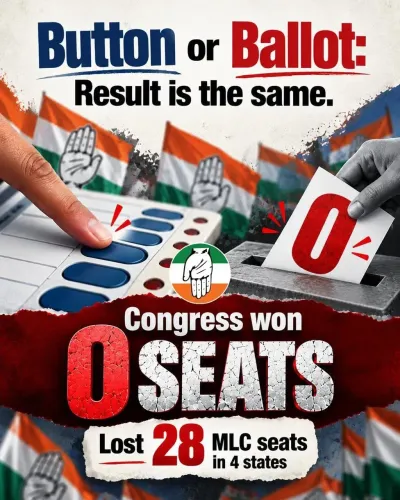
Congress drew a blank across all 28 MLC seats it contested in Bihar, Karnataka, Maharashtra, and UP — including a 4-0 sweep against it in Karnataka, a state it governs. The results deal a tangible blow to the project of positioning Rahul Gandhi as the face of a united opposition, with regional parties continuing to outrun Congress on its own turf.
Key Takeaways
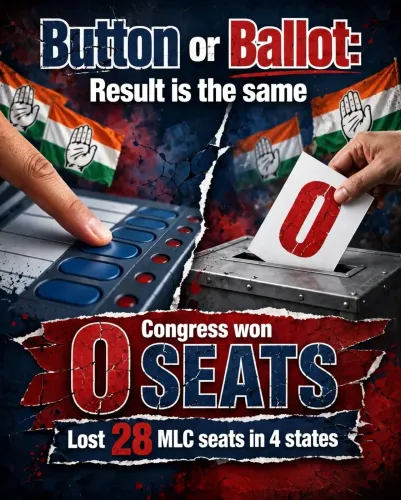
Congress won zero seats across all 28 MLC constituencies it contested in Bihar , Karnataka , Maharashtra , and Uttar Pradesh .
In Karnataka , the BJP -led NDA (with JD(S) ) swept all 4 seats, including wresting the Bengaluru Teachers' seat from Congress.
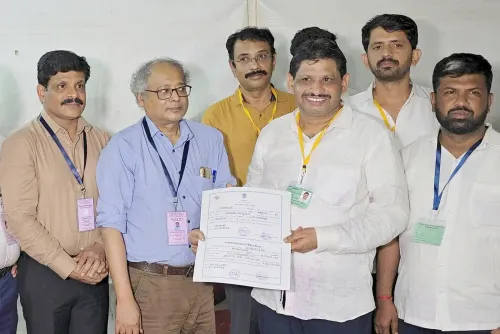
In Bihar , JSP candidate Suresh Prasad Rai defeated sitting Congress MLC Madan Mohan Jha in the Darbhanga Teachers' constituency.
In Uttar Pradesh , the primary contest was between BJP and Samajwadi Party ; Congress was a marginal presence.
In Maharashtra , dominant opposition voices within MVA came from Shiv Sena (UBT) and NCP (Sharad Pawar) , not Congress.
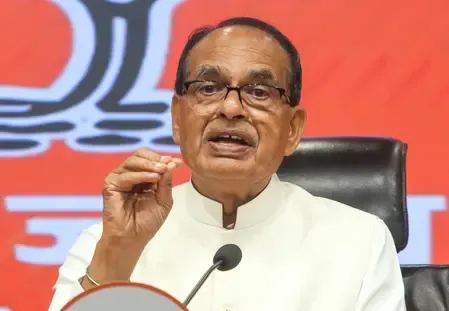
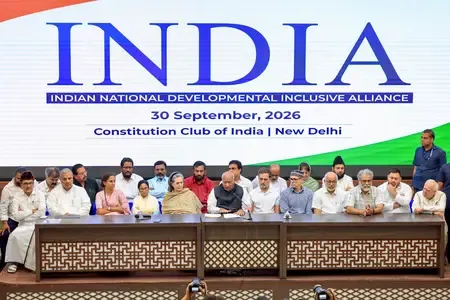
The results reinforce that India's opposition space remains decentralised and regional-leader-driven, complicating Rahul Gandhi's claim to lead the anti-BJP bloc.
Congress failed to win a single seat in the biennial Legislative Council (MLC) elections held across Bihar, Karnataka, Maharashtra, and Uttar Pradesh, delivering a sharp organisational reality check to the party and dealing a blow to efforts to project Rahul Gandhi as the undisputed face of a united anti-Bharatiya Janata Party (BJP) bloc. The party contested 28 seats in total and drew a blank, a result that analysts say reflects deeper structural weaknesses rather than a single electoral miscalculation.
Karnataka: Setback in the Stronghold
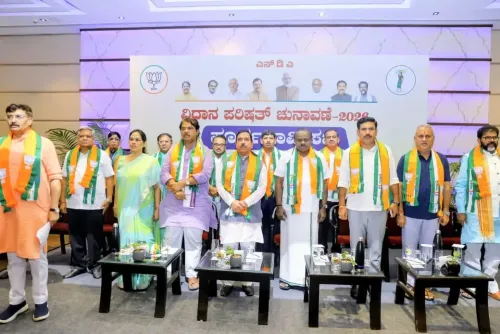
The most politically stinging outcome came from Karnataka, where Congress currently holds power and had hoped to showcase its state government as proof of a national resurgence. Instead, the BJP-led National Democratic Alliance (NDA) — with Janata Dal (Secular) as a constituent — swept the state 4-0. BJP retained the North-East Teachers', South-East Graduates', and West Graduates' constituencies, while JD(S) captured the Bengaluru Teachers' seat directly from Congress. The result indicates that even where Congress governs, opposition alliances and regional dynamics can neutralise its influence. JD(S), though diminished in Assembly politics, demonstrated that regional parties still command durable pockets of support.
Bihar and UP: Regional Forces Dominate
In Bihar, Congress suffered a symbolic defeat in the Darbhanga Teachers' constituency, where Jan Suraaj Party (JSP) candidate Suresh Prasad Rai defeated sitting Congress MLC Madan Mohan Jha. The broader Bihar results painted a fragmented opposition landscape: BJP and its ally Janata Dal (United) won several seats, Rashtriya Janata Dal (RJD) registered a victory, JSP opened its account, and independents also secured wins. Tejashwi Yadav's RJD continues to anchor the central anti-BJP role in the state, while Prashant Kishor's JSP is carving out an alternative space — leaving Congress increasingly squeezed between stronger regional actors.
In Uttar Pradesh, the main contest played out between BJP and the Samajwadi Party (SP), with the former securing victories in multiple constituencies and the latter winning key teachers' seats. Congress, once a major force in the state, was largely peripheral to the contest.
Maharashtra: MVA Tussle, Congress on the Margins
In Maharashtra, counting trends pointed to a mixed battle between the ruling Mahayuti alliance and the opposition Maha Vikas Aghadi (MVA), with candidates from both camps leading in different constituencies. Crucially, the dominant opposition faces were regional leaders from Shiv Sena (UBT) and NCP (Sharad Pawar) camps rather than Congress — reinforcing the party's secondary status within the very alliance it is nominally a part of.
What the Results Signal for Rahul Gandhi's Leadership Bid
These elections were limited-franchise contests — involving graduates and teachers rather than the general electorate — yet they are widely read as indicators of organisational strength, cadre mobilisation, and political influence among politically aware sections of society. On all three counts, Congress's performance fell short. The outcome underlines its continued inability to translate anti-BJP sentiment into consolidated electoral support or establish itself as the bloc's unquestioned anchor. While Congress may remain an essential component of any broad opposition coalition, the results suggest that Rahul Gandhi is far from commanding unquestioned leadership of that bloc. India's opposition space, the results once again indicate, remains decentralised, state-driven, and heavily reliant on regional satraps.
Point of View
SP in UP, Shiv Sena (UBT) and NCP (SP) in Maharashtra — confirms what has been evident since the 2024 Lok Sabha results: regional parties are not Congress's foot soldiers, they are its competitors for the anti-BJP constituency. Rahul Gandhi's 'face of the opposition' framing requires a party that can win on its own; these results suggest Congress is not yet that party.
NationPress
28 Oct 2026
Frequently Asked Questions
What happened in the MLC elections across Bihar, Karnataka, Maharashtra, and UP?
The biennial Legislative Council elections across the four states saw Congress fail to win a single seat from the 28 it contested. The BJP and its allies, along with regional opposition parties, dominated the results, leaving Congress without any representation from these contests.
Why is the Karnataka MLC result especially significant for Congress?
Karnataka is a Congress-governed state the party had hoped to showcase as a model for national revival. Instead, the BJP-led NDA swept all four seats 4-0, with JD(S) taking the Bengaluru Teachers' seat directly from Congress — suggesting that holding state power has not translated into organisational strength on the ground.
What do MLC elections measure politically?
MLC elections are limited-franchise contests involving graduates and teachers rather than the general electorate. They are widely regarded as indicators of a party's organisational strength, cadre mobilisation, and political influence among educated, politically aware voters — making the results a useful barometer of ground-level party machinery.
How does the MLC outcome affect Rahul Gandhi's position as opposition leader?
The results complicate the project of positioning Rahul Gandhi as the unquestioned face of a united anti-BJP bloc. With regional parties — RJD in Bihar, SP in UP, Shiv Sena (UBT) and NCP (Sharad Pawar) in Maharashtra — continuing to outperform Congress even within opposition alliances, the party's claim to national opposition leadership lacks a corresponding organisational base.
Did any new political force make an impact in these MLC elections?
Yes, in Bihar, Prashant Kishor's Jan Suraaj Party (JSP) opened its account by defeating sitting Congress MLC Madan Mohan Jha in the Darbhanga Teachers' constituency. The result suggests JSP is beginning to carve out a niche in Bihar's political landscape, adding further competition for the anti-BJP space.