Shivraj Chouhan mocks Congress: 'Aryabhata invented zero for them' after MLC poll rout
Synopsis
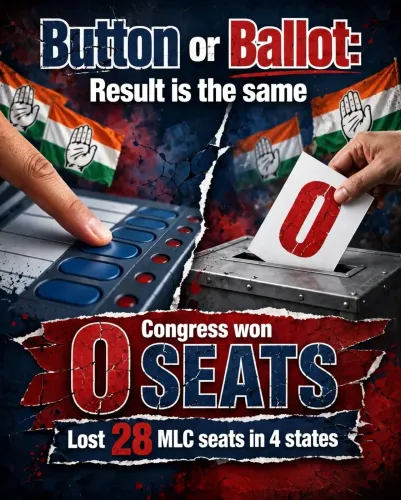
Congress contested 12 Legislative Council seats across four states — and won zero. Shivraj Singh Chouhan's 'Aryabhata invented zero for the Congress' quip captured the moment, but the real sting is Karnataka: the Congress governs the state yet lost all four MLC seats it contested to the BJP-JD(S) alliance.
Key Takeaways
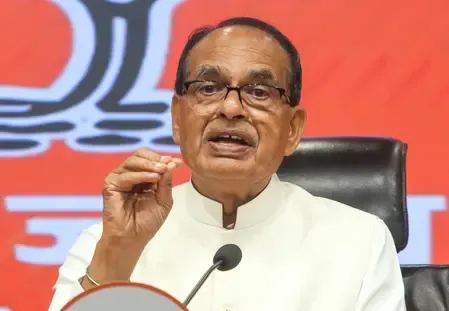
Shivraj Singh Chouhan posted on X on 28 October that 'Aryabhata invented zero specifically for the Congress,' mocking the party's MLC poll performance.
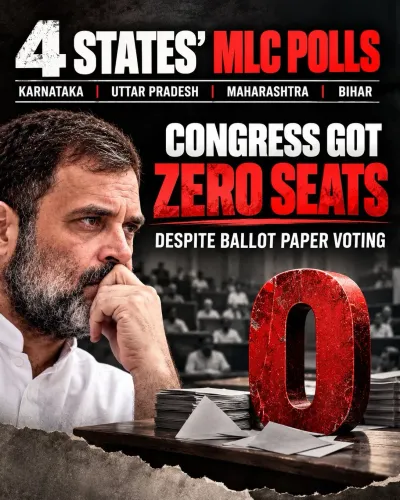
Congress contested 12 of 28 Legislative Council seats across Uttar Pradesh, Bihar, Maharashtra and Karnataka — and won none .
The party lost four seats it had previously held , including all four it contested in Karnataka , where it is the ruling party.
The BJP–JD(S) alliance swept all four Karnataka MLC seats; BJP retained three and JD(S) took the Bengaluru Teachers' seat.
MP BJP president Hemant Khandelwal noted Congress had blamed EVMs, then SIR, and now lost under a ballot-paper system — calling for a leadership rethink.
Bharatiya Janata Party (BJP) leader Shivraj Singh Chouhan on Wednesday, 28 October launched a sharp attack on the Indian National Congress after the opposition party failed to win a single seat in Legislative Council (MLC) elections held across four states — drawing a blank in all 12 constituencies it contested.
The Jibe That Went Viral
Chouhan, the former Madhya Pradesh Chief Minister and senior Union minister, posted a pointed remark on X: 'Sometimes it seems that Aryabhata invented zero specifically for the Congress. Its leadership is zero, its policies are zero, and its results are zero.' The post drew wide attention, framing the Congress's performance as a systemic failure rather than a one-off electoral loss.
What the MLC Results Show
Elections were held for 28 Legislative Council seats across Uttar Pradesh, Bihar, Maharashtra, and Karnataka using ballot papers. The Congress contested 12 of those seats, including four it had previously held, and lost all of them. In Karnataka — where the Congress is in power — the party failed to secure any of the four seats it contested. The BJP–Janata Dal (Secular) alliance swept all four Karnataka seats, with BJP retaining three constituencies and JD(S) wresting the Bengaluru Teachers' seat from the Congress. In Bihar, the Congress lost all five seats it contested, and in Maharashtra it drew a blank across three constituencies. It fielded no candidates in Uttar Pradesh's 11 seats.
BJP Presses the Advantage
Madhya Pradesh BJP president Hemant Khandelwal escalated the critique, pointing out that the Congress had blamed Electronic Voting Machines (EVMs) for previous losses, then attributed defeats to the Special Intensive Revision (SIR) of electoral rolls — and has now lost even in elections conducted through traditional ballot papers. 'First, the Congress lost elections while blaming EVMs, then it held SIR responsible, and now it has lost even in elections conducted through ballot papers,' Khandelwal said, urging the party to reconsider its leadership rather than its narrative about the voting system.
Why These Polls Matter Beyond Their Scale
Legislative Council elections involving graduates' and teachers' constituencies carry a limited electorate and rarely generate national headlines on their own. However, the Congress's failure to retain seats it previously held — including in a state where it governs — gives the BJP a potent line of attack on the opposition's broader credibility and its recurring claims about electoral malpractice. This comes amid an already fraught political environment heading into upcoming state assembly cycles. Notably, the clean sweep by the BJP-JD(S) alliance in Karnataka is particularly significant, as it chips away at the Congress's narrative of southern dominance. The results are unlikely to shift the national balance of power, but they hand the BJP a fresh rhetorical weapon ahead of the next round of elections.
Point of View
Because it goes beyond mockery: it invites voters and commentators to ask whether the problem is systemic within the Congress itself. Chouhan's Aryabhata quip will circulate widely, but the sharper challenge comes from Khandelwal's question — if not EVMs, not SIR, and not ballot papers, what is the Congress's explanation for its own voters drifting away?
NationPress
28 Oct 2026
Frequently Asked Questions
What happened in the Legislative Council elections on 28 October 2026?
Elections were held for 28 Legislative Council seats across Uttar Pradesh, Bihar, Maharashtra and Karnataka using ballot papers. The Congress contested 12 seats and failed to win any, while the BJP and its allies performed strongly, including sweeping all four contested seats in Karnataka.
What did Shivraj Singh Chouhan say about Congress on X?
Chouhan posted on X that 'Sometimes it seems that Aryabhata invented zero specifically for the Congress. Its leadership is zero, its policies are zero, and its results are zero.' The remark was a direct reference to the party's clean-sweep loss across all 12 MLC seats it contested.
Why is the Karnataka result particularly significant for Congress?
Congress is the ruling party in Karnataka yet failed to win any of the four MLC seats it contested in the state. The BJP–JD(S) alliance swept all four, with JD(S) also taking the Bengaluru Teachers' seat away from the Congress, dealing a reputational blow in its own stronghold.
How does the BJP use these results against Congress's EVM criticism?
BJP leaders, including Madhya Pradesh BJP president Hemant Khandelwal, pointed out that Congress had previously blamed EVMs and then the Special Intensive Revision of electoral rolls for losses — but has now lost elections conducted through traditional ballot papers, removing both as credible excuses.
What are Legislative Council elections and who votes in them?
Legislative Council elections for graduates' and teachers' constituencies involve a limited, specialised electorate — registered graduates and teachers within a given constituency — rather than the general public. They are considered a lower-stakes contest than assembly or Lok Sabha elections, but carry political signal value.