Sonowal hails anti-paper-leak amendment bill passage in Parliament
Synopsis
The Public Examinations (Prevention of Unfair Means) Amendment Bill, 2026 has passed both Houses of Parliament. Union Minister Sarbananda Sonowal called it a historic milestone for India's youth, building on the 2024 law that first criminalised exam malpractice at the central level.
Key Takeaways
The Public Examinations (Prevention of Unfair Means) Amendment Bill, 2026 was passed by both Lok Sabha and Rajya Sabha .
Union Minister Sarbananda Sonowal described the bill as 'the strongest deterrent' against compromising public examination credibility.
The amendment builds on the original Public Examinations (Prevention of Unfair Means) Act, 2024 , which first established central-level criminal liability for exam fraud.
The law targets malpractice in exams conducted by bodies such as the NTA and UPSC , affecting millions of aspirants annually.
The next critical step is notification of rules under the amended law and its application to upcoming examination and recruitment cycles.
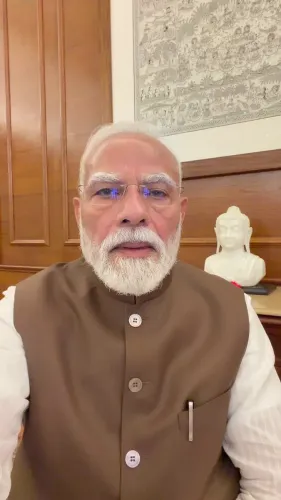
India's war on examination fraud just got a new weapon. Union Minister of Ports, Shipping and Waterways Sarbananda Sonowal on Friday, July 31, 2026, called the passage of the Public Examinations (Prevention of Unfair Means) Amendment Bill, 2026 in both Houses of Parliament a 'historic milestone' for the country's youth.
The bill clears both chambers — Lok Sabha and Rajya Sabha — marking a significant legislative step in the Modi government's push to clean up India's deeply troubled public examination ecosystem.
From 2024 law to 2026 amendment: closing the gaps
The original Public Examinations (Prevention of Unfair Means) Act, 2024 was itself a response to a wave of high-profile paper leaks and irregularities that shook national-level entrance and recruitment exams, triggering mass protests by aspirants. That law established criminal liability for exam malpractice for the first time at the central level. The 2026 Amendment Bill builds on that foundation, with Sonowal describing it as 'the strongest deterrent against any attempt to compromise credibility of our public examination system.' The stakes are enormous. Millions of young Indians — competing for seats in medical colleges, engineering institutes, and government jobs — pour years of preparation into examinations conducted by bodies such as the National Testing Agency (NTA) and the Union Public Service Commission (UPSC). A single leaked question paper can invalidate that effort overnight.What the amendment signals for India's Yuva Shakti
Sonowal framed the legislation squarely around the aspirations of what he called Yuva Shakti — India's youth power — arguing that the amended law 'ensures nothing comes between them and their dreams.' The government's messaging is deliberate: exam integrity is not a bureaucratic footnote but a social contract with the generation that will carry India's demographic dividend. The immediate watch-point is the notification of rules under the amended law and its application to upcoming examination cycles. How swiftly enforcement agencies operationalise the new provisions — and whether deterrence translates into a measurable drop in malpractice incidents — will determine whether this legislative milestone becomes a genuine turning point. For millions of aspirants who have seen their futures disrupted by fraud, the amendment's real test begins not in Parliament, but in examination halls across the country.Point of View
Signalling that the 2024 Act alone was deemed insufficient to close all loopholes. Politically, the legislation is calibrated to resonate with a vast constituency of exam aspirants and their families — a demographic that erupted in anger over paper leaks in 2024. The real measure of the law's success will be institutional: whether enforcement agencies gain the teeth and resources to prosecute offenders swiftly. If implementation falters, the legislation risks becoming a symbolic gesture rather than a structural fix.
NationPress
14 Sept 2026
Frequently Asked Questions
What is the Public Examinations (Prevention of Unfair Means) Amendment Bill 2026?
It is a central law passed by both Houses of India's Parliament in July 2026 that strengthens existing provisions against malpractice, paper leaks, and fraud in public examinations, building on the original 2024 Act.
What was wrong with the 2024 Public Examinations Act?
The 2024 Act was the first central law to criminalise exam malpractice, but the 2026 Amendment suggests the government identified gaps or needed stronger deterrent provisions to address continuing irregularities.
Which exams does this law cover?
The law applies to public examinations conducted by central bodies, which includes exams by the National Testing Agency (NTA) and the Union Public Service Commission (UPSC), among others.
What did Sarbananda Sonowal say about the bill?
Sonowal called the bill's passage a 'historic milestone' and described it as the 'strongest deterrent' against compromising the credibility of public examinations, framing it as a protection for India's youth and their merit-based aspirations.
When will the new exam anti-fraud law come into effect?
The bill has passed Parliament, but its practical application depends on the government notifying rules under the amended law, which will determine when and how it applies to upcoming examination cycles.