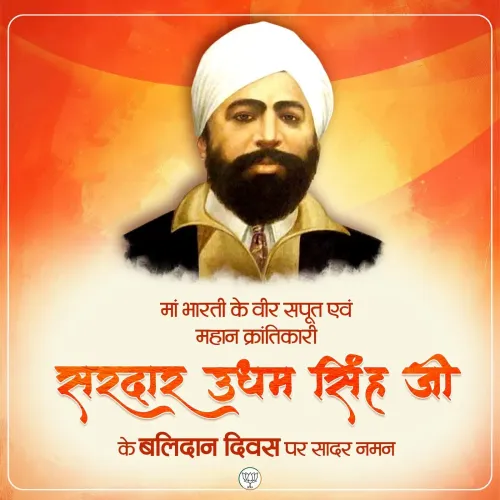
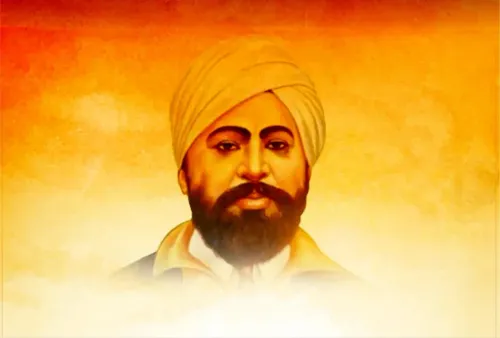
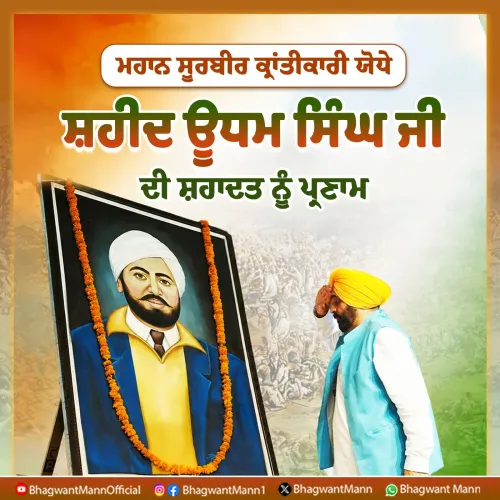
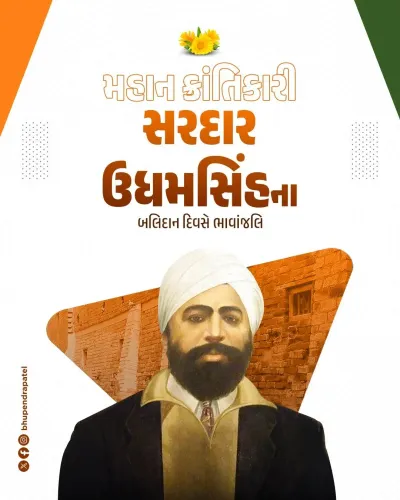
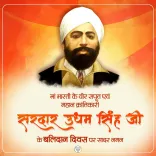
Rajnath Singh pays tribute to Shaheed Udham Singh on martyrdom anniversary
Synopsis
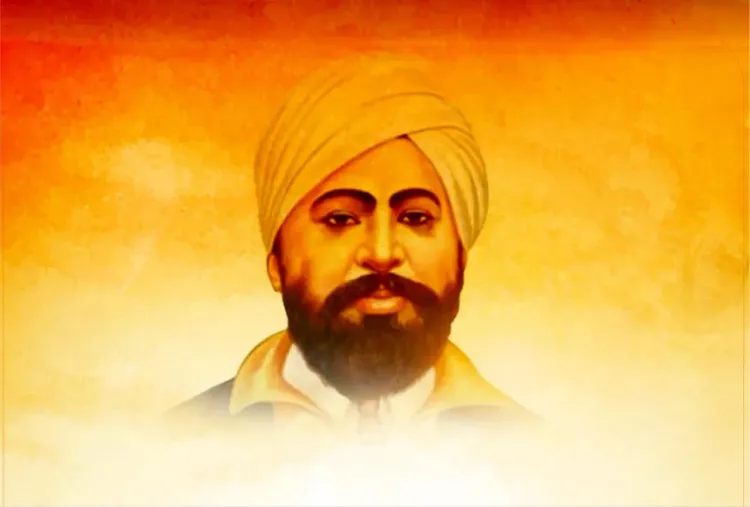
Union Defence Minister Rajnath Singh honoured Shaheed Udham Singh on his martyrdom anniversary, 31 July 2026, calling his sacrifice a glorious chapter of Indian history. Udham Singh was hanged in London in 1940 after assassinating Michael O'Dwyer in retaliation for the 1919 Jallianwala Bagh massacre.
Key Takeaways
Union Defence Minister Rajnath Singh paid tribute to Shaheed Udham Singh on his martyrdom anniversary, 31 July 2026 .
Udham Singh was hanged at Pentonville Prison, London, on 31 July 1940 after assassinating Michael O'Dwyer in retaliation for the Jallianwala Bagh massacre of 1919 .
Singh described Udham Singh's sacrifice as 'a glorious chapter of Indian history' and said the nation would always draw inspiration from it.
Udham Singh's remains were repatriated to India in 1974 and cremated with state honours in Sunam, Punjab .
The tribute is part of a broader pattern of Indian political leaders commemorating independence-era martyrs on their death anniversaries.
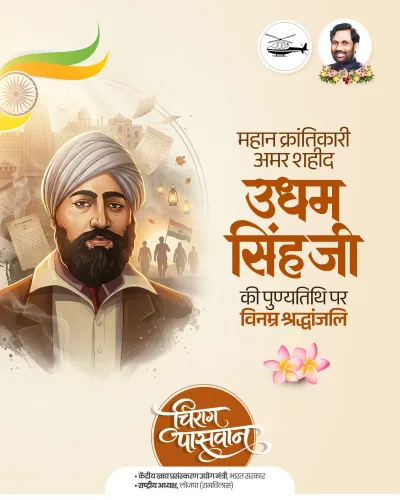
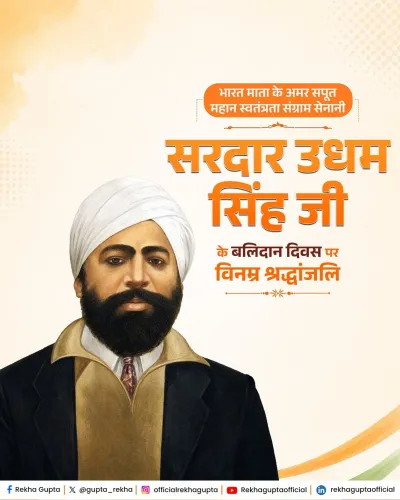
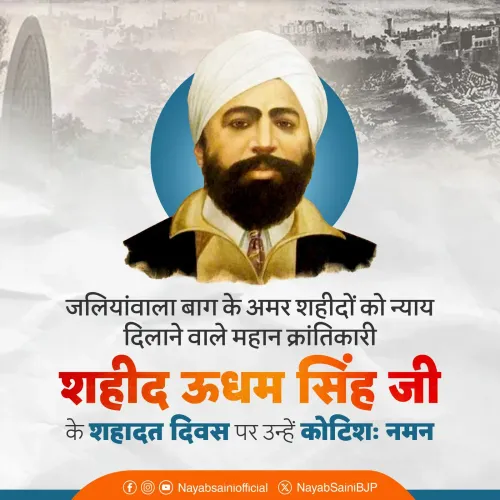
On the martyrdom anniversary of one of India's most defiant revolutionary heroes, Union Defence Minister Rajnath Singh offered his tribute to Shaheed Udham Singh on 31 July 2026 — honouring a man who carried the wounds of Jallianwala Bagh across continents and settled them in London with an act that shook the British Empire.
In his post, Singh wrote: 'महान क्रांतिकारी एवं भारतीय स्वतंत्रता संग्राम के अमर सेनानी शहीद ऊधम सिंह जी के बलिदान दिवस पर उन्हें विनम्र श्रद्धांजलि।' — 'A humble tribute to Shaheed Udham Singh, the great revolutionary and immortal warrior of India's freedom struggle, on his martyrdom day.' He added that Udham Singh's 'indomitable courage and the sacrifice he made in his efforts to free India is a glorious chapter of Indian history,' and that 'this nation will not only remember his sacrifice but will always draw inspiration from it.'
The assassination that answered Jallianwala Bagh
Udham Singh was among the survivors — or witnesses — of the Jallianwala Bagh massacre of 13 April 1919, when troops under the command of General Reginald Dyer opened fire on an unarmed crowd in Amritsar, killing hundreds. The man Udham Singh held responsible was Michael O'Dwyer, the Lieutenant Governor of Punjab who had sanctioned Dyer's actions. For over two decades, Udham Singh carried that reckoning quietly across continents.
On 13 March 1940, at Caxton Hall in London, Udham Singh shot and killed O'Dwyer at a public meeting. He made no attempt to flee. Tried and convicted, he was hanged at Pentonville Prison on 31 July 1940 — the date that India now observes as his martyrdom anniversary. His last words in court framed his act not as murder but as justice for the dead of Amritsar.
A tribute in a long tradition of national remembrance
Rajnath Singh's post follows a well-established pattern among Indian political leaders across party lines: marking the death anniversaries of independence-era figures with public tributes. As a senior BJP leader, former Chief Minister of Uttar Pradesh, and former Union Home Minister, Singh has been a consistent voice in national commemorations of the freedom struggle. Today's tribute carries no specific policy announcement — it is an act of national memory, and it stands on its own weight.
Udham Singh's legacy sits at the intersection of revolutionary nationalism and the politics of colonial accountability — a story that resonates differently across generations but has never lost its charge. His remains were repatriated to India in 1974 and cremated with full state honours in his native Sunam, Punjab.
Eighty-six years after the gallows at Pentonville, the Defence Minister's tribute is a reminder that the nation's debt to its most uncompromising martyrs is considered permanent — and that Udham Singh's particular brand of defiance remains one of the freedom struggle's most vivid and unresolved chapters.
Point of View
Making tributes to him a rare moment of cross-party consensus. That a Defence Minister specifically leads this commemoration — rather than, say, the Culture Ministry — subtly underscores the framing of martyrdom as a defence of the nation. The tribute carries no policy weight today, but it feeds into an ongoing effort to keep the emotional architecture of the freedom struggle central to India's political identity.
NationPress
31 Jul 2026
Frequently Asked Questions
Why is 31 July observed as Shaheed Udham Singh's martyrdom day?
31 July marks the day Udham Singh was hanged at Pentonville Prison in London in 1940 after being convicted for the assassination of Michael O'Dwyer , the former Lieutenant Governor of Punjab.
Who was Udham Singh and why did he kill Michael O'Dwyer?
Udham Singh was an Indian revolutionary who held Michael O'Dwyer responsible for sanctioning the Jallianwala Bagh massacre of 13 April 1919 , in which hundreds of unarmed civilians were killed in Amritsar . He shot O'Dwyer at Caxton Hall, London, on 13 March 1940 .
What did Rajnath Singh say about Udham Singh?
Rajnath Singh called Udham Singh's sacrifice 'a glorious chapter of Indian history,' praised his 'indomitable courage,' and said India would always draw inspiration from his martyrdom.
Where are Udham Singh's remains kept?
Udham Singh's remains were repatriated from Britain to India in 1974 and cremated with full state honours in his native town of Sunam, Punjab .
Was Udham Singh present at the Jallianwala Bagh massacre?
Udham Singh is widely believed to have been a witness to the Jallianwala Bagh massacre of 1919 , though the exact nature of his presence is part of historical accounts of his motivation for the assassination of O'Dwyer.