Clarity Needed: Vance's Pakistan Visit for Iran Talks Faces Conflicting Reports
Synopsis
Confusion surrounds Vice President J.D. Vance's planned visit to Pakistan for crucial negotiations with Iran, as President Trump cites security concerns while the White House insists he will attend. The unfolding situation highlights a potential power struggle and the complexities of US-Iran relations.
Key Takeaways
Conflicting reports about Vance's Pakistan trip highlight the complexities in US diplomatic efforts.
Trump's security concerns raise questions about the feasibility of high-level talks.
The situation reflects ongoing tensions between the US and Iran.
The IRGC's actions demonstrate the volatile security environment in the region.
Negotiations may be pivotal for future US-Iran relations.
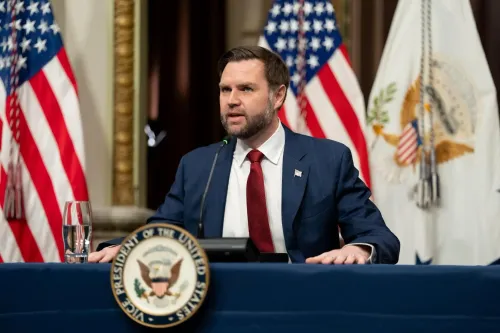
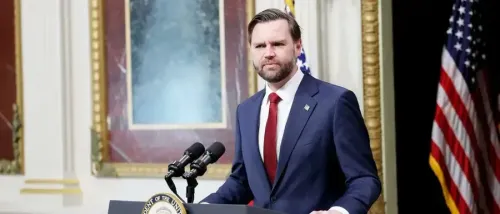
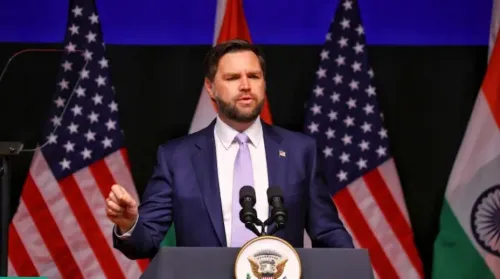
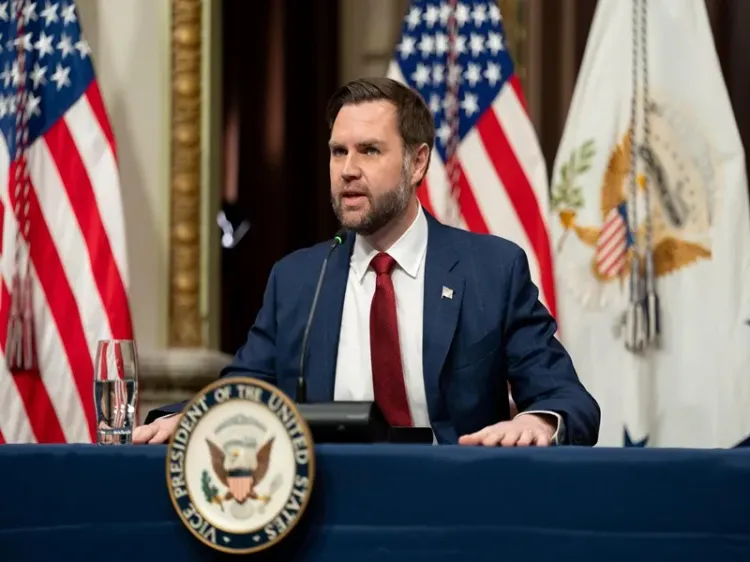
New York, April 20 (NationPress) Confusion has arisen regarding US Vice President J.D. Vance's trip to Pakistan, which was initially ruled out by President Donald Trump on security concerns, while the White House contradicted him by stating he would still attend the negotiations with Iran.
Trump appeared on two television shows, asserting that Vance would not be traveling to Islamabad for the upcoming negotiations scheduled for next week.
However, subsequent reports from both CNN and The New York Times indicated that White House officials confirmed Vance's participation in the talks, alongside Trump’s son-in-law Jared Kushner and Special Representative Steve Witkoff.
In an interview with ABC News, Trump reiterated his stance, stating, “Vice President Vance will not be heading the US delegation to Islamabad” due to security issues, as the Secret Service felt it was unsafe for him to travel to Pakistan on such short notice. He commented, ‘JD is great’.
Trump further explained to MSNBC’s Jacqueline Alemany that the 24-hour notice was insufficient for adequate security preparations.
Pakistan, a country plagued by terrorism partly due to its policy of exporting it, raised significant concerns.
As of now, Iran has not confirmed its participation in the new round of direct discussions in Islamabad.
Trump announced that his representatives would be arriving in Islamabad on Monday.
He informed Fox News that his son-in-law Jared Kushner and Special Representative Steve Witkoff would be leading the US delegation in the discussions with Iran.
Despite the Islamic Revolutionary Guard Corps (IRGC) keeping the Strait of Hormuz closed, Trump is proceeding with the negotiations, while simultaneously issuing fresh threats to Iran if an agreement is not reached.
“We’re proposing a very fair and reasonable DEAL, and I hope they accept it because, if they don’t, the United States will target every power plant and bridge in Iran,” he stated on Truth Social.
“NO MORE MR. NICE GUY,” he added.
A power struggle seems to be unfolding between Iran's diplomatic and military factions.
Iranian Foreign Minister Seyed Abbas Araghchi announced on Friday that the “Strait of Hormuz is declared completely open” for commercial shipping; however, the IRGC contradicted this statement on Saturday.
Trump acknowledged Araghchi’s comments with a “Thank you” post.
The IRGC has asserted that the Strait was closed due to US blockades on its ports, even firing upon two Indian vessels on Saturday.
Trump refrained from declaring the ceasefire null or taking retaliatory measures, as he is eager for successful negotiations, especially given the domestic pressure stemming from the war's economic ramifications.
Regarding the IRGC Navy's aggressive actions in the Strait, Trump remarked, “That wasn’t nice, was it?”
However, he also stated, “My representatives are heading to Islamabad, Pakistan—they will arrive tomorrow evening for discussions. Iran’s recent claim about closing the Strait is peculiar, as our BLOCKADE has already rendered it inactive.”
Trump has claimed that Iran has agreed to most US conditions, including a permanent cessation of its nuclear ambitions.
Nonetheless, there has been no corroboration of this from Iran, which continues its confrontational rhetoric.
Point of View
The conflicting statements from President Trump and the White House regarding Vice President Vance's trip to Pakistan illustrate the complexities of diplomatic relations and security concerns in a volatile region. It is essential to analyze these developments carefully as they unfold.
NationPress
18 Sept 2026
Frequently Asked Questions
Why did Trump rule out Vance's trip to Pakistan?
Trump cited security concerns, stating the Secret Service was uncomfortable with the vice president traveling on such short notice.
What is the significance of the talks in Islamabad?
The talks aim to address ongoing tensions between the US and Iran, particularly regarding nuclear ambitions and regional security.
Who else is part of the US delegation to the talks?
Alongside Vice President Vance, Jared Kushner and Special Representative Steve Witkoff are also expected to attend.
What has Iran's response been regarding the negotiations?
As of now, Iran has not confirmed its participation in the talks and continues to express a confrontational stance.
What actions did the IRGC take recently?
The IRGC claimed to have closed the Strait of Hormuz and fired upon two Indian ships, escalating tensions in the region.