Will Trump's Proposed Board of Peace Charge Membership Fees?
Synopsis
Is President Trump's Board of Peace truly fee-free? A senior US official clarifies the initiative's financial structure and governance, revealing important details about membership, oversight, and voluntary contributions aimed at resolving conflicts without mandatory dues.
Key Takeaways
The Board of Peace will not impose membership fees.
Financial contributions are voluntary.
Stringent oversight and auditing will be in place.
Future leadership can change based on presidential appointments.
Transparency is a priority for managing funds.
Washington, Jan 21 (NationPress) A senior US official has announced that the Board of Peace proposed by President Donald Trump will not impose any entry fees or compulsory dues on participating nations, aiming to clarify the operational aspects of this initiative.
When inquired about a reported $1 billion figure as a potential buy-in, the official clarified that it is not the case. “No. Countries that contribute significantly to projects and wish to maintain oversight can remain involved,” the official stated, preferring to remain anonymous.
The official emphasized that mere membership would not necessitate any financial contributions. “No. Membership does not entail mandatory funding obligations beyond voluntary contributions from states or partners,” the official remarked.
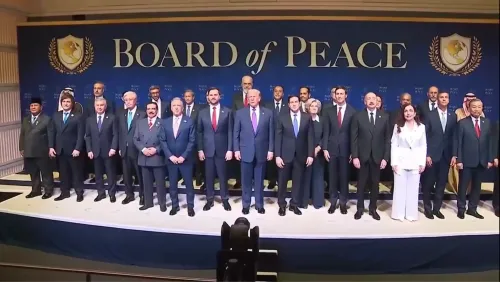
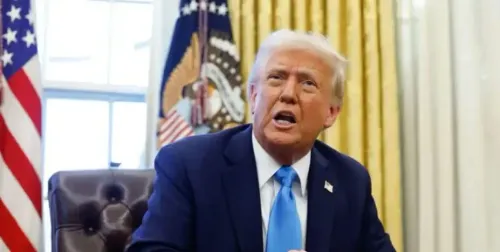
These clarifications come as President Trump has proposed the Board of Peace as a new mechanism for conflict resolution and war prevention. The initiative has raised inquiries from foreign governments regarding costs, governance, and oversight.
On the matter of financial management, the official assured that stringent controls would be implemented. “The Board will enforce the highest standards of financial oversight and controls,” the official said.
Funds would only be stored in recognized accounts at reputable banks, with processes involving due diligence by a chief financial officer and executive board approval. Payments would require multiple signatures and be subject to know-your-customer and anti-money-laundering checks, along with sanctions screening.
“Payments will necessitate the correct multi-signatory approval threshold, KYC/AML and sanctions screening, along with supporting documentation,” the official indicated.
Furthermore, the official mentioned that oversight would not be solely internal. “Oversight will be reinforced through an Audit & Risk subcommittee and an independent annual external audit that includes published financials,” the official added.
Concerns were also raised regarding the leadership of the proposed board, specifically whether Trump would hold the chairmanship indefinitely or whether it would transition to future US presidents.
Simultaneously, the official noted that the role is not permanently linked to the person in the White House. “A future US President may select or designate the United States’ representative to the Board,” the official mentioned.
These responses aimed to alleviate worries that the Board would function like a dues-based organization or impose binding financial responsibilities on participants. The focus, as per the official, will be on voluntary contributions and joint oversight from those who opt to support specific projects.
By detailing audit requirements and banking safeguards, the official sought to reassure potential partners about the stringent control and transparency of funds, with public disclosures through annual audits.
The proposed Board of Peace has been characterized by Trump as a platform to directly bring leaders together to resolve disputes. He contends that existing institutions have often been too slow or ineffective in preventing wars.
Point of View
We aim to provide an unbiased perspective on this initiative. The proposed Board of Peace, while ambitious, raises several questions about governance and financial oversight. It is crucial that transparency and accountability remain at the forefront to build trust among participating nations.
NationPress
22 Sept 2026
Frequently Asked Questions
Will countries need to pay to join the Board of Peace?
No, countries will not be required to pay entry fees or mandatory dues. Membership will not impose any financial obligations beyond voluntary contributions.
How will financial oversight be managed?
Strict financial controls will be implemented, including due diligence, multiple signature requirements, and annual external audits to ensure transparency.
Who will lead the Board of Peace?
President Trump can hold the chairmanship until he decides to resign, but future US Presidents may appoint their own representatives.