Trump Endorses 'Final Offer' Following Stalemate in Iran Nuclear Talks
Synopsis
In a significant turn of events, President Trump has personally backed a 'final and best offer' to Iran after extensive nuclear negotiations in Islamabad failed. Vice President J.D. Vance reveals the intense communication and clear boundaries set by Washington during these high-stakes discussions.
Key Takeaways
Trump's involvement: Direct engagement in negotiations.
Final offer: A straightforward proposal presented to Iran.
Negotiation duration: Talks lasted 21 hours without agreement.
U.S. demands: Clear requirements for long-term nuclear guarantees.
National security coordination: Ongoing communication with national security officials.
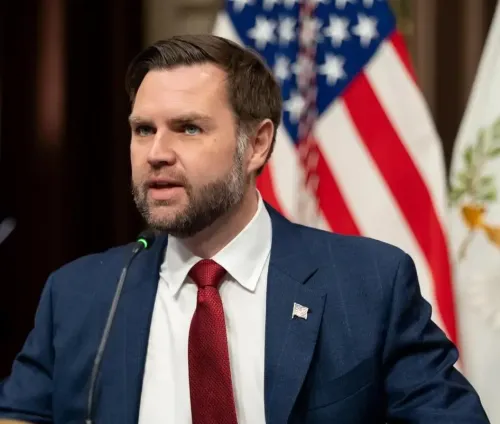
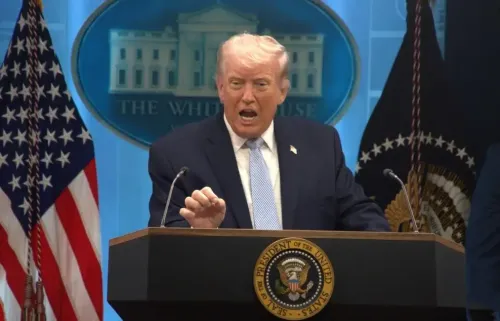
Washington, April 12 (NationPress) President Donald Trump has been actively engaged in critical nuclear negotiations with Iran, endorsing a “final and best offer” to Tehran following the breakdown of talks in Islamabad, according to Vice President J. D. Vance.
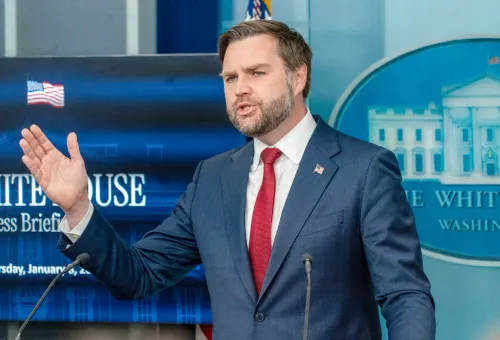
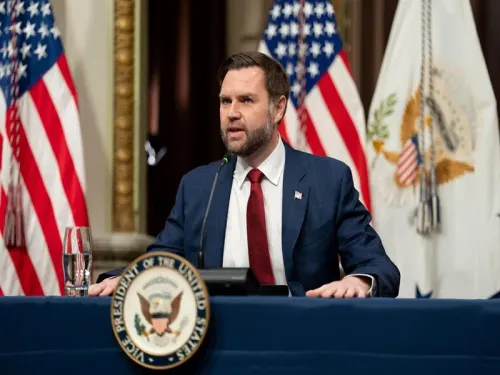
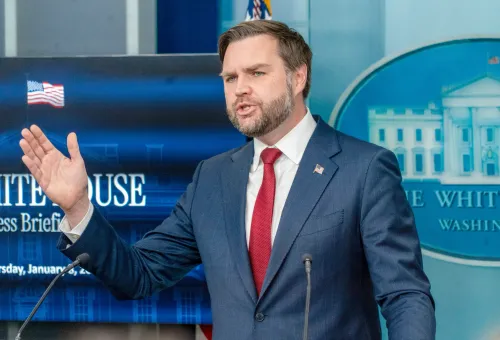
“We depart with a straightforward proposition, a method of understanding that constitutes our final and best offer. It remains to be seen if the Iranian authorities accept it,” Vance remarked to journalists after a marathon 21-hour discussion.
The Vice President highlighted Trump's personal involvement, noting ongoing communication between the negotiating team and the White House. “We were in constant contact with the President. I cannot specify how many times we communicated—perhaps half a dozen to a dozen times during the last 21 hours,” he stated.
He further explained that the President had directed the negotiators to engage in discussions with integrity but emphasized adherence to strict limits.
“The President instructed us to approach this with sincerity and make every effort to secure a deal. That’s precisely what we did,” Vance affirmed.
Despite their intensive efforts, the talks were unable to reconcile significant differences concerning Iran’s nuclear agenda. “We have been at it for 21 hours… we engaged in numerous substantial discussions with the Iranians. That's the positive aspect. The negative aspect is that we did not reach an agreement,” Vance added.
Washington, he noted, had clearly defined its negotiation parameters. “We have unequivocally articulated our red lines… and the Iranians opted not to accept our conditions,” Vance continued.
At the heart of the stalemate lies the U.S. demand for a long-term assurance that Iran will refrain from pursuing nuclear weapon capabilities. “We need an explicit commitment that they will not seek a nuclear weapon nor the means to rapidly acquire one,” he emphasized.
Vance made it clear that Washington is looking for enduring assurances, not just fleeting promises. “Are we witnessing a fundamental commitment from the Iranians to refrain from developing a nuclear weapon? Not only now, or in two years, but over the long haul? We have yet to observe that,” he remarked.
He also pointed out the extensive national security collaboration underpinning the negotiations, mentioning that the team remained connected with senior officials throughout the process.
“We obviously communicated with the entire national security team… as we were negotiating sincerely,” Vance noted.
While he refrained from revealing specific obstacles, Vance asserted that the U.S. side had demonstrated considerable flexibility. “I believe we were quite accommodating. However, regrettably, we couldn’t make any progress,” he lamented.
Point of View
I observe that the recent nuclear negotiations with Iran reveal the complexities of international diplomacy. Trump's direct involvement highlights the critical nature of these discussions, while the failure to reach an agreement underscores the challenges ahead. The U.S. remains firm on its demands, and the stakes are undeniably high for global peace and security.
NationPress
19 Sept 2026
Frequently Asked Questions
What was the outcome of the Iran nuclear talks?
The negotiations in Islamabad concluded without an agreement despite extensive discussions.
What did Trump say about the negotiations?
Trump backed a 'final and best offer' to Iran, emphasizing the need for a lasting commitment against nuclear weapons.
Who reported on Trump's involvement in the talks?
Vice President J.D. Vance reported on Trump's direct involvement and constant communication during the negotiations.
What were the U.S. demands in the negotiations?
The U.S. demanded a long-term guarantee that Iran would not pursue nuclear weapons capabilities.
Were any compromises reached during the talks?
Despite the U.S. demonstrating flexibility, no compromises were successfully negotiated.