Trump's Georgia rally 2026: 'Golden Age' pitch sharpens midterm push
Synopsis
Trump's Georgia rally was less a routine campaign stop and more a blueprint for the 2026 Republican midterm offensive — combining a 'Golden Age' closing argument with direct pressure on Senate leadership, a sweeping slate of state endorsements, and an escalation of his election integrity demands. The speech signals that Trump intends to be the central force in next year's congressional races, for better or worse for his party.
Key Takeaways
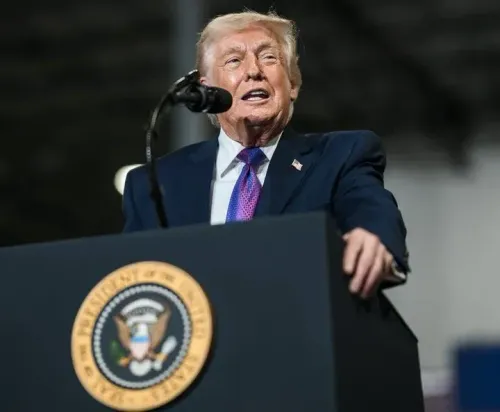
President Donald Trump held a campaign-style rally in Georgia on Wednesday, 23 July , targeting the 2026 midterm elections .
Trump endorsed Republican candidates including gubernatorial hopeful Rick Jackson , AG candidate Brian Strickland , and Representative Mike Collins .
He called on supporters to lobby Senate Majority Leader John Thune and urged Republicans to 'terminate the filibuster.' Trump renewed demands for voter ID , proof of citizenship, and an end to mail-in ballots under his 'Make it too big to rig' message.
He repeatedly labelled Democrats and Senator Jon Ossoff as 'communists,' framing the midterms as a battle against a Marxist takeover.
Trump closed with a 'Golden Age of America' declaration, urging Republicans to expand their congressional majorities.
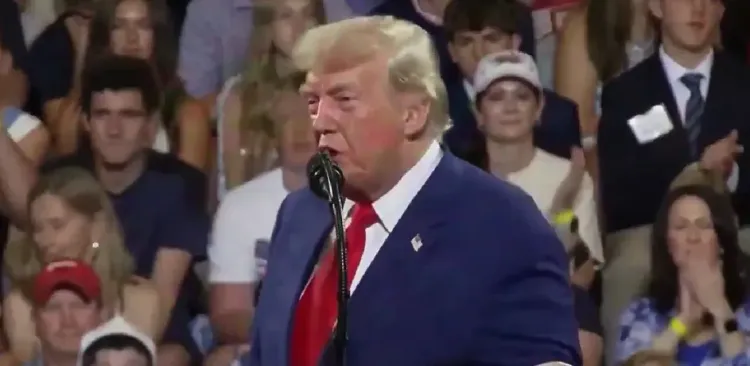
President Donald Trump took his sharpest midterm campaign message yet to the battleground state of Georgia on Wednesday, rallying supporters with a sweeping address that blended policy promotion, attacks on Democrats, election integrity demands, and a string of endorsements for Republican candidates ahead of the 2026 midterm elections. The rally marked one of Trump's most explicitly campaign-style appearances since his return to the White House.
The 'Golden Age' Framing
Trump opened with a moment of theatrical humour, briefly pretending to announce another presidential bid before pulling back. 'Well, thank you very much, everybody. It's a special place, and I am here to announce my candidacy,' he said, pausing as the crowd erupted, before adding: 'I'm only kidding. I'm only kidding.'
He closed the rally on a grander note, declaring that the United States had entered a new era under his leadership. 'So, ladies and gentlemen of Georgia, the Golden Age of America is upon us,' he told the crowd, before running through his familiar refrain of making America 'powerful,' 'wealthy,' 'healthy,' 'strong,' 'proud,' 'safe,' and 'great again.'
Midterm Stakes and the Anti-Democrat Offensive
Trump framed the 2026 midterms as an existential contest, repeatedly urging Republicans to expand their congressional majorities. 'We have some great candidates running. They got to win by a lot. Otherwise we're going communist,' he told supporters.
Throughout the address, Trump labelled Democrats — and specifically Georgia Senator Jon Ossoff — as 'communists' and 'Marxists,' accusing them of opposing tax cuts, border security, and immigration enforcement. 'Jon Ossoff and the Democrat communists want to let the Marxists into power, bankrupt your families, and leave you totally undefended with wide open borders, but we will not let that happen to our country,' he said. This escalatory framing is consistent with the rhetorical pattern Trump has deployed since the 2022 midterms, though critics argue it deepens political polarisation rather than broadening his coalition.
Election Integrity Demands
Election integrity remained a central pillar of Trump's address. He revived longstanding calls for voter ID requirements, proof of citizenship for all voters, and an end to mail-in ballots — with exceptions only for military personnel, illness, disability, and travel. 'Make it too big to rig,' he told supporters, urging them to 'watch those machines.'
These demands echo positions Trump has maintained since the 2020 presidential election and which he has sought to embed in federal and state legislative agendas. Critics, including election law experts, have argued that several of these proposals face constitutional and logistical hurdles at the national level.
Pressure on Senate Republicans
Trump publicly pressured Senate Majority Leader John Thune from the rally stage, urging supporters to lobby Republican senators directly. 'Everybody call John Thune at the Senate. He's the leader of the Republican Party, and tell him to get this stuff approved,' he said.
He also argued that Republicans should 'terminate the filibuster' to accelerate his legislative agenda, warning that Democrats would do so if they regained the Senate. The filibuster debate has long divided the Republican caucus, and Trump's public pressure on Thune signals continued friction between the White House and Senate leadership.
Georgia Endorsements and Policy Agenda
Trump endorsed a slate of Republican candidates for Georgia offices, including gubernatorial hopeful Rick Jackson, attorney general candidate Brian Strickland, lieutenant governor candidate Greg Dolezal, congressional candidate Houston Gaines, and incumbent Representative Mike Collins, whom he praised as 'one of the most highly respected' members of Congress.
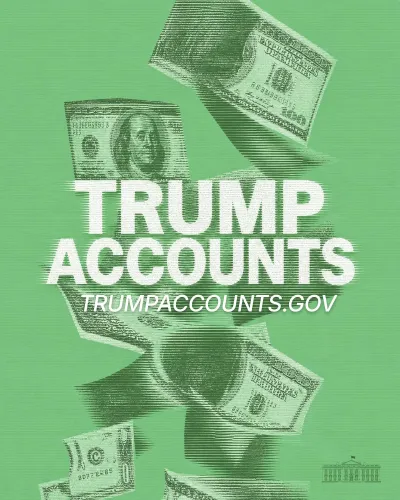
The policy portion of the speech covered tax cuts, immigration enforcement, prescription drug pricing reforms, healthcare proposals, and the newly launched 'Trump Accounts' investment programme for children. Trump also reiterated commitments to ban transgender athletes in women's sports and restrict gender-affirming medical procedures for minors — positions he described as permanent Republican priorities.
With Georgia shaping up as a key Senate battleground in 2026, Trump's choice of the state for this rally underscores the electoral calculus driving his early campaign mobilisation.
Point of View
Not a guardrail. Whether that pressure accelerates legislation or deepens caucus fractures will define the next legislative session.
NationPress
21 Oct 2026
Frequently Asked Questions
What did Trump say at the Georgia rally on 23 July?
Trump used the Georgia rally to sharpen his 2026 midterm message, endorsing Republican candidates, attacking Democrats as 'communists,' demanding election reforms including voter ID and an end to mail-in ballots, and pressuring Senate Republicans to advance his agenda. He closed by declaring the United States had entered a 'Golden Age' under his leadership.
Which Republican candidates did Trump endorse in Georgia?
Trump endorsed gubernatorial hopeful Rick Jackson, attorney general candidate Brian Strickland, lieutenant governor candidate Greg Dolezal, congressional candidate Houston Gaines, and incumbent Representative Mike Collins, whom he called 'one of the most highly respected' members of Congress.
Why did Trump pressure Senate Majority Leader John Thune at the rally?
Trump publicly urged supporters to call Thune's office and push Senate Republicans to approve more of his legislative priorities. He also argued that Republicans should 'terminate the filibuster' to move legislation faster, warning that Democrats would do the same if they regained power.
What election reforms did Trump call for at the Georgia rally?
Trump renewed his longstanding demands for mandatory voter ID, proof of citizenship for all voters, and an end to mail-in ballots — with exceptions only for military personnel, those with illness or disability, and travellers. He framed these as essential to ensuring elections are 'too big to rig.'
How significant is Georgia as a midterm battleground for 2026?
Georgia is a key Senate battleground in 2026, with Democratic Senator Jon Ossoff up for re-election. Trump's choice of Georgia for this early rally underscores the state's electoral importance; he repeatedly urged Georgians to replace Ossoff, whom he labelled a 'communist.'